
The Trust Problem Behind Ireland’s Online Shopping Scams
Ireland is facing a rising tide of online shopping scams, with sophisticated impersonations and AI-generated content challenging traditional trust signals.
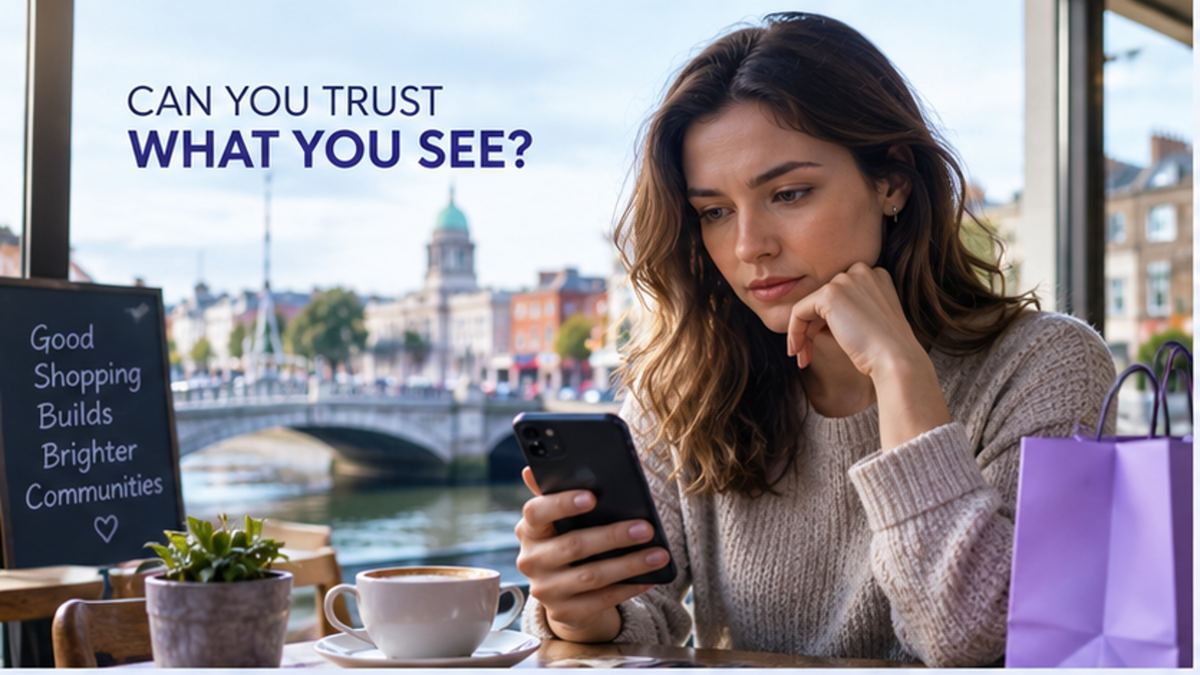
A convincing logo, polished website and sponsored social-media ad no longer prove that a business is real. Fresh warnings in Ireland show scammers impersonating recognisable organisations, cloning online shops and using increasingly sophisticated digital content to win trust. As shopping, discovery and payments converge online, proving who is actually behind a seller may become one of digital commerce’s most important safety layers.
Key takeaways
- On 16 September 2026, the CCPC warned about online scams impersonating Dublin Zoo through fake social-media posts and fraudulent website links.
- FraudSMART research published on 14 September says 85% of Irish adults receive suspicious communications or online content at least once a month, yet only 15% checked whether the company or website mentioned was legitimate.
- One in four respondents to that FraudSMART research said suspicious communications appeared AI-generated.
- Central Bank figures cited by FraudSMART show €179 million was lost through fraudulent payments and scams in Ireland in 2025, up 27% from 2024.
- Irish SMEs are victims too: FraudSMART reported in March that SMEs lost €18.9 million through email-related scams over the previous two years.
- Verification can improve trust signals, but no verification badge should be treated as a guarantee that every transaction is safe.
When a familiar brand is no longer proof
Ireland received a timely reminder this week of how online trust can be manufactured.
On 16 September, the Competition and Consumer Protection Commission warned consumers about online scams appearing to impersonate Dublin Zoo. According to the CCPC, some social posts used fake Dublin Zoo-branded images or video and offered free gifts or back-to-school packs in exchange for a small postage payment.
The amount requested may look insignificant. The trust mechanism is not.
A recognisable organisation, familiar branding, a social-media post and a low-friction payment request can combine to make a false offer feel legitimate. The CCPC’s advice is to avoid clicking social-media ads directly and to independently check that the website is authentic before entering payment details.
The warning follows other examples this year. In February, the CCPC warned about a suspected fraudulent website impersonating retailer EuroGiant, using the context of the company’s liquidation and an alleged closing-down sale to create credibility.
The lesson is uncomfortable but important: a logo is copyable. A brand story is copyable. Product photography can be copied or generated. Reviews can be fabricated. Even the appearance of a local Irish business can be manufactured.
That changes what “trust” has to mean online.

Genuine businesses can be victims of impersonation too, making provable authenticity valuable for both sellers and customers.
Scams are becoming part of everyday digital life
The newest FraudSMART figures show the scale of exposure.
Research published by Banking & Payments Federation Ireland’s FraudSMART initiative on 14 September found that 85% of Irish adults reported receiving suspicious calls, text messages, emails or online content at least once a month. More than half said suspicious communications were increasing.
Yet only 15% said they checked whether the company or website referred to in a suspicious text or email was legitimate.
That gap matters. People are being asked to make more authenticity decisions while the signals they traditionally relied upon are becoming easier to imitate.
FraudSMART also reported that one in four people believed suspicious communications they received appeared AI-generated. AI is not the cause of every scam, but generative tools can lower the effort required to create polished copy, convincing imagery, personalised messages and synthetic media at scale.
The CCPC now explicitly lists AI-generated product imagery, fake testimonial videos, deepfakes, AI-powered phishing and voice cloning among emerging scam risks.
The result is an authenticity problem as much as a cybersecurity problem.
The money behind the trust crisis
The financial impact is substantial.
FraudSMART said on 4 September that Central Bank of Ireland figures show €179 million was lost through fraudulent payments and scams in 2025, a 27% increase on 2024. Authorised push-payment fraud — where someone is manipulated into sending money themselves — accounted for €74.86 million, or 45% of total fraud by value, according to those figures.
Online shopping fraud is also highly visible in Garda data. An Garda Síochána says reports of online shopping fraud reached 2,288 in the first nine months of 2025, compared with 693 in 2022. Gardaí described that as a 235% increase, with reported losses exceeding €1.1 million during those first nine months of 2025.
Those figures should not be combined as though they measure the same thing: the Central Bank/FraudSMART number covers a much broader universe of fraudulent payments and scams, while the Garda figures cited here concern reports of online shopping fraud. Together, however, they show why digital trust has become an economic issue rather than merely an inconvenience.
Real businesses are victims too
The problem is not simply dishonest sellers versus consumers.
Legitimate Irish businesses can have their names, logos, social accounts or identities copied. They can also be targeted directly by fraudsters.
FraudSMART reported in March that Irish SMEs lost €18.9 million through email-related scams over the previous two years. Invoice-redirection and CEO-impersonation scams remained major risks, with average losses above €22,000. Its survey found 67% of SMEs had been targeted by a scam in the previous 12 months, while 53% lacked specific fraud-awareness guidelines and training programmes.
This creates a double cost. A business can lose money directly to fraud and can also suffer reputational damage when criminals impersonate it to target customers.
For small businesses, trust is an asset. Digital impersonation effectively steals part of that asset.
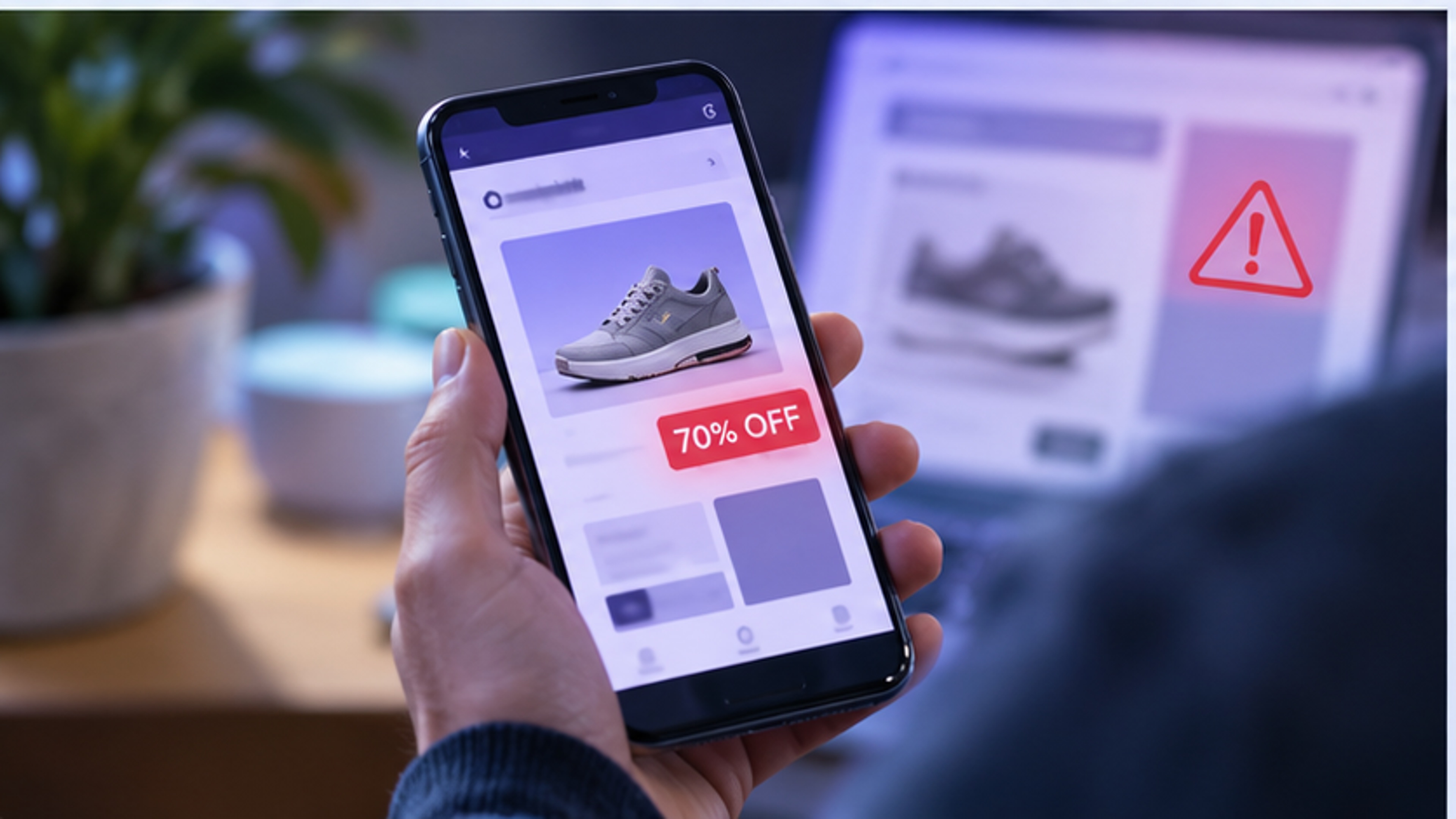
Extreme discounts, urgency and unfamiliar sellers remain common warning signs in fake-shop and social-media scams.
Why “looks legitimate” is no longer enough
For years, online-safety advice relied heavily on visible warning signs: spelling mistakes, crude websites, strange logos and obviously suspicious messages.
Those clues still matter, but they are becoming less reliable.
The CCPC’s current guidance warns that scam shops may use Irish-sounding names, professional-looking websites, copied branding, fake media logos, fake followers, artificial engagement, AI-generated product content and fabricated testimonials.
A polished interface is therefore not evidence of legitimacy.
This is why identity and business verification are becoming more important in marketplaces and social commerce. The useful question is not simply whether a page looks professional. It is whether the platform has meaningful evidence that the seller or business behind it is who it claims to be.
Verification can include different checks depending on the context: confirmed contact information, identity checks, business-registration evidence, payment-account verification, ownership or representative checks, and ongoing controls when important account information changes.
But verification must be described carefully. A verified business can still provide poor service. An account can potentially be compromised after verification. A legitimate seller can breach rules. Verification is a trust signal and risk-reduction mechanism — not an insurance policy or guarantee.
The platform has a role, not just the buyer
Consumer advice often tells people to stop, search and stay safe. That is sensible. Buyers should independently find a seller’s official site, examine real contact details, check reviews critically, avoid unusual payment methods and resist artificial urgency.
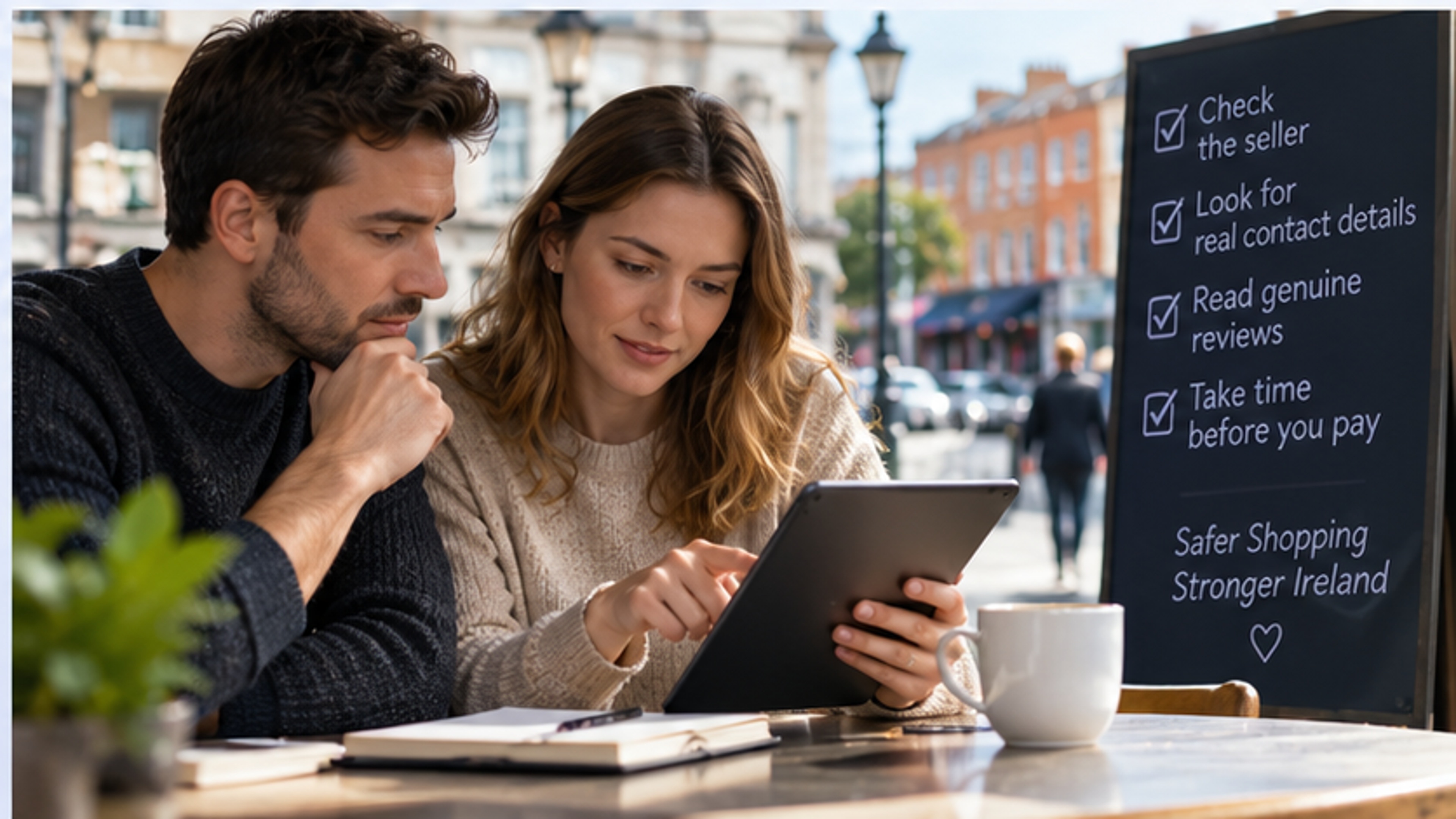
The CCPC advises consumers to pause and independently check the seller rather than relying on the appearance of an advert or website.
But placing the entire burden on consumers is insufficient when platforms design the environments in which discovery and transactions happen.
Platforms can make impersonation harder. They can verify sellers before allowing certain commercial activity, distinguish business accounts from ordinary profiles, make verification status understandable, detect suspicious account changes, respond quickly to impersonation reports and limit deceptive advertising.
They can also avoid designing verification in a way that encourages consumers to switch off their judgement. A badge should answer a narrow question — for example, that certain identity or business checks were completed — rather than silently implying that the platform guarantees every product, service or outcome.
That distinction is essential for credible trust design.
What this means for safegram
Safegram’s social-marketplace direction makes this issue directly relevant, but its product claims should remain tied to actual release state.
Safegram’s stated model requires businesses and creators to complete verification before adding products or services to Safegram Exchange. Paid subscription status is separate from verification: paying for a business or creator package does not itself make an account verified.
Safegram is also building around verified users, creators, businesses and sellers, with verification intended to provide stronger authenticity signals without requiring every piece of verified identity information to be publicly displayed.
Where these controls are live in the production build, they can be described as live. Where a particular workflow, protection or transaction feature remains in testing or implementation, it should be labelled beta or planned.
SafePay, for example, has been explored as a planned transaction-protection concept in which funds could be held through an appropriate payments flow until agreed conditions are met. It should not be described as a live escrow service unless and until the implemented payments architecture, legal structure and release state support that claim.
The objective should be straightforward: make it easier for people to understand who they are dealing with before money changes hands.
Verification should help good businesses, not just block bad ones
There is another side to this debate.
Stronger business verification is not only a defensive measure. It can help genuine local businesses distinguish themselves from clones, fake shops and disposable scam accounts.
That matters particularly as discovery moves into social feeds. A customer may encounter a business for the first time through a video, creator recommendation, marketplace listing or sponsored post rather than by deliberately searching for the company’s website.
In that environment, provenance becomes valuable. Who posted this? Is the seller a real business? Is the account connected to the business it claims to represent? Is there a traceable transaction history? Can the customer report a problem through the same platform?
These questions can become part of the product experience rather than homework customers perform after something feels wrong.
A new competitive advantage: provable authenticity
For years, online businesses competed on convenience, price, delivery and attention.
Authenticity is becoming another competitive dimension.
The businesses that can demonstrate who they are, communicate through trusted channels, protect their accounts and build a credible transaction history may have an advantage as consumers become more sceptical of what they see online.
Platforms face the same test. The winners may not be those that eliminate fraud entirely — an unrealistic promise — but those that make deception materially harder, make authenticity easier to assess and respond quickly when trust breaks down.
Ireland’s latest scam warnings make the direction clear.
The internet has reached a point where seeing is no longer believing.
The next generation of online commerce will need better ways to prove what is real.
Frequently asked questions
Why are fake online shops becoming harder to spot?
Scammers can copy real branding, create professional websites, buy sponsored social-media ads and use AI-generated images, video or text. Traditional visual warning signs are therefore less dependable than they once were.
How common are suspicious scam communications in Ireland?
FraudSMART research published on 14 September 2026 found 85% of Irish adults reported receiving suspicious calls, texts, emails or online content at least monthly.
How much money is being lost to fraud in Ireland?
FraudSMART, citing Central Bank of Ireland figures, reported €179 million in losses through fraudulent payments and scams in 2025, up 27% from 2024. This is broader than online-shopping fraud alone.
Does a verified business mean a purchase is guaranteed safe?
No. Verification can establish useful information about identity or business legitimacy and reduce some risks, but it cannot guarantee service quality, prevent every account compromise or ensure every transaction will be satisfactory.
What should consumers check before buying from an unfamiliar online seller?
The CCPC recommends pausing, independently researching the seller, checking genuine contact information and reviews, being wary of extreme discounts or urgency, and avoiding suspicious payment methods or links.
What should a business do if its brand is being impersonated?
Preserve evidence, report fake accounts or adverts to the relevant platform, warn customers through official channels and contact appropriate authorities where fraud is involved. Businesses should also secure their own accounts with strong authentication and internal fraud controls.
How does Safegram approach business verification?
Safegram’s stated product model separates verification from paid subscriptions and requires businesses and creators to be verified before adding products or services to Exchange. Specific workflows should be described as live, beta or planned according to their actual deployment status at publication.
More from Safegram
Try Safegram
Privacy-first social and a verified marketplace, built in Dublin.