
The Scam Doesn’t Look Like a Scam Anymore: Why Verification Is Becoming Essential in Ireland
New research shows scams are becoming more sophisticated, making verification essential to protect against increasingly polished fraudulent messages and impersonation.
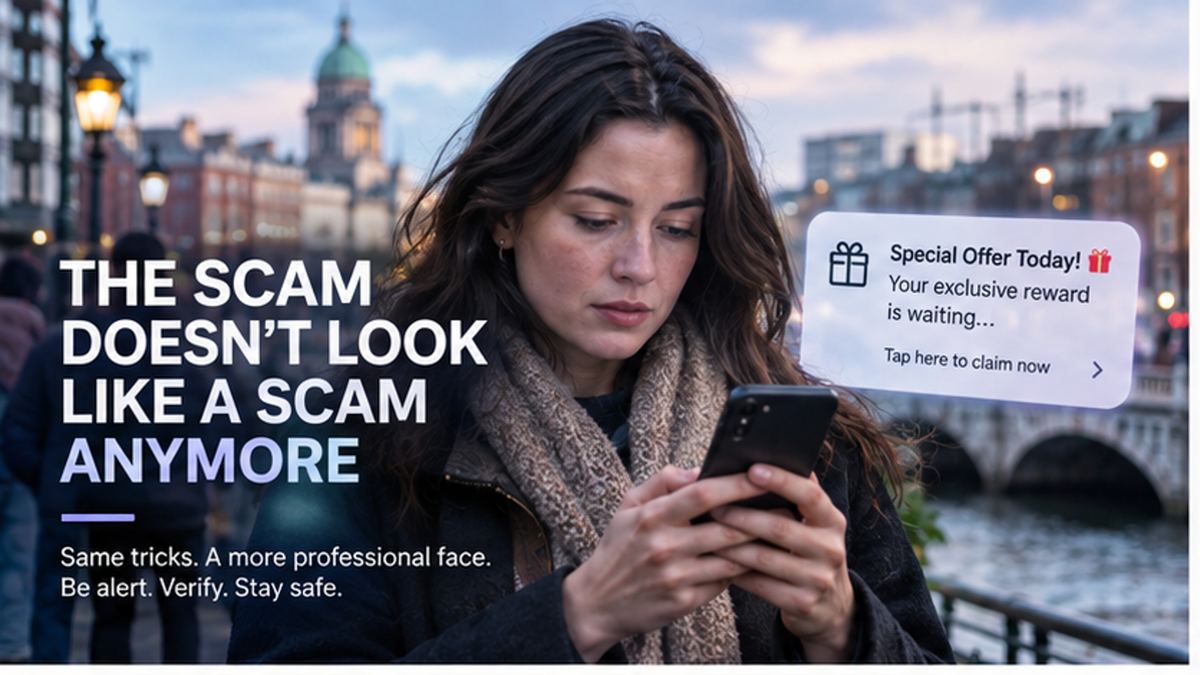
For years, scam advice was simple: look for spelling mistakes, strange links, bad design and messages that “just look fake”. Those clues still matter, but they are no longer enough. New Irish research shows suspicious communications are becoming part of everyday digital life while AI and brand impersonation are making fraudulent messages look more polished. The practical response is not panic. It is a better habit: stop, verify, then act.
Key takeaways
FraudSMART says 85% of Irish adults encounter suspicious calls, texts, emails or online content at least monthly, while 51% say they are seeing more suspicious communications than before.
One in ten respondents said they had clicked a link in a text or email before realising it was suspicious.
One in four said suspicious communications appeared computer-generated or artificial, showing how AI is becoming part of the trust problem.
Only 15% checked whether the company or website mentioned in a suspicious text or email was legitimate.
The CCPC has also warned Irish consumers about fake branded social posts and fraudulent sites impersonating well-known organisations, showing that recognisable branding is no longer proof of authenticity.
Verification should be understood as a habit and a trust signal — not a guarantee that every transaction or account is safe.
The old red flags are weakening
The newest Irish fraud research captures a change that many people already feel.
Scams are no longer occasional odd messages that are easy to dismiss. FraudSMART, the fraud-awareness initiative led by Banking & Payments Federation Ireland, says 85% of Irish adults now encounter suspicious calls, texts, emails or online content at least once a month.
More than half of respondents said suspicious communications are increasing.
That matters because the volume itself creates risk. When people receive repeated delivery notifications, bank messages, account alerts, discount offers, payment requests and business communications every day, the fraudulent message no longer needs to be perfect. It only needs to arrive at a moment when the person is busy, distracted or expecting something similar.
The same research found that one in ten people had clicked a link in a text or email before realising it was suspicious.
That is not evidence that consumers are careless. It is evidence that scam design is exploiting normal behaviour.
For years, public advice focused on obvious warning signs: bad spelling, strange grammar, unknown senders, low-quality websites and unusual links.
Those clues remain useful. But they are increasingly incomplete.
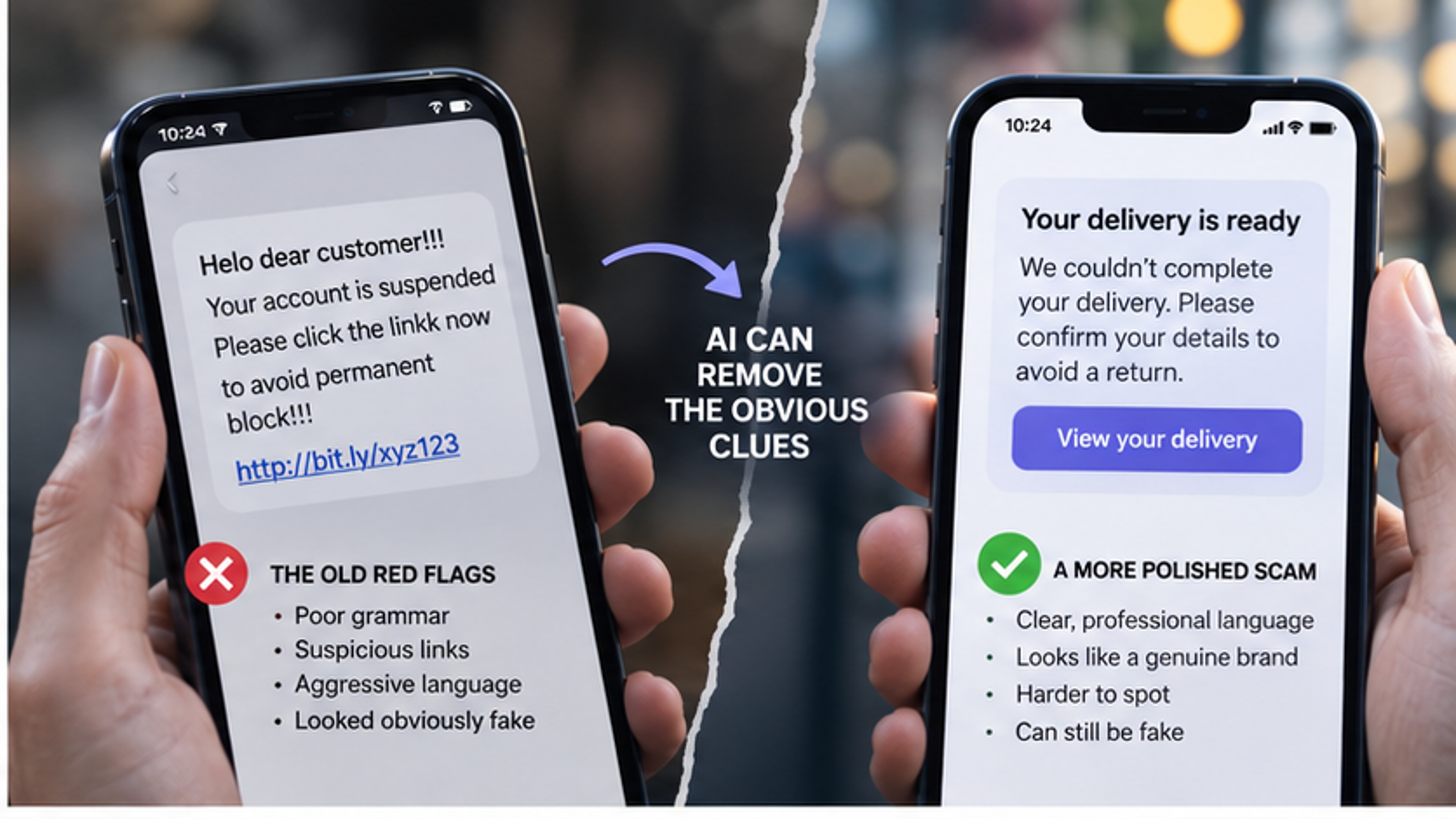
AI can improve grammar, design and presentation, weakening some of the visual clues people once relied on.
AI can remove the obvious clues
One in four respondents in the FraudSMART research said suspicious communications appeared computer-generated or artificial.
Generative AI can make fraud more scalable and more polished. It can improve grammar, create convincing product images, imitate professional customer-service language, produce realistic audio, generate personalised messages and help fraudsters adapt the same scam to different audiences.
The result is important: “looks professional” can no longer be treated as a trust test.
A scam message can have correct spelling.
A fake store can have clean design.
A cloned social account can use genuine-looking photography.
A fake promotion can copy the visual identity of a real organisation.
A fraudulent email can sound calm, competent and familiar.
The more polished the internet becomes, the less useful polish is as proof.
The dublin zoo warning shows how trust can be borrowed
The CCPC’s latest warning about fake promotions impersonating Dublin Zoo is a good example of the new problem.
The regulator warned consumers about social posts using fake branded imagery and fraudulent links, including offers presented as free gifts or promotional packs that required a small postage payment.
The request may look harmless because the amount is small.
The real mechanism is borrowed trust.
The scam does not need to persuade someone to trust an unknown company from scratch. It uses a name people already know, a visual identity they recognise and a familiar social-media format.
That same model can be used against retailers, delivery companies, banks, public bodies, local businesses, creators and charities.
A known logo is not proof that the account belongs to the organisation.
A sponsored post is not proof that the seller is legitimate.
A website with an Irish-looking name is not proof that the business is Irish.
A large follower count is not proof that the account is genuine.
This is why the safest question is changing from “Does this look real?” to “Can I independently verify who is behind it?”
Verification is a habit, not just a badge
The strongest protection often happens outside the suspicious message itself.
Instead of clicking the link, search for the organisation independently.
Instead of calling the number in the message, use the number published on the organisation’s official website or app.
Instead of trusting a payment request because the email looks familiar, confirm it through a second channel.
Instead of treating a badge, logo or profile design as proof, understand exactly what has been verified.
This is the behavioural shift behind the simple rule:
Stop.
Verify.
Then act.
It is deliberately slower than the scam.
Fraud often depends on urgency: your parcel is waiting, your account will be closed, the offer ends today, the invoice must be paid now, the bank details have changed, the executive needs an urgent transfer.
Verification breaks that rhythm.
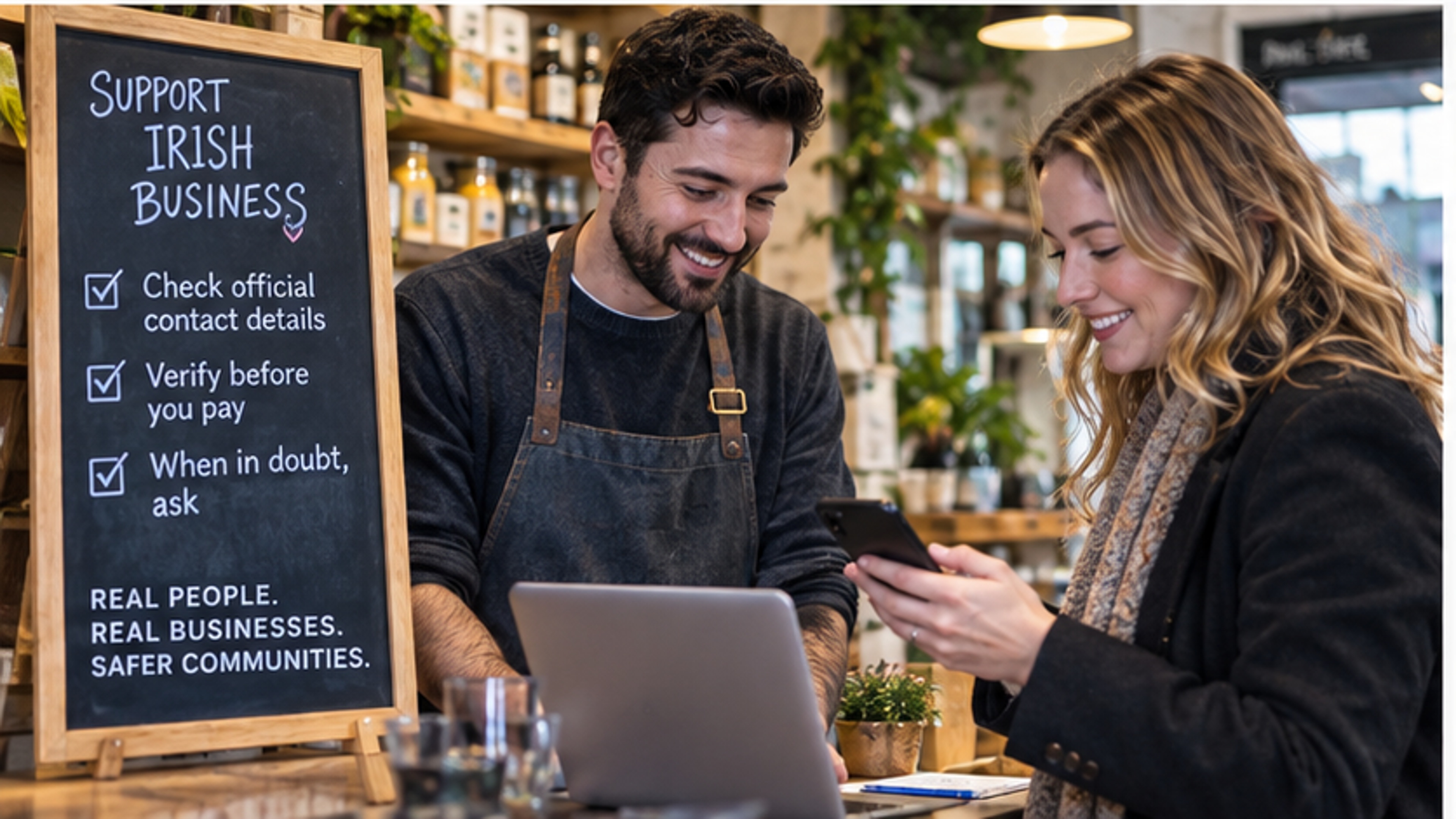
Independent verification is increasingly important before changing payment details or buying from an unfamiliar seller.
Businesses need verification habits too
Consumers are not the only targets.
FraudSMART reports that Irish SMEs lost €18.9 million through email-related scams over a two-year period, with average losses above €22,000 per incident.
Invoice-redirection fraud remains particularly dangerous because it can look like ordinary business communication.
A supplier appears to email saying its bank details have changed.
The email may use the correct company name, invoice language and contact style.
If the change is accepted without an independent check, future legitimate payments can be redirected into an account controlled by the fraudster.
The protection is simple in principle: important changes should be verified using trusted contact details already on file, not the details contained in the request.
Businesses should also use dual approval for higher-value payments, staff fraud training, strong authentication and clear procedures for supplier-detail changes.
The important point is cultural.
A good fraud-prevention culture gives staff permission to slow down, challenge an urgent request and verify it without feeling they are creating a problem.
What “verified” should and should not mean
Verification is becoming more important, but the word can also be misunderstood.
A verified identity or verified business does not mean every future action by that account is safe.
A legitimate business can provide poor service.
A verified account can potentially be compromised.
A genuine seller can breach platform rules.
Verification therefore works best when it answers a narrow question clearly: what has the platform checked?
For example, a platform may have confirmed contact details, identity information, business-registration evidence or a payment-account relationship.
That can reduce some types of impersonation and make accountability stronger.
But it should not be presented as a guarantee of service quality or transaction outcome.
Good trust design is precise.
What this means for safegram
Safegram’s stated direction is built around verified users, creators, businesses and sellers within a social marketplace.
Its product model separates verification from paid subscription status. Paying for a plan does not itself make a person, creator or business verified.
Safegram’s stated model also requires businesses and creators to complete verification before adding products or services to Safegram Exchange.
That approach is relevant to the fraud problem because commerce is increasingly happening inside the same environments where people discover content, follow creators and communicate privately.
The useful objective is not to claim scams can be eliminated.
It is to make impersonation harder, make authenticity easier to assess and create clearer accountability before money changes hands.
Any Safegram feature should still be described according to its actual release state. Controls that are live can be described as live; anything still being tested or implemented should be labelled beta or planned.
Planned transaction-protection concepts such as SafePay should not be described as a live escrow service unless the implemented payments architecture and legal structure support that claim.
The new safety skill is independent verification
The most striking number in the latest FraudSMART research may not be the 85% exposed to suspicious communications.
It may be the 15% who checked whether the company or website mentioned in a suspicious text or email was legitimate.
That gap is where a new digital habit needs to form.
People are getting better at deleting suspicious messages and blocking numbers.
The next step is stronger source verification.
Before entering payment details, independently find the seller.
Before changing supplier bank details, call the known contact.
Before acting on an account warning, open the official app directly.
Before believing a branded promotion, verify it through the organisation’s real website or official account.
Before transferring money because of urgency, stop.
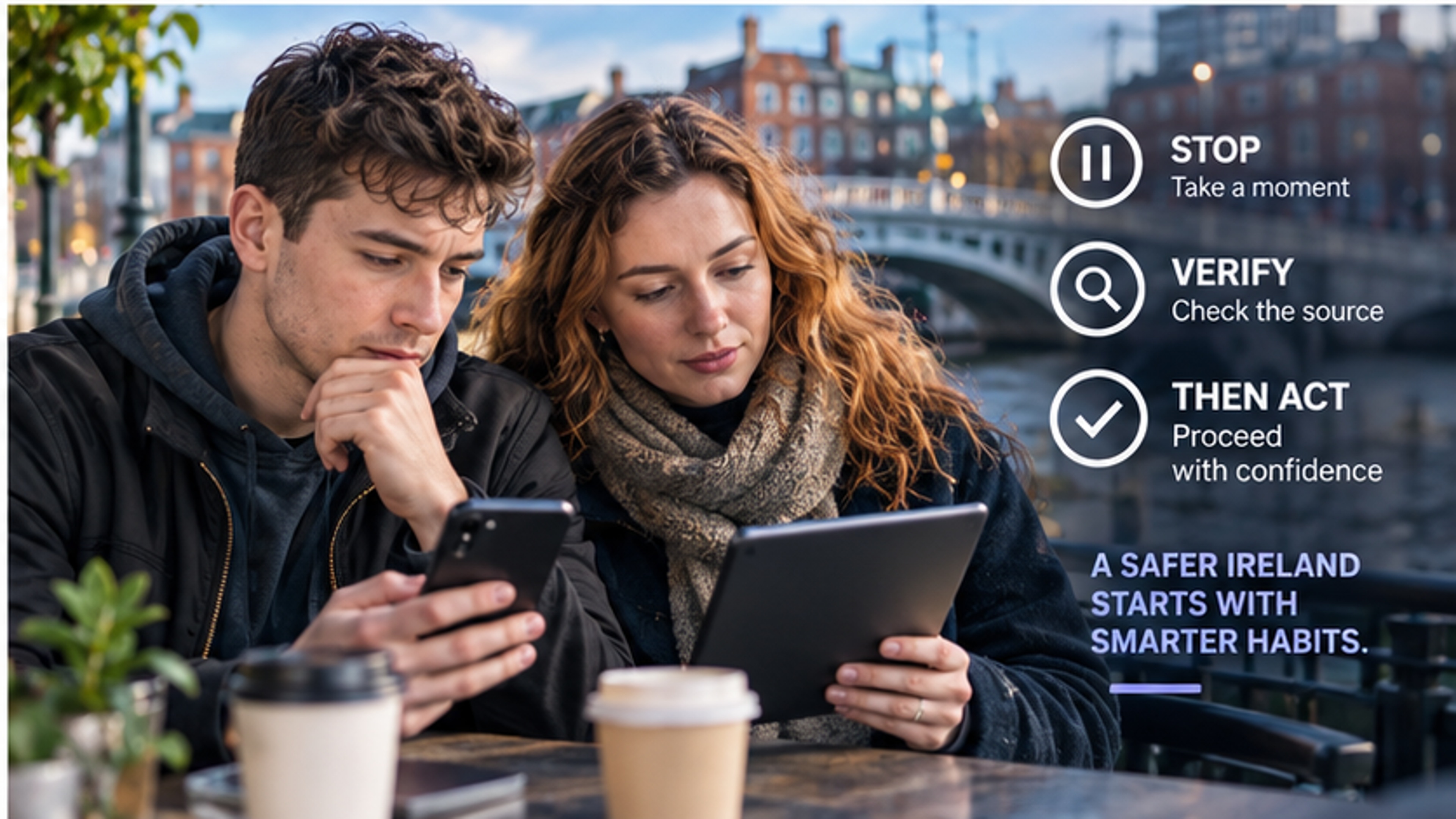
A simple habit can interrupt social engineering: stop, verify the source independently, then act.
STOP. VERIFY. THEN ACT.
This does not require people to become cybersecurity experts.
It requires a small change in behaviour.
Stop — interrupt the urgency.
Verify — independently confirm the person, business, website or request.
Then act — only after the source makes sense.
That habit works whether the message was written badly, written perfectly or generated by AI.
It works whether the scam arrives by text, email, social media, phone call or marketplace message.
And it works without assuming that every unfamiliar interaction is fraudulent.
The future of online trust will not be built by teaching people to fear everything they see.
It will be built by making authenticity easier to prove.
Frequently asked questions
Why are scams becoming harder to spot?
Fraudsters can copy branding, use professional website templates, create realistic social posts and use AI tools to improve language, imagery and personalisation. Visual polish is therefore a weaker signal of legitimacy than it once was.
How common are suspicious scam communications in Ireland?
FraudSMART’s latest research says 85% of Irish adults encounter suspicious calls, texts, emails or online content at least monthly.
How many people independently verify suspicious companies or websites?
FraudSMART found that only 15% of people who received suspicious texts or emails checked whether the company or website mentioned was legitimate.
What should I do before clicking a suspicious link?
Do not rely on the link in the message. Find the organisation independently through its official website, app or a trusted contact number, then verify whether the request is genuine.
Does a verified business mean a purchase is guaranteed safe?
No. Verification can provide stronger evidence about who is behind an account or business and reduce some impersonation risk, but it cannot guarantee product quality, service quality or every future transaction.
How should Irish SMEs protect themselves from invoice-redirection fraud?
Use a defined verification procedure for changes to supplier bank details, verify requests through contact details already on file, consider dual approval for significant payments and train staff to pause and challenge unusual requests.
How does Safegram approach verification?
Safegram’s stated model separates verification from subscriptions and requires businesses and creators to be verified before adding products or services to Exchange. Individual features should be described as live, beta or planned according to their actual production status.
Source references
Banking & Payments Federation Ireland / FraudSMART — “Majority of consumers receiving suspicious calls, texts or emails at least once a month.” Used for consumer exposure, rising suspicious communications, one-in-ten click behaviour, AI-generated perception and the 15% legitimacy-checking figure.
Competition and Consumer Protection Commission — warning on online scams impersonating Dublin Zoo. Used for the current example of fake branded social posts, fraudulent links and independent verification guidance.
Banking & Payments Federation Ireland / FraudSMART — “Almost €19 million lost by SMEs to email-related scams over the past two years.” Used for SME losses, invoice-redirection risk, average losses and practical business controls.
More from Safegram
Try Safegram
Privacy-first social and a verified marketplace, built in Dublin.