
Irish Businesses Deserve Fairer Online Platforms
New evidence highlights the need for fairer, more transparent online platforms for Irish businesses, as many current platforms show compliance issues.
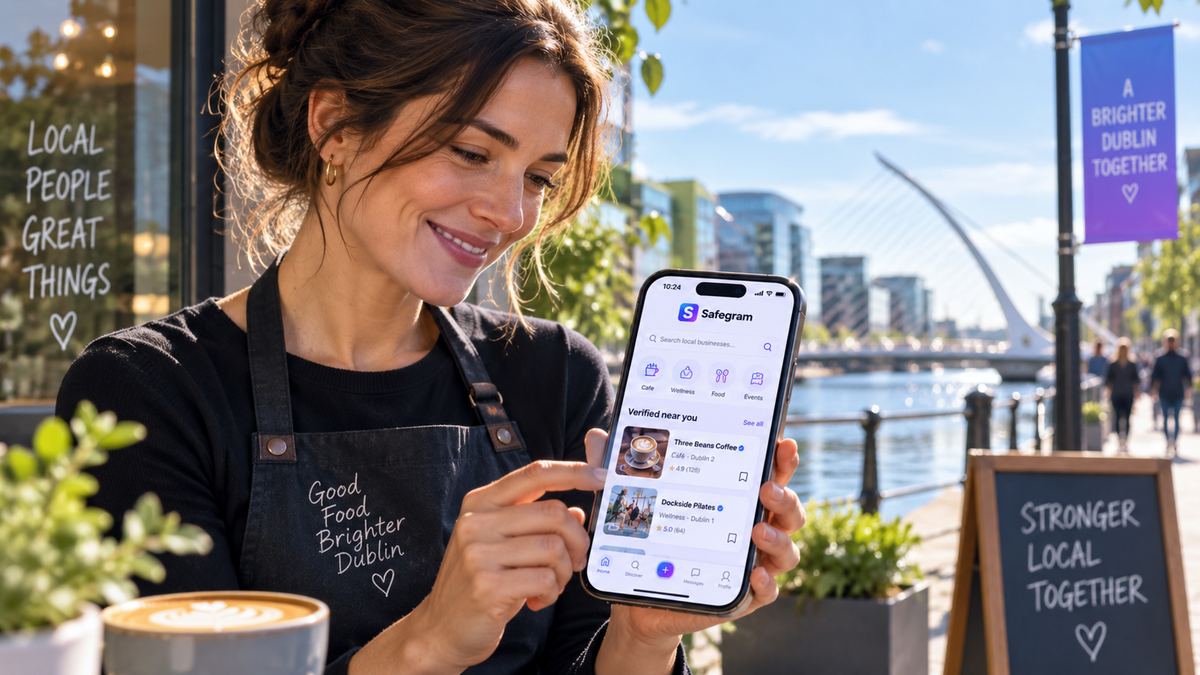
Irish businesses need digital platforms, but they also need platforms they can trust. Fresh Irish evidence shows e-commerce is now part of everyday business while regulators are finding serious transparency problems across online platforms. The next generation of platforms should be designed around clearer rules, verified participants and relationships that work for businesses as well as users.
Key takeaways
- 37.5% of Irish enterprises recorded e-commerce sales in 2025, according to the Central Statistics Office; among small enterprises, the figure was 34.9%.
- In May 2026, the CCPC said approximately 80% of 17 online platforms it swept had some element of non-compliance with Platform-to-Business transparency or resolution requirements at the time of the sweep.
- The EU Platform-to-Business Regulation is intended to make the relationship between platforms and businesses fairer, more transparent and more predictable.
- Safegram is live on iPhone and Android and currently combines social discovery, Plans, Circles and Safegram Exchange.
- Safegram requires businesses, creators and sellers to complete Didit-powered verification before they can list, sell or offer services. Verification is a trust signal, not a guarantee of future behaviour.
Irish businesses are increasingly digital. The platform relationship needs to catch up.
For a café in Dublin, a salon in Dundrum, a creator in Cork or a trades business serving a local area, being discoverable online is no longer a side project. Search, social media, marketplaces and booking platforms can determine who gets seen, who receives enquiries and who wins the next customer.
The latest CSO figures underline how important digital commerce has become. In 2025, 37.5% of enterprises in Ireland had e-commerce sales. Among small enterprises employing 10–49 people, 34.9% recorded internet sales. In services, 41.7% of enterprises conducted sales by internet.
That is a significant share of the economy relying, at least in part, on digital infrastructure to turn attention into revenue.
But dependence on platforms creates another question: are those platforms treating businesses fairly?
The ccpc’s 2026 platform sweep raised a warning
On 1 May 2026, Ireland’s Competition and Consumer Protection Commission published the results of a sweep of 17 online platforms operating in Ireland. The work followed what the CCPC described as a notable increase in complaints during 2025.
The regulator focused on requirements under the EU Platform-to-Business Regulation, including whether terms and conditions were clear, accessible and not misleading, whether businesses received appropriate notice of changes, and whether platforms provided complaint-handling systems and information about independent mediation.
The finding was striking: the CCPC said approximately 80% of the platforms swept had some element of non-compliance with those requirements at the time of the late-2025 sweep.
That does not mean 80% of platforms were fraudulent or unsafe. It means the regulator identified potential shortcomings in the transparency and resolution protections that business users are entitled to expect.
For an independent business, those protections matter. A change to ranking, access, terms, fees or account status can have an immediate commercial effect. When a platform becomes an important route to customers, predictability is not a luxury.
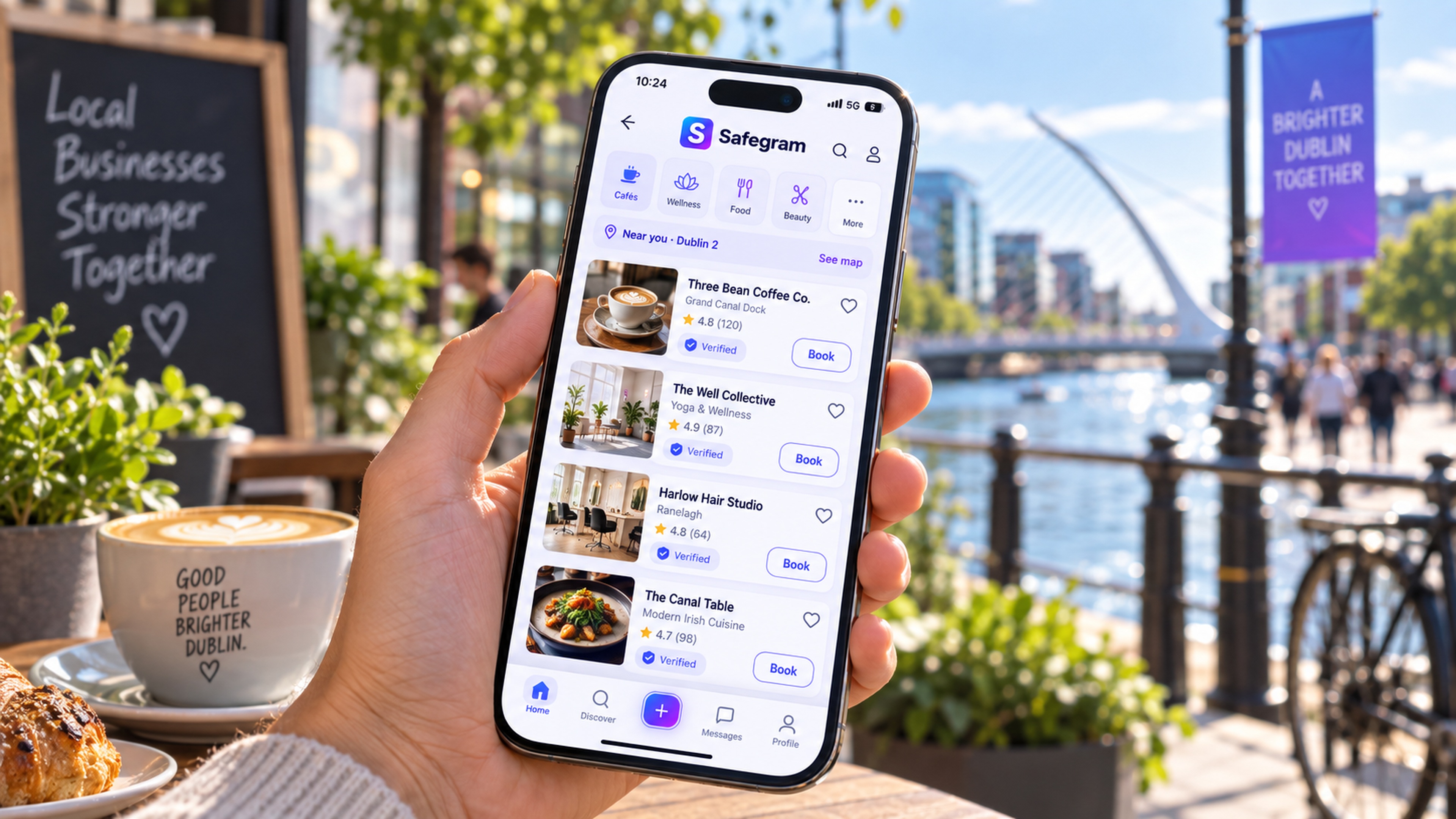
Better platforms should help genuine local businesses build reputation and reach real customers.
Fair platform design is about power as well as technology
The Platform-to-Business Regulation exists partly because the relationship between a platform and a small business can be structurally unequal.
A local business may depend heavily on one discovery channel. The platform, by contrast, may have millions of users and thousands of merchants. That imbalance makes clarity especially important.
Businesses should be able to understand the rules they are operating under. They should know how to complain. They should have reasonable visibility into decisions that materially affect their presence. And changes should not arrive as a surprise after a business has already invested time, reputation and money into building an audience.
This is not anti-platform. Good platforms can create enormous value for small businesses. It is an argument for better platforms.
Trust matters on both sides of a marketplace
Fairness for businesses is only half of the equation. Customers also need confidence in who they are dealing with.
The CCPC has repeatedly warned Irish consumers about fake online shops, cloned brands, misleading social-media advertisements and pressure-selling tactics. In February 2026, for example, it warned about a suspected fraudulent website impersonating EuroGiant and specifically advised consumers to be cautious about social-media ads and links.
A healthier marketplace therefore needs two forms of trust at the same time: businesses need confidence in the platform, and customers need stronger signals about the businesses and sellers they encounter.
That is one reason identity and business verification can matter. Verification cannot promise that someone will always behave well, but it raises the cost of anonymity and gives customers a clearer signal about who is behind a commercial account.
How safegram is approaching the problem
Safegram is built in Dublin and is live on iPhone and Android. The current app combines social discovery with Plans, Circles and Safegram Exchange.
For commerce, Safegram’s published verification policy is straightforward: every business, creator and seller must complete verification before their first listing can go live. Individual sellers and creators use identity checks, while businesses can undergo KYB and beneficial-owner checks through Safegram’s verification partner Didit.
Safegram states that it does not store users’ ID documents or biometric data itself; Didit performs the verification and Safegram receives the verification outcome used for the account’s trust status.
That distinction matters. Verification should improve accountability without unnecessarily turning a social platform into a repository of sensitive identity documents.
Safegram also explicitly warns that verification is not a guarantee. A verified badge confirms that a check was passed; it cannot predict future conduct. Reviews, reporting, transaction history, dispute handling and sensible buyer behaviour still matter.
For businesses, Safegram’s broader direction is to bring discovery, community and commerce closer together: a business can have a verified presence, be discovered locally, communicate with customers and participate in the Exchange rather than relying entirely on anonymous inbox selling.

Local discovery works better when customers can see meaningful trust signals before they engage.
Why local discovery deserves a rethink
The internet made global discovery easy. Local discovery can still feel strangely fragmented.
A person looking for a nearby class, café, beauty service, tradesperson, creator or event may jump between search engines, social apps, directories, booking products and private messages. Each platform owns a different part of the relationship.
A more useful model can connect the pieces while keeping the user in control: real local businesses, clearer trust signals, understandable discovery and a direct route from finding something useful to contacting or booking it.
For Irish businesses, that can mean competing on service, reputation and relevance rather than simply on who can spend the most to win attention.

Digital platforms can strengthen local commerce when transparency, verification and community work together.
What better online platforms should aim for
The lesson from the current Irish regulatory environment is not that businesses should abandon digital platforms. The opposite is true: digital channels are too important to abandon.
The lesson is that platform quality matters.
A strong business platform should make its rules understandable, provide meaningful complaint routes, communicate material changes clearly, distinguish verified commercial participants, give customers useful trust signals and avoid creating unnecessary dependence on opaque systems.
No single feature solves the problem. Verification alone is insufficient. Transparency alone is insufficient. Reviews alone are insufficient.
Trust is a system.
And for the next generation of Irish digital platforms, building that system well may become one of the most important competitive advantages of all.
Frequently asked questions
Why are online platforms important to Irish businesses?
The CSO reported that 37.5% of Irish enterprises had e-commerce sales in 2025, including 34.9% of small enterprises. Platforms can provide discovery, customer acquisition, bookings and online sales.
What did the CCPC find about online platforms in 2026?
In a sweep published on 1 May 2026, the CCPC said approximately 80% of 17 platforms examined had some element of non-compliance with the Platform-to-Business requirements reviewed at the time of the sweep.
What is the EU Platform-to-Business Regulation?
Regulation (EU) 2019/1150 aims to create a fairer, more transparent and predictable environment for businesses using online intermediation services and search engines to reach consumers.
Does Safegram verify businesses and sellers?
Yes. Safegram’s current published policy requires every business, creator and seller to pass Didit-powered verification before listing, selling or offering services. Verification is a trust signal, not a guarantee of behaviour.
Is Safegram live now?
Yes. Safegram states that it is live on iPhone and Android. Its current website lists social posts and videos, Plans, Circles, feed control, encrypted chat and Safegram Exchange among features available in the current app.
Sources
- Central Statistics Office, Information Society Statistics — Enterprises 2025, published 6 February 2026
- Competition and Consumer Protection Commission, “CCPC conducts sweep of online platforms to identify potential breaches of the Platform to Business Regulation”, published 1 May 2026
- CCPC, fake online shops guidance
- CCPC warning regarding suspected EuroGiant impersonation scam, 13 February 2026
- Safegram, current product overview
- Safegram, verification partner and policy
More from Safegram
Try Safegram
Privacy-first social and a verified marketplace, built in Dublin.