
Ireland’s Creator Economy Is Growing Up
Ireland's creator economy is professionalizing, with increasing regulation and a focus on trust, offering new opportunities for creators and businesses alike.

Ireland’s creator economy is growing up — trust may be its next competitive advantage
Written by Safegram Editorial Team
Published: 11 September 2026
Ireland’s creator economy is moving from side-hustle culture toward a more professional market connecting creators, brands, local businesses and communities. A sold-out Dublin industry summit this week put creator marketing firmly on the agenda — while Irish regulators are simultaneously demanding clearer advertising disclosure. The opportunity is growing, but so is the responsibility.
Key takeaways
- IAB Ireland held its first Creator Marketing Summit in Dublin on 9 September 2026 as part of Global Creator Week, bringing creators, brands, agencies, publishers and platforms together.
- Irish consumer-protection rules require commercial creator content to be clearly identifiable; receiving money is not the only trigger — commissions, gifts, discounts, trips and other benefits can count.
- The CCPC and Advertising Standards Authority strengthened cooperation in 2025 through a data-sharing agreement, and the CCPC said it had already issued its first compliance notices against prominent influencers.
- For creators, long-term value increasingly depends on trust, audience relationships and diversified ways to earn — not follower count alone.
- Safegram’s current direction combines verified identities, social discovery, Circles and Safegram Exchange, creating potential routes for creators and businesses to be discovered and transact in the same environment.
A creator economy that is starting to look like an industry
On Wednesday, 9 September, creators, brands, agencies, publishers and technology companies gathered at 1WML in Dublin for IAB Ireland’s first Creator Marketing Summit.
The timing matters. IAB Ireland described creator marketing as increasingly central to how audiences discover, trust and engage with brands. Its programme focused not only on campaign ideas but on measurement, regulation, platform innovation and long-term creator partnerships.
That is a useful marker of where the market is heading. The creator economy is no longer only about a viral post or a large follower count. For many people it is becoming work: filming, editing, community management, brand partnerships, affiliate income, digital products, services and direct sales.
For businesses, creators can provide something conventional advertising often struggles to reproduce: a trusted person explaining a product in the language of a particular community.
But trust is precisely why the rules matter.
When a recommendation becomes advertising
Ireland’s CCPC and Advertising Standards Authority guidance is deliberately broad. It applies to influencers, content creators, streamers, bloggers, celebrities, online personalities and others who promote or recommend products or services for a benefit.
That benefit does not have to be a conventional fee. It can include commission, sales proceeds, discounts, shares, free or loaned products, trips, experiences, event invitations or the prospect of future work.
The central principle is straightforward: audiences should be able to recognise commercial content immediately.
The Irish guidance recommends clear labels such as #Ad, rather than vague language that leaves the relationship open to interpretation. Affiliate marketing and promotion of a creator’s own commercial brand also require transparency in the circumstances covered by the guidance.
Disclosure is only one part of the obligation. A properly labelled advertisement can still be misleading if its underlying claims are false or deceptive.
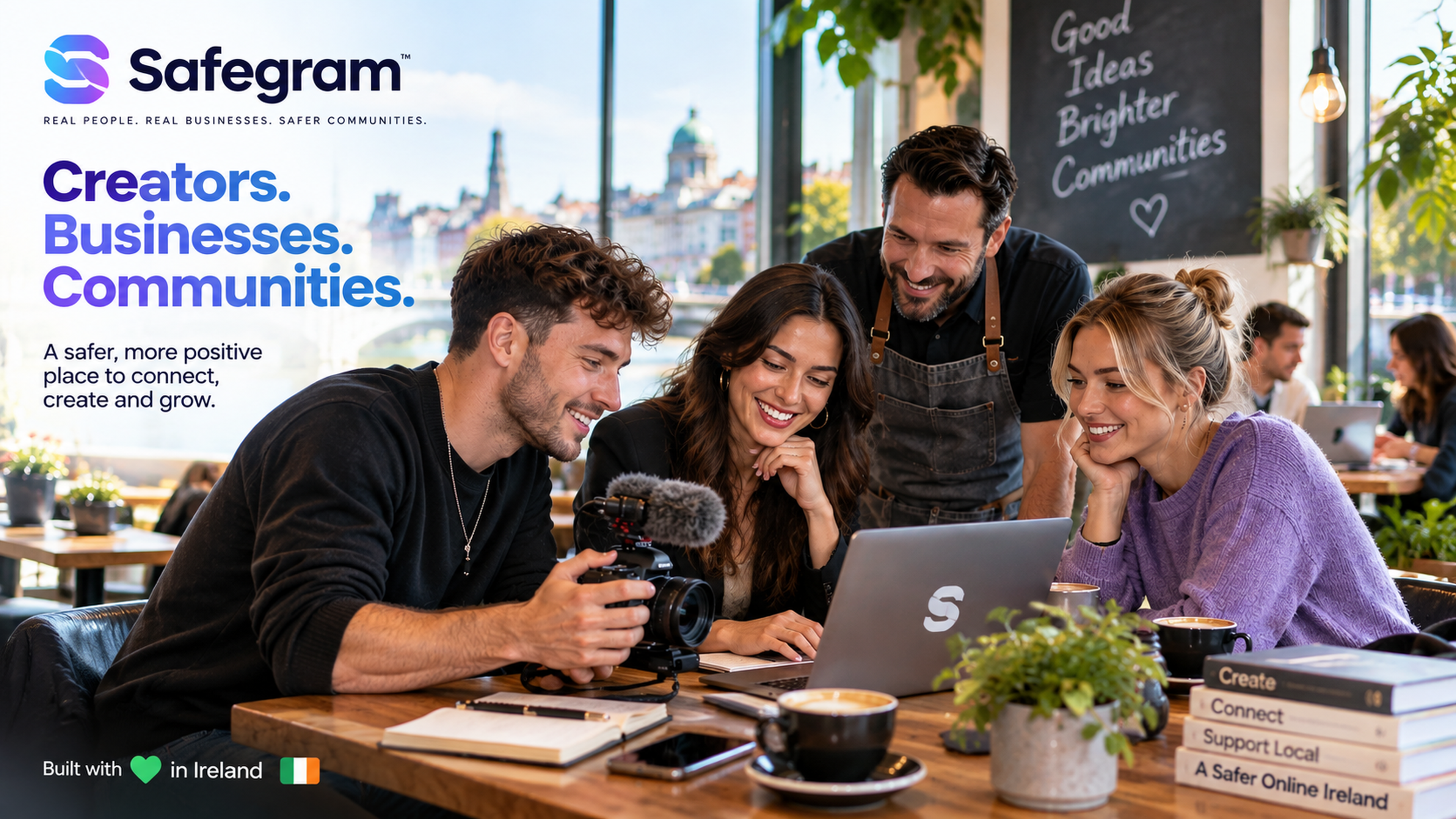
Local creator partnerships work best when audience relevance, transparent commercial relationships and useful content come together.
Enforcement is becoming more visible
This is not simply an etiquette debate. In August 2025, the CCPC and Advertising Standards Authority announced a data-sharing agreement designed to strengthen oversight of influencer and social-media advertising. The CCPC said the arrangement would give it greater access to reports about potential breaches.
At the time, the CCPC also said it had issued its first compliance notices against two prominent influencers that year.
In February 2026, RTÉ reported that the CCPC had served compliance notices on Conor McGregor and Suzanne Jackson over Instagram posts where the commercial nature of promoted products had not been adequately disclosed. A compliance notice is an enforcement action requiring a breach to be remedied; it is not the same thing as a criminal conviction.
The wider direction is clear: as creator marketing becomes economically significant, regulators expect it to operate with the transparency expected of other forms of advertising.
Why trust is commercial infrastructure
Creators trade partly in attention, but their more valuable asset is credibility.
A follower may tolerate a weak video. They are less likely to tolerate feeling deceived.
That changes how creators should think about growth. The strongest long-term model is not necessarily the account that maximises sponsored posts. It may be the creator who can maintain a recognisable point of view, disclose commercial relationships clearly and build several revenue streams without making the audience feel like inventory.
The European Commission’s Influencer Legal Hub makes a similar structural point from a legal perspective: influencers who regularly advertise or sell products can be treated as traders under European consumer law. Becoming commercially successful online can therefore bring business responsibilities as well as opportunity.
For creators, professionalism is becoming part of the product.
The local opportunity: creators and small businesses need each other
Ireland’s creator economy is especially interesting at local level.
A Dublin café may not need a celebrity with millions of followers. It may need a credible food creator whose audience actually lives nearby. A bridal boutique may benefit more from a trusted Irish fashion creator than from broad, untargeted reach. A fitness instructor, photographer, trades business, beauty professional or event organiser can work with creators who understand a specific community.
That is where creator marketing starts to overlap with local discovery and social commerce.
The relationship can move beyond “brand pays for post”. A creator can introduce a service, host a community, sell a digital product, offer UGC production, promote an event, collaborate with a local business or build a niche audience around a shared interest.
The opportunity is not just influencer marketing. It is creator-led commerce and community.
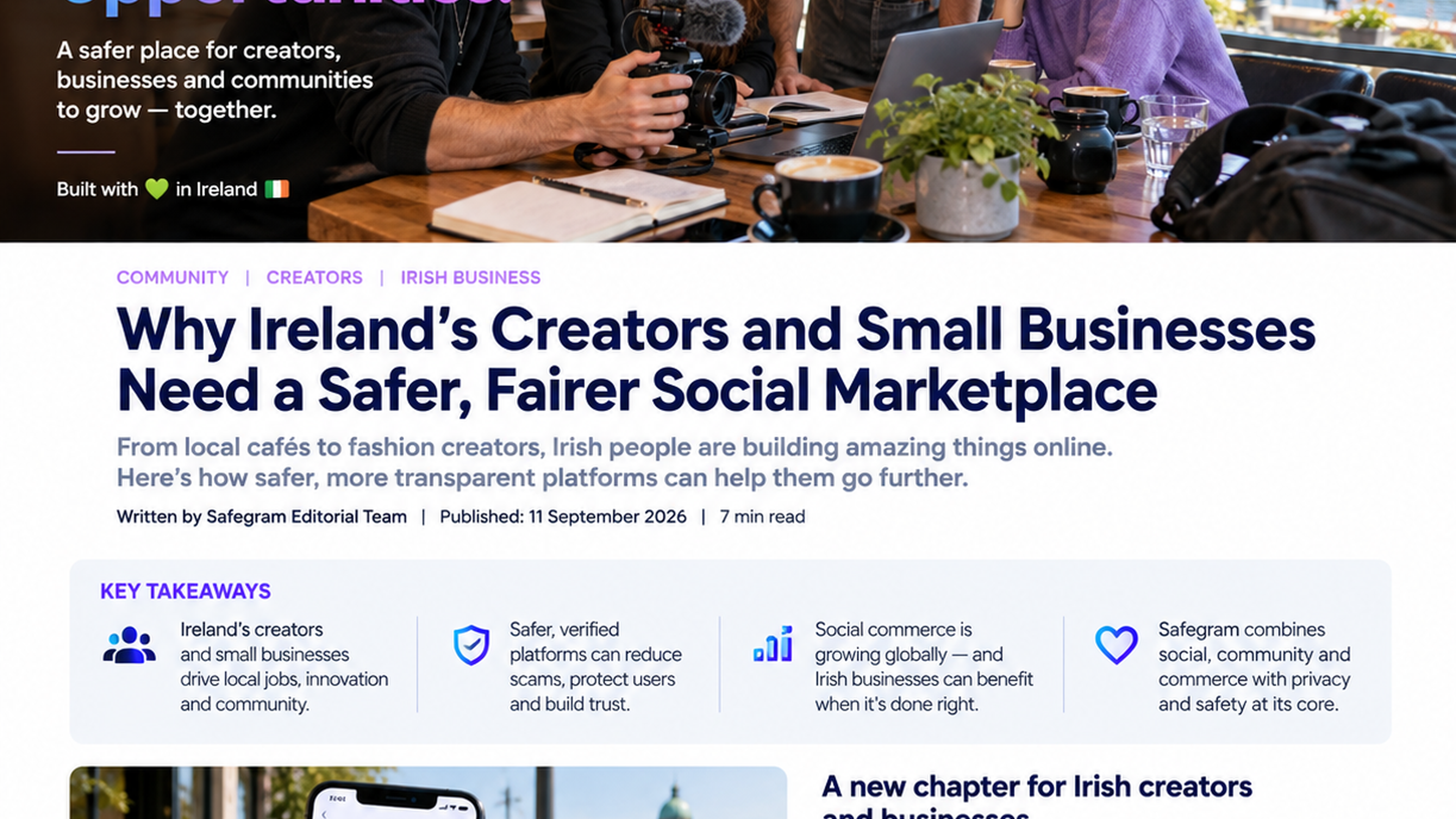
As creators become businesses, trust and clear commercial disclosure become part of the infrastructure of sustainable growth.
Where safegram fits — and where it should not overclaim
Safegram is a Dublin-built social marketplace live on iPhone and Android. Its current product combines social content and discovery with verified profiles, Circles and Safegram Exchange.
For creators, that creates a useful product direction: identity and audience can sit closer to community and commerce. A creator can build a public presence, participate in interest-based Circles and use the Exchange for eligible products or services, subject to Safegram’s verification and platform rules.
Safegram requires creators, businesses and sellers to complete verification before listing, selling or offering services. Verification is a trust signal — it confirms that an identity or business check has been completed. It does not guarantee honesty, quality or future behaviour, and Safegram should never present it as such.
Safegram’s creator proposition also needs to remain broader than “become an influencer”. Creators include photographers, videographers, UGC producers, educators, coaches, designers, performers, reviewers, specialists and people building communities around a genuine interest.
That matters for discoverability too. People do not always search for “creator economy platform”. They search for practical outcomes: how to find UGC creators in Ireland, how creators make money, how small businesses work with influencers, where to promote local services, how to sell digital products, how to build a community online, and how to find verified businesses or creators.
Useful editorial content should answer those questions directly rather than stuffing them unnaturally into copy.
Circles can make the audience more than a follower count
One weakness of conventional social media is that an audience can become an abstract number. A creator may have thousands of followers but little sense of who wants deeper participation around a particular interest.
Safegram’s Circles feature is intended to support interest-based communities — places where people can find others around shared interests and participation rather than only passively consuming a feed.
For a creator, that can mean thinking beyond broadcasting. A running creator might build a local running Circle. A photographer might gather people interested in Dublin street photography. A wedding creator could connect brides, suppliers and ideas around a specific community.
Those are examples of potential use, not claims that every Circle will automatically become successful or commercially valuable.
THE NEXT PHASE WILL REWARD CREATORS WHO BUILD LIKE BUSINESSES — WITHOUT LOSING THEIR HUMAN VOICE
The creator economy has always depended on personality. Professionalisation should not erase that.
The better outcome is the opposite: clearer commercial rules can protect the authenticity that made creator media valuable in the first place. Audiences know when they are seeing an ad. Creators can choose partnerships that fit their identity. Businesses can work with people whose communities are genuinely relevant. Platforms can make trust signals and commercial relationships easier to understand.
The most durable creators will probably look less like rented advertising space and more like small media companies with a human face: a recognisable voice, a community, clear commercial standards and multiple ways to create value.
For Ireland, this is an opportunity. The country has a dense network of local businesses, creative talent and communities. Connecting those groups more efficiently could create value well beyond traditional influencer campaigns.
The creator economy is growing up. The platforms built for its next stage should grow up with it.
Frequently asked questions
What is the creator economy in Ireland?
The creator economy includes people who build audiences or communities through digital content and earn through activities such as brand partnerships, UGC production, affiliate marketing, subscriptions, products, services or other commercial work. Ireland’s first IAB Creator Marketing Summit in September 2026 reflects the sector’s growing professionalisation.
Do influencers in Ireland have to label advertisements?
Yes. Irish consumer-protection guidance says commercial social-media content must be clearly identifiable. The CCPC and Advertising Standards Authority recommend clear disclosure such as #Ad in relevant commercial posts. The exact obligation depends on the circumstances, and creators should consult current official guidance.
Do gifted products count as commercial content?
They can. CCPC/ASA guidance explains that benefits can include free products, services, trips, experiences and other advantages. The correct label depends on the relationship and circumstances.
Can Irish small businesses work with local creators?
Yes. Local creator partnerships can be particularly relevant where a creator’s audience overlaps with the business’s actual customer base. Businesses should use transparent agreements and ensure commercial content is properly disclosed.
What can creators do on Safegram?
Safegram’s current product supports social presence and discovery, verified profiles, Circles and Safegram Exchange. Eligible creators can use these tools to build presence, participate in communities and list relevant products or services after completing required verification. Availability and functionality can change as the platform develops.
Is a verified Safegram creator guaranteed to be trustworthy?
No. Verification confirms completion of an identity or business check; it cannot guarantee future conduct, quality or the accuracy of every claim. Users should still apply normal judgement when buying, booking or collaborating.
What are Safegram Circles?
Circles are Safegram’s interest-based community feature designed to help people find and participate around shared interests. They can be relevant to creators, local communities, students, clubs, businesses and other groups depending on how they are used.
Sources
- IAB Ireland, Creator Marketing Summit, 9 September 2026 —
- Competition and Consumer Protection Commission, Influencer Advertising and Marketing guidance —
- CCPC, data-sharing agreement with Advertising Standards Authority, 25 August 2025 —
- European Commission, Influencer Legal Hub —
- RTÉ News, compliance notices for influencer social posts, 12 February 2026 —
- Safegram, current product overview —
More from Safegram
Try Safegram
Privacy-first social and a verified marketplace, built in Dublin.