
Age Checks Are Becoming Infrastructure: What Ireland’s First Online Safety Investigation Means for Families
Ireland's first online safety investigation into X highlights the growing importance of effective, privacy-preserving age assurance and parental controls in protecting children online.
Age checks are moving from a niche compliance feature to part of Europe’s digital safety infrastructure. Ireland’s first formal investigation under its Online Safety Code puts a practical question at the centre: can platforms protect children without turning every user into an identity file?
Key takeaways
- On 8 September 2026, Coimisiún na Meán opened Ireland’s first formal investigation under the Online Safety Code, examining X’s implementation of age assurance and parental controls.
- The Code requires effective age assurance where children must be prevented from normally accessing pornography or extreme/gross and gratuitous violence.
- Where a platform permits adult-only content while allowing under-16s to use the service, parental controls must meet requirements including visibility and accessibility.
- The European Commission is pushing a privacy-preserving EU age-verification approach designed to prove an age threshold without disclosing exact age or identity.
- Good age assurance is not simply “upload your ID”. The design challenge is to prove what is necessary while collecting as little personal information as possible.
Ireland has moved from rules to enforcement
For years, online child safety debates often ended with the same problem: everyone agreed that children should not be exposed to certain harmful material, but the practical responsibility for preventing access remained blurred.
That is changing. On 8 September 2026, Coimisiún na Meán announced the first formal investigation under Ireland’s Online Safety Code. The investigation concerns X and potential ineffective implementation of age-assurance mechanisms. The regulator also raised concerns about parental-control systems, including whether they are effective, easy to locate and properly brought to users’ attention at sign-up.
The investigation is not a finding of wrongdoing. It is an enforcement process examining compliance. That distinction matters. But the significance is broader: Ireland’s Online Safety Code has entered an enforcement phase.
WHAT DOES “AGE ASSURANCE” ACTUALLY MEAN?
Age assurance is an umbrella term for methods used to establish, estimate or verify whether a user is above or below a relevant age threshold. The important point is that it does not automatically mean showing a passport to every website.
The European Commission’s age-verification blueprint is explicitly designed around data minimisation. Its stated goal is to let a person prove that they meet an age threshold without revealing their exact age, identity or other personal details.
That approach points toward a more useful principle: a service should learn only what it genuinely needs to know. If the question is “is this user over 18?”, the ideal system should not need a full biography.
Why self-declared birthdays are under pressure
The familiar birthday box — type a date and continue — is increasingly difficult to defend for higher-risk services. In April 2026, the European Commission preliminarily found Meta in breach of the Digital Services Act in relation to risks of under-13s accessing Instagram and Facebook, highlighting that a child could enter a false birth date without effective controls checking it.
That does not mean every digital service needs the same age-check method. Risk matters. A news site, a marketplace, a messaging product and a service hosting adult content do not create identical risks. Proportionate design is essential.
Parental controls have to be usable, not merely present
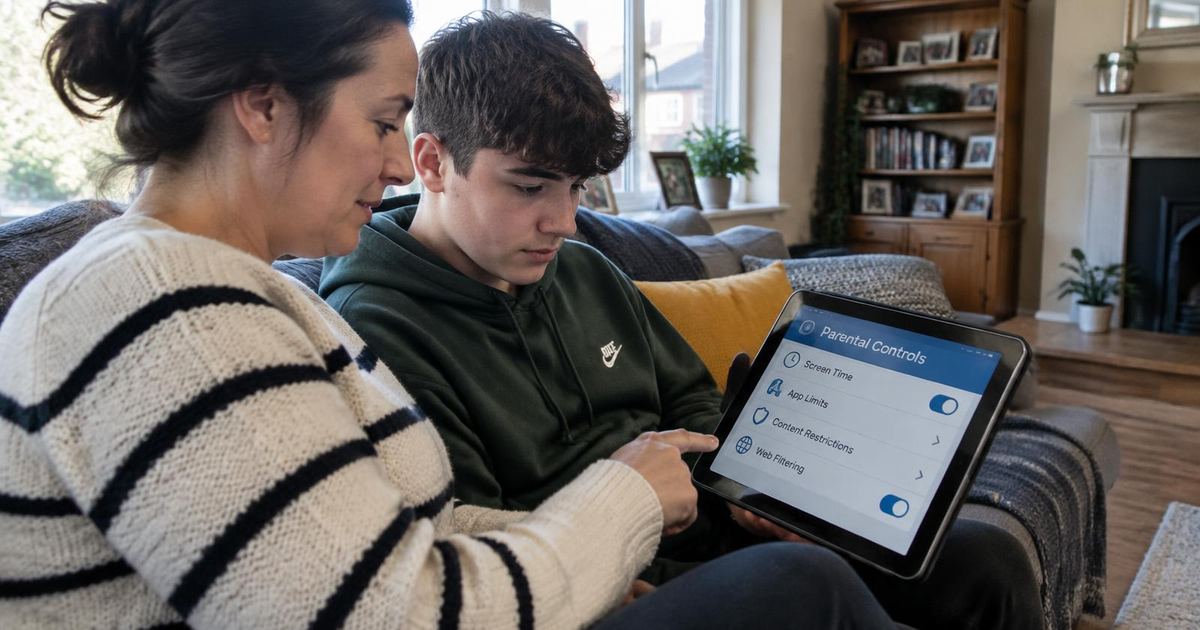
A safety control hidden several menus deep may technically exist while failing families in practice. Coimisiún na Meán’s September investigation specifically highlights concerns about whether parental controls are effective, have minimum requirements, are easy to locate and are surfaced to new users.
This is an important shift from feature-counting to outcome-focused design. The question is no longer just “does the platform have parental controls?” It is “can a parent realistically find, understand and use them when it matters?”
The privacy trade-off is real — but it is not unsolvable
Age assurance creates a legitimate tension. Stronger checks can protect children, but poorly designed checks can create new privacy risks by collecting unnecessary identity documents or centralising sensitive data.
The emerging European direction is therefore significant: prove the attribute, not the whole identity. Privacy-preserving credentials, threshold proofs and interoperable wallet-style systems could make it possible to separate “I am old enough” from “here is everything about me”.
This principle should influence more than adult-content controls. It can inform marketplaces, teen experiences, financial services, dating, gaming and any environment where age materially changes the risk profile.
What families can do now
Regulation matters, but families still need practical habits today. Parents and guardians should review the age settings and parental controls on the services children actually use, not just the devices they own. Check whether sensitive-content controls are enabled, whether new accounts can be created without supervision, and whether privacy settings change after app updates.
For teenagers, safety conversations work better when they explain why a boundary exists. A young person who understands how recommendation systems, adult contact, scams and harmful content work is better equipped to recognise risk than someone who only knows that a setting is forbidden.
Where safegram fits — live, developing and planned
Safegram’s broader product direction is based on reducing anonymous trust gaps while treating younger users as a distinct safety group rather than simply smaller adults.
LIVE: Safegram is available on iOS and Android. Verification for users, creators and businesses, social profiles and Safegram Exchange form part of the live product. Businesses and creators must be verified before adding products or services to Exchange.
DEVELOPING / BETA: Safegram continues to develop and test its marketplace, booking, discovery, messaging and AI-assisted experiences. Individual flows can change as testing and rollout continue.
PLANNED / EXPANDING: Safegram’s roadmap includes stronger teen/family protections, age-aware discovery and contact boundaries, family notifications and additional automated safety signals. These should not be interpreted as universally deployed functionality until Safegram marks them live.
The important design principle is separation: a teen-safety system should minimise unnecessary exposure and contact while respecting privacy. Family safety should not automatically mean parents reading private conversations. Likewise, age assurance should establish the minimum fact required for a safety decision rather than normalising excessive identity collection.
The bigger shift: safety is becoming product infrastructure
The internet’s first era often treated safety as a moderation department added after growth. Europe’s current direction is different. Age assurance, parental controls, recommender-system risk, reporting, transparency and data protection are increasingly becoming product-design requirements.
That will create difficult debates about proportionality, privacy, effectiveness and unintended consequences. It should. Systems that affect millions of people deserve scrutiny.
But one principle is becoming harder to dispute: if a platform knows that a predictable design choice exposes children to serious risk, “the user clicked agree” is no longer an adequate safety strategy.
Frequently asked questions
What is Ireland’s Online Safety Code?
It is part of Ireland’s Online Safety Framework and places safety obligations on designated video-sharing platform services. Requirements include measures concerning harmful and illegal content, age assurance in relevant circumstances and parental controls.
Has X been found to have broken the Code?
No. Coimisiún na Meán announced a formal investigation on 8 September 2026. An investigation examines potential non-compliance; it is not itself a final finding.
Does age assurance mean uploading a passport?
Not necessarily. Age assurance covers multiple methods. The European Commission’s blueprint aims to allow users to prove they meet an age threshold without revealing exact age, identity or other personal details.
Why isn’t entering a birthday enough?
For higher-risk services, self-declaration can be easy to circumvent. European regulators are increasingly asking whether platforms use effective measures proportionate to the risks faced by children.
What are parental controls supposed to do?
They can help parents or guardians manage what types of content or experiences children can access. Effective controls also need to be discoverable, understandable and practical to use.
Is the EU age-verification app already mandatory everywhere?
No. The European Commission has developed a blueprint and urged Member States to accelerate rollout, with the aim of privacy-preserving proof of age. National implementation and service-specific obligations still matter.
Are Safegram’s teen and family protections fully live?
No. Safegram has live verification and core platform functionality, while additional teen/family protections and age-aware safety mechanisms remain developing or planned. They should be described according to their actual rollout status.
Can age verification make a platform completely safe?
No. It can reduce certain risks, but effective safety also depends on product design, reporting, moderation, parental tools, privacy safeguards, enforcement and user education.
Source references
-
Coimisiún na Meán, “Investigation commenced into X under Online Safety Code”, 8 September 2026.
-
Coimisiún na Meán, “Response to media queries about implementation of Online Safety Code”, 24 July 2025.
-
European Commission, “Commission urges Member States to rollout EU age verification app”, 29 April 2026.
-
European Commission, “Commission preliminarily finds Meta in breach of Digital Services Act for failing to prevent minors under 13 from using Instagram and Facebook”, 29 April 2026.
-
Coimisiún na Meán, Online Safety Framework guidance on illegal content and protections for children, accessed 1 October 2026.
More from Safegram
Try Safegram
Privacy-first social and a verified marketplace, built in Dublin.