
Ireland's Scam Verification Gap
Learn how to verify suspicious messages, prevent invoice redirection fraud and check sellers before paying in Ireland.
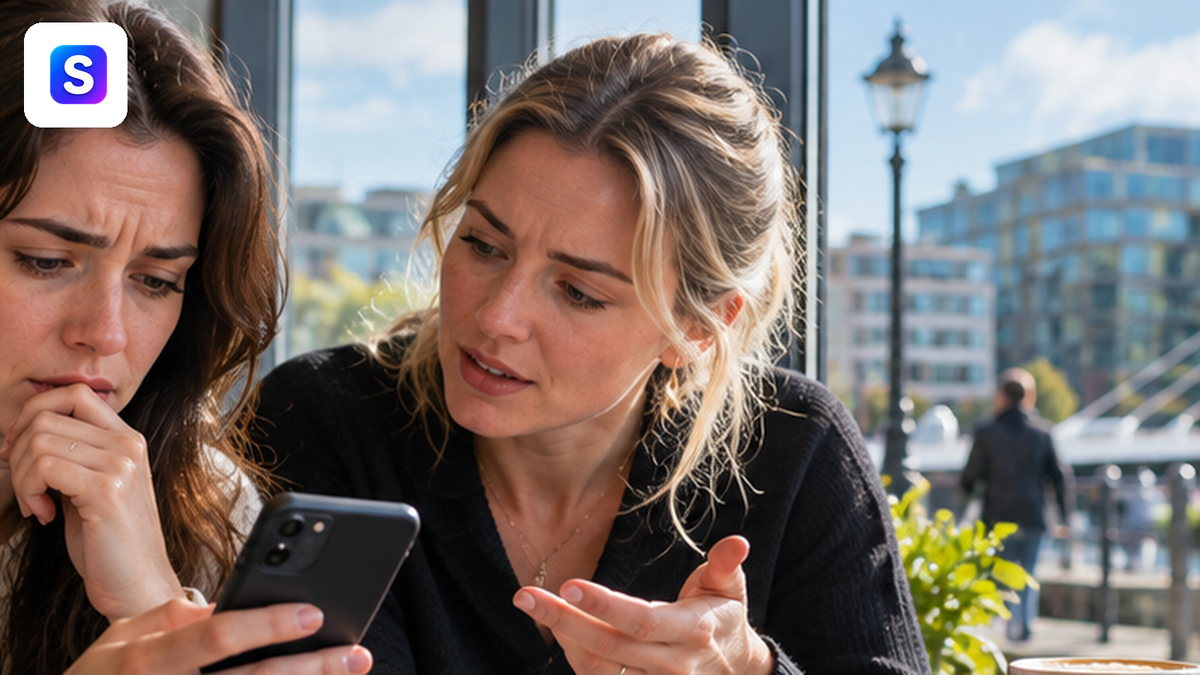
A new Irish survey exposes a gap between spotting suspicious contact and checking who is behind it. For families and small businesses, the next defence is a better verification habit—not a sharper instinct.
When a message looks credible, an independent check matters more than appearances. Editorial photo illustration; official Safegram logo.
The essential facts
A September 2026 FraudSMART survey found that 85% of Irish adults encounter suspicious calls, messages, emails or online content at least monthly. Yet only 15% of people who received suspicious texts or emails said they checked whether the company or website mentioned was legitimate. That gap—not simply the volume of scams—is the central warning for consumers and businesses. The survey was conducted in July 2026 by Core Research among a nationally representative sample of 1,000 adults for Banking & Payments Federation Ireland (BPFI). [1]
The same research found that 51% perceived more suspicious communications than a year earlier, while one in ten respondents said they had clicked a link before recognising it as suspicious. These are self-reported experiences and behaviours, not a measurement of successful fraud attempts. [1]
The message looks legitimate. That is precisely the problem.
A convincing scam rarely announces itself as one. It might resemble a parcel-delivery update, a message from a bank, a booking confirmation or a request from someone who appears to work for a familiar business. The attacker is borrowing trust from a name, relationship or transaction that already feels real.
This is social engineering: manipulating a person into sharing information, clicking a malicious link or authorising a payment by exploiting context, authority or urgency. It does not require an obviously broken website or a badly written email. FraudSMART says a quarter of respondents suspected some communications were artificial or AI-generated. That is a perception reported by survey participants—not forensic proof that one quarter of scams used AI. [1]
Ireland’s latest figures show the stakes. According to BPFI’s September account of Central Bank of Ireland data, fraudulent payments and scams caused €179 million in losses during 2025, 27% more than in 2024. The total covers payment fraud broadly; it should not be presented as the value of fake marketplace listings alone. Authorised push-payment fraud—where a person is deceived into sending money—represented €74.86 million by BPFI’s reporting. [2]
A small business can lose money before an invoice arrives
For an independent Dublin florist, builder or design studio, the most damaging message may arrive inside an ordinary supplier relationship. A fraudster impersonates a regular supplier and says their bank account has changed. The business updates the payment record. Weeks later, a genuine invoice arrives, and the money goes to the criminal’s account.
FraudSMART reported in March 2026 that Irish SMEs lost €18.9 million to email-related scams over the preceding two years. In research with ISME, 67% of SMEs said they had been targeted by a financial scam in the previous 12 months, while 53% reported having no fraud-awareness guidelines or training for staff. These figures come from different surveys and periods, so they should not be combined into a single rate. [3]
The strongest practical defence is deliberately unglamorous: treat a change of bank details as a new financial instruction. Call the supplier using a number already held in your records, not the number in the suspicious message; use a second approver for higher-value payments; and keep an audit trail. Even a verified business account cannot make an independently emailed change of payment details safe without this step. [3]

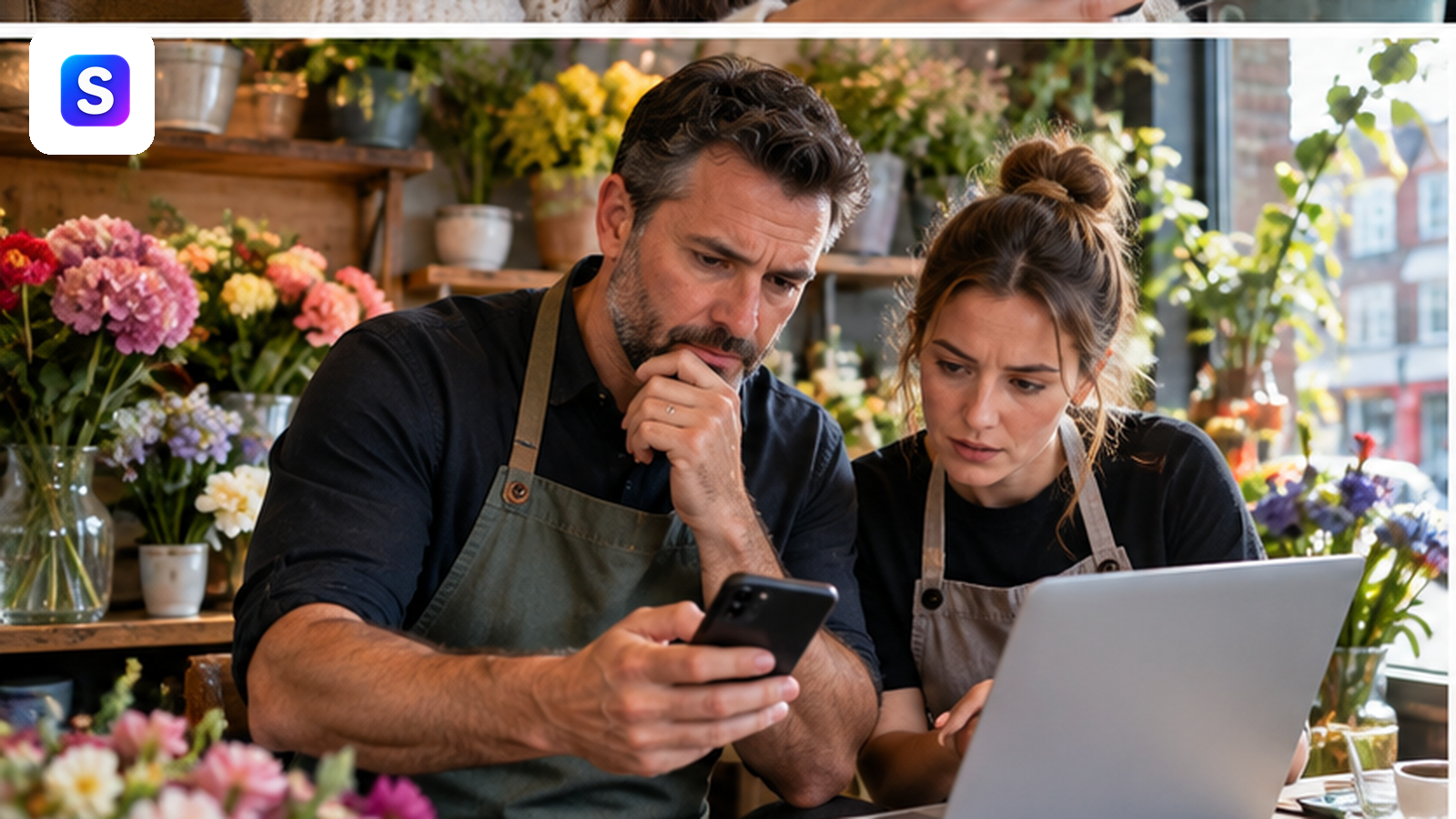
A changed bank account should trigger a verification call using a known number. Editorial photo illustration; official Safegram logo.
Trust should not disappear when a conversation becomes a transaction
A common weakness in online commerce is the hand-off: someone discovers a seller on a social feed, moves into a private message, follows a payment link and completes the purchase somewhere else. Each move can strip away context about who the seller is, whether the listing is genuine and what protections apply.
That is one reason platforms increasingly need identity and transaction context to work together. Safegram’s approach links verified people, businesses and creators with social discovery and Safegram Exchange, where products and services can be presented within a persistent platform identity. Verified ordinary users can also list second-hand goods. The aim is to make it easier to assess who is behind a listing before a conversation or booking becomes a payment decision.
Verification is a useful signal, not an absolute guarantee. A legitimate account can be compromised, a seller can make a misleading claim, and an off-platform payment request can bypass safeguards. A credible marketplace should therefore combine verification with clear listing information, reporting routes, reviews where available, careful payment flows and warnings when someone tries to move the transaction elsewhere.
Large specialist marketplaces have real advantages in inventory, logistics, buyer familiarity and established dispute systems. Safegram’s longer-term bet is different: that people should not have to reconstruct trust from scratch when moving between a local service, a creator’s offering, a community recommendation and a second-hand sale. Whether that architecture succeeds will depend on execution and user confidence, not the claim that a verification badge alone stops fraud.
Five checks worth making before you click or pay
1. Leave the message and find the source yourself
Open the bank, courier, marketplace or business through its known app, bookmarked website or a telephone number you already trust. Do not use a contact number or link supplied by the suspicious message.
2. Verify the actual person or business
Check the seller’s established profile, business details, independent contact channels and transaction history where available. A familiar name or polished logo is not evidence that the sender controls the genuine account.
3. Stop when bank details change
For invoices and deposits, independently confirm any change in payment instructions. Businesses should use dual authorisation for material payments and document who approved the change.
4. Keep the transaction in a traceable process
Use the platform’s intended booking, checkout and communication process where available. Be especially cautious if a stranger demands a bank transfer, a new messaging app or a payment link unrelated to the listing.
5. Act quickly if something goes wrong
Contact your bank immediately using an official number, preserve messages and payment records, and report suspected fraud to An Garda Síochána. Report the account or listing to the relevant platform. FraudSMART also recommends its Scamchecker service for checking questionable links and websites. [1, 2]
Online safety is often a shared habit, not an individual instinct. Editorial photo illustration; official Safegram logo.
Cybersecurity Month’s most useful lesson is a human one
October is European Cyber Security Month. The European Union Agency for Cybersecurity, ENISA, said in its September 2026 Threat Landscape that ransomware remains among the most impactful short-term incidents and that AI models are likely to support more malicious operations. Those findings concern the wider European threat environment; they are not a direct estimate of Irish consumer scam volumes. [4]
The lesson for an Irish household or small business is to build a repeatable verification habit rather than depend on spotting a spelling mistake. Ireland’s National Cyber Security Centre offers SME CORE guidance and a free risk-assessment resource. A two-minute independent check may be more valuable than another warning poster, particularly when a convincing message arrives at the busiest moment of the day. [5]
The next generation of safer social commerce will be judged less by how loudly it promises trust than by how reliably it preserves identity, context and accountability from discovery to transaction. For users, the immediate rule remains simple: the message can wait; verification cannot.
Frequently asked questions
How common are scam messages in Ireland in 2026?
FraudSMART’s July 2026 survey, published in September, found that 85% of Irish adults reported encountering suspicious communications or online content at least monthly. The figure measures reported exposure, not confirmed financial loss.
What is social engineering fraud?
It is deception that persuades someone to reveal information, click a link or send money by impersonating a trusted person or organisation or creating false urgency.
How can I check whether a text or email is real?
Do not follow the message’s link. Open the organisation’s official app or website yourself or call a trusted number from your records. FraudSMART also points consumers to Scamchecker.ie.
What is invoice redirection fraud?
A fraudster impersonates a supplier and changes the bank account that a business uses for payments. Confirm every change independently with the supplier using previously verified contact details.
Does a verified seller badge guarantee a safe purchase?
No. Verification can help establish identity, but buyers still need to check the listing, payment method, seller behaviour and dispute options. Accounts can be compromised.
What should I do if I have already paid a scammer?
Contact your bank immediately, preserve evidence and report the suspected fraud to An Garda Síochána and the platform involved. Acting quickly may improve the chance of stopping or tracing a payment, but recovery is not guaranteed.
A practical next step
Before your next online purchase, booking or supplier payment, take sixty seconds to verify the sender independently. For local businesses and creators, explore how verified identities and clearer listing context can support safer discovery through Safegram Exchange. The goal is not to stay online longer; it is to make the moments that matter online more trustworthy.
Sources and methodology
[1] Banking & Payments Federation Ireland / FraudSMART, 14 September 2026, Social Engineering Research 2026 (survey fieldwork July 2026; n=1,000): https://bpfi.ie/publications/majority-consumers-receiving-suspicious-calls-texts-or-emails/
[2] BPFI, 4 September 2026, reporting Central Bank of Ireland 2025 fraud losses: https://bpfi.ie/consumers-warned-to-be-on-alert-for-scams-new-figures-show-27-jump-in-losses/
[3] FraudSMART, 27 March 2026, Irish SME email-related scams and ISME survey: https://www.fraudsmart.ie/2026/03/27/19m-lost-by-smes-to-email-related-scams-over-the-past-two-years/
[4] ENISA, 22 September 2026, ENISA Threat Landscape 2026: https://www.enisa.europa.eu/publications/enisa-threat-landscape-2026
[5] National Cyber Security Centre, SME CORE: https://sme.ncsc.gov.ie/
More from Safegram
Try Safegram
Privacy-first social and a verified marketplace, built in Dublin.