
Irish Children Say Online Safety Education Beats a Social Media Ban
A new Irish study reveals children prefer online safety education over social media bans, urging platforms to combine digital literacy with safer-by-design products.
Article 07 — safegram news
Irish Children Say Online Safety Education Beats a Social Media Ban
Written by Safegram Editorial Team
Published: 12 September 2026
A major new Irish study gives children and parents a direct voice in the debate over social media and online safety. Its message is more nuanced than “ban or allow”: young people want the skills to navigate digital life safely, while parents want meaningful protection. That puts pressure on platforms to combine education with safer-by-design products, privacy, age-aware safeguards and tools families can actually understand.
Key takeaways
- 69% of children surveyed in Ireland said it would be better to teach children how to stay safe online than impose a social media ban.
- 67% of children surveyed did not think a ban would be effective because young people would find ways around it.
- 60% of 9–17-year-olds surveyed said they had a social media account, rising to 90% among 16–17-year-olds.
- Only 46% said they knew how to judge whether a website could be trusted, highlighting a significant digital-literacy gap.
- One-third of children surveyed said they had felt upset by something online in the previous year; the figure rose to 46% among 16–17-year-olds.
- The findings strengthen the case for combining media literacy with safer product architecture rather than treating education and platform responsibility as alternatives.
Ireland has asked children what they actually think
Arguments about children and social media are often conducted by adults, about children, without much space for children themselves.
New Irish research changes that balance.
On 10 September 2026, Coimisiún na Meán published “Online Safety & Children’s Digital Lives”, Ireland’s contribution to the wider EU Kids Online research programme. The study draws on national surveys of children and their parents or caregivers and examines how young people use the internet, what they understand about it and what worries them.
One finding immediately stands out: 69% of children surveyed agreed that teaching children how to stay safe online would be better than a social media ban. Most children surveyed — 67% — also said they did not believe a ban would work because children would find a way around it.
Parents were more divided, but the direction was similar. Almost half, 49%, favoured online-safety education over a ban, while 21% disagreed. Parents were also almost twice as likely to agree as disagree that children would circumvent a ban.
That does not mean parents are relaxed about social media. Far from it. Majorities believed that having no social media could improve school focus, online safety and mental health. The research captures something more useful than a simple yes-or-no verdict: families recognise both the opportunities and the risks of digital life.
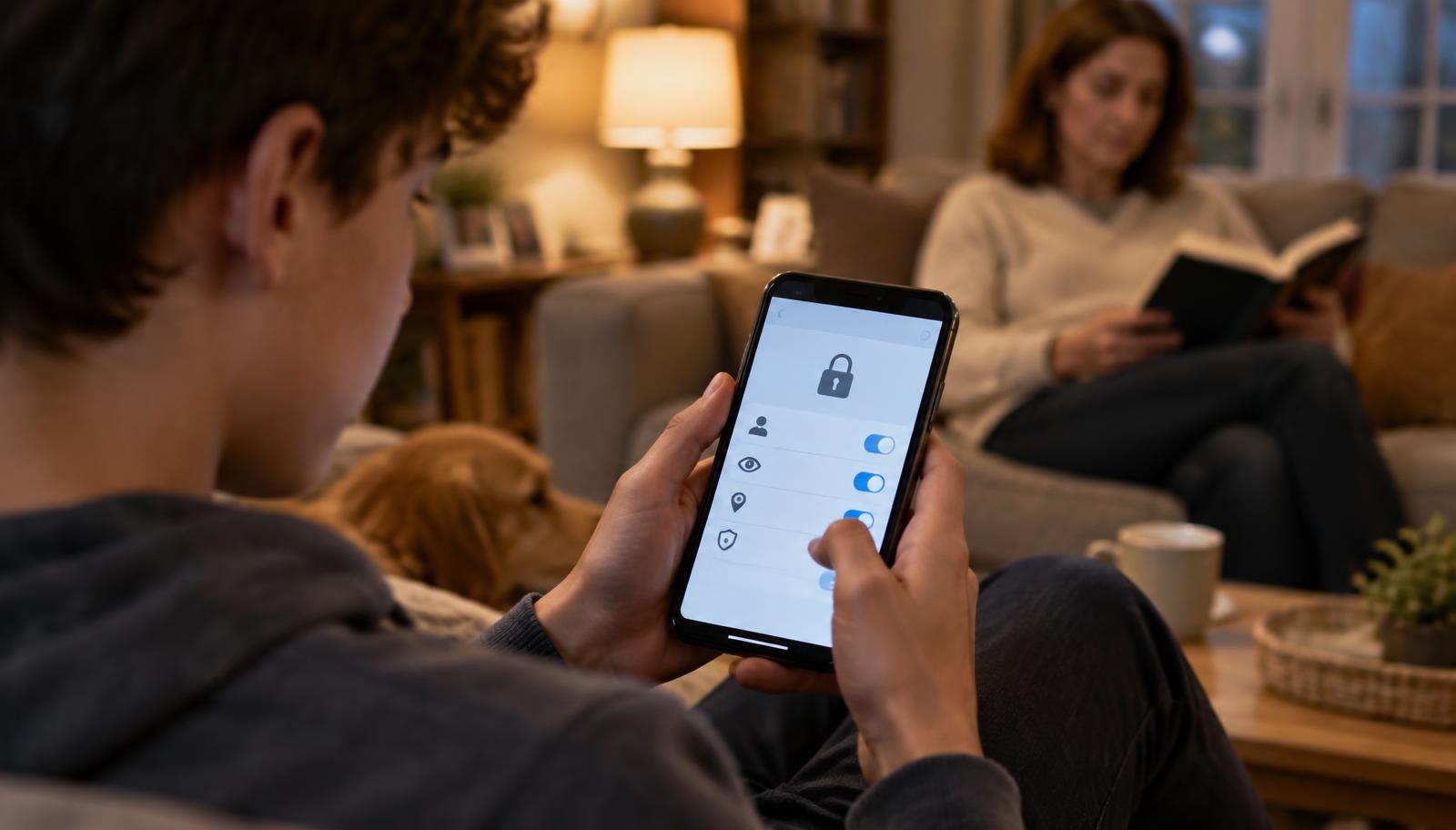
Media literacy works best when families can talk openly about privacy, trust, algorithms, advertising and uncomfortable online experiences.
The real question is not simply “ban or no ban”
Public debate can make online safety sound like a binary choice. Either children are kept away from social platforms, or they are left to navigate them alone.
The evidence points toward a third path: teach young people how digital systems work while requiring the systems themselves to be safer.
That distinction matters because social media is already part of everyday life for many Irish teenagers. According to the new research, 60% of children and young people aged 9–17 said they had a social media account. Usage rose sharply with age, from around a quarter of 9–11-year-olds to 90% of 16–17-year-olds.
Education therefore has to go beyond telling children not to click suspicious links. It needs to include privacy, scams, identity, algorithms, advertising, manipulated content, recommendation systems, reporting, blocking and the commercial incentives behind what appears in a feed.
The study shows why. While 73% of children said they knew how to protect a device, fewer than half — 46% — said they knew how to work out whether a website could be trusted. Only 39% correctly recognised that the first search result is not always the best source of information, and 32% understood that the first social post shown is not necessarily the most recent post from a contact.
Those are not minor technical details. They are basic skills for navigating an internet shaped by ranking systems, creators, influencers, search engines, AI-generated content and social commerce.
Safety education cannot become an excuse for bad product design
Teaching children digital skills is essential. But it would be a mistake to turn that finding into a transfer of responsibility from platforms to families.
Children should not need expert-level media literacy simply to avoid predictable product risks.
The EU Digital Services Act requires online platforms accessible to minors to put appropriate measures in place to ensure a high level of privacy, safety and security for minors. Ireland’s Online Safety Framework adds further protections, while Coimisiún na Meán is now actively supervising and investigating platform compliance.
The principle is straightforward: education helps people make better choices, while safer design reduces the number of dangerous choices they are forced to make in the first place.
That can mean age-appropriate defaults, clear reporting and blocking, limits on unwanted contact, understandable privacy controls, age assurance where proportionate, transparent recommendation choices and friction around risky interactions.
No individual safeguard is enough. Age assurance can make mistakes. Verification proves something about identity at the time of a check, not future behaviour. Parental tools can be badly designed. Encryption protects conversation privacy but does not prevent every form of abuse.
Good safety architecture uses layers.
The findings also show why trust matters
The research is not only about access. It is also about confidence and harm.
A third of children surveyed said they had felt upset by something they experienced online at least once in the previous year. Among 16–17-year-olds, that rose to 46%. Children with disabilities reported negative online experiences at a notably higher rate: half said they had felt upset by something online.
Twelve per cent of children said they had been treated in a hurtful or nasty way online. Nine per cent reported receiving a sexual message at least once, with the proportion rising to 20% among 16–17-year-olds.
These figures should not be used to create panic. Most online experiences are not harmful, and digital participation can support friendship, creativity, learning, community and opportunity. But the numbers are large enough to show why “just be careful” is not a serious safety strategy.
Young people need to know who they are interacting with, what information they are sharing, how to leave an uncomfortable interaction and where to get help. Platforms need to make those actions obvious rather than burying them behind menus.

Education and product responsibility are complementary: users need digital skills while platforms need safer defaults, understandable controls and meaningful protections.
What safer social design can look like
Safegram is being built in Dublin around a trust-first model that combines social interaction, smaller communities and a verified marketplace. Its current public product pages describe Circles, Plans, end-to-end encrypted direct messaging, verification through Didit, Safegram Exchange and a live Family Safety Layer.
Circles are live and are designed as smaller interest-based communities rather than broadcast audiences. Safegram’s Circles page says members can build communities around interests such as sport, neighbourhoods, creative scenes, study, careers and parent groups, and move from a Circle into a real-world Plan.
Plans are also live. They allow people to organise real-world activities with visibility controls and private plan chats. Hosts can choose settings including verified-only or host approval, according to Safegram’s published product information.
Safegram’s verification model is also live. Identity, seller and business checks are handled by Didit. Safegram says it stores the verification outcome rather than users’ ID documents or biometric data. Verification is required before a business, creator or seller can list, sell, offer services or accept payments; ordinary members can browse and post without verification.
For younger users, Safegram’s published verification information says Didit age estimation assists age-gating for teen and family-safety features. That should be understood as one risk-reduction layer, not a guarantee that a platform is risk-free and not a substitute for communication between families and young people.
The distinction matters. A platform can promote verification, privacy and safety without pretending technology can solve every human problem.

Digital literacy now includes understanding creators, paid partnerships, recommendations and the point where social content becomes commerce.
Creators, influencers and communities are part of digital literacy too
Online-safety education increasingly overlaps with creator literacy.
Young people do not experience the internet as separate boxes labelled “social media”, “advertising”, “shopping” and “entertainment”. A single video can be a recommendation, a paid partnership, a product demonstration, a social interaction and a route to a purchase.
That makes transparency especially important for creators, influencers and businesses. Young users should be able to recognise commercial content and understand why something is being recommended to them. Creators should have clear ways to identify paid relationships. Businesses should be identifiable when they sell. Marketplaces should make it harder for anonymous sellers to exploit trust built through social content.
This is one reason Safegram requires creators and businesses to verify before transacting on Safegram Exchange. It does not mean every verified seller is trustworthy forever; Safegram explicitly describes verification as a signal rather than a guarantee. But it creates accountability at the point where social interaction becomes commerce.
The same logic applies to community features. Circles can support creator communities, freelance networks, hobbies, neighbourhood groups, parents, students and local interests. Plans can turn those communities into real-world meetups or collaborations. Safety has to travel with the user across those contexts rather than disappearing when a social conversation becomes a booking, sale or meetup.
What parents can do now
The strongest response to this research is not panic and it is not passivity.
Parents can start by asking practical questions with their children: Who can contact you? Is your profile public? Can you recognise an advertisement or paid creator promotion? What would you do if someone asked you to move a conversation off-platform? Do you know how to block and report? Can you tell why a particular post or search result appeared first?
Those conversations are more useful when they are regular and non-judgmental. A teenager who believes every mistake will lead to losing their phone may be less likely to ask for help when something genuinely goes wrong.
Families should also inspect the safety architecture of the services they use. Are controls easy to find? Does the platform explain what data it collects? Can a young user limit who discovers or messages them? Is commercial content labelled? Are reporting and appeal routes clear?
Media literacy works best when the product meets the user halfway.
What platforms should learn from ireland’s children
The clearest lesson from the new Irish research is that young people do not want digital life reduced to a choice between unrestricted access and exclusion.
They want competence. They want to understand the environment they are growing up in.
That creates a responsibility for schools, parents, regulators and technology companies. Schools can teach digital and media literacy. Parents can create an environment where children ask for help. Regulators can enforce meaningful standards. Platforms can reduce foreseeable risks through design.
And technology companies should listen to the people affected by their decisions.
For Safegram, the relevant standard is not to claim that a new platform can eliminate online harm. It cannot. The more credible ambition is to build privacy, identity signals, age-aware protections, smaller communities, safer commerce and user control into the product architecture — while continuing to learn from evidence such as this new Irish research.
A safer internet will not come from one button, one ban or one company.
It will come from better-informed users and better-designed systems working at the same time.
Frequently asked questions
What did Irish children say about a social media ban?
In research published by Coimisiún na Meán on 10 September 2026, 69% of children surveyed agreed that teaching children how to stay safe online would be better than a social media ban. Sixty-seven per cent said they did not think a ban would be effective because children would find a way around it.
How many Irish children use social media?
The study found that 60% of surveyed children and young people aged 9–17 had a social media account. The proportion rose with age, reaching 90% among 16–17-year-olds.
Why is online-safety education important?
The research identified gaps in digital and media literacy. For example, only 46% of children surveyed said they knew how to determine whether a website could be trusted, while 39% correctly recognised that the first search result is not always the best source.
Does education mean platforms have less responsibility?
No. Education and safer platform design address different parts of the problem. Under the EU Digital Services Act, platforms accessible to minors have obligations around privacy, safety and security. Users need skills, while platforms remain responsible for meeting applicable legal duties and reducing foreseeable risks.
What is Safegram’s Family Safety Layer?
Safegram’s public website describes its Family Safety Layer as live. Its published verification information says Didit age estimation assists age-gating for teen and family-safety features. These are risk-reduction measures, not guarantees that harm cannot occur.
Are Safegram Circles and Plans live?
Yes. Safegram’s current product pages describe both Circles and Plans as available features. Circles are smaller communities built around shared interests; Plans help people organise real-world meetups with visibility controls and private plan chats.
Can creators and influencers use Safegram?
Yes. Safegram supports creators as part of its social marketplace. Its current verification policy requires creators, sellers and businesses to complete verification before listing, selling, offering services or accepting payments. Creators can also participate in Circles and Plans for communities and collaborations.
Does Safegram verification guarantee someone is safe?
No. Safegram’s own verification information explicitly states that verification is not a guarantee of future behaviour. It is an identity or business signal that can add accountability, particularly around commerce.
Sources
- https://www.cnam.ie/online-safety-childrens-digital-lives-research-report-published/
- https://www.cnam.ie/industry-and-professionals/online-safety-framework/digital-services-act/
- https://www.cnam.ie/general-public/online-safety/what-is-illegal-content/
- https://safegram.com/circles
- https://safegram.com/plans
- https://safegram.com/verification-partner
- https://safegram.com/
More from Safegram
Try Safegram
Privacy-first social and a verified marketplace, built in Dublin.