
Irish Children Say Teach Us to Be Safe Online, Don’t Just Ban Social Media
Irish children surveyed emphasize the need for digital literacy and education over social media bans, highlighting real online harms and the importance of safer design.
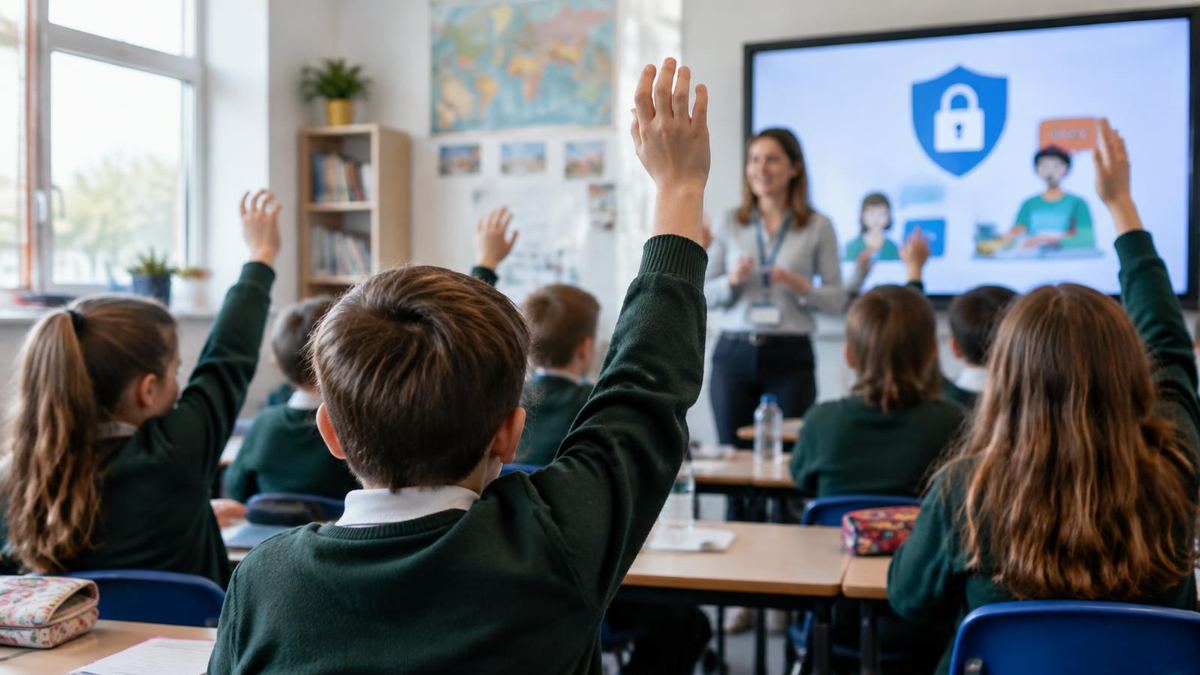
Standfirst
As Europe debates tougher age rules for social media, new Irish evidence adds something essential to the conversation: the voices of children themselves. Most say education would work better than a blanket ban — while the same research also shows real exposure to harm. The strongest answer may not be “access or safety”, but safer design, age-appropriate access, digital literacy and meaningful enforcement working together.
New Irish research suggests most children want to be taught how to navigate online risks rather than simply blocked from social media.
Key takeaways
- 69% of children surveyed in Ireland agreed it would be better to teach children how to stay safe online than to ban them from social media.
- 67% of children surveyed thought a social-media ban would not be effective because children would find ways around it.
- 60% of Irish children aged 9–17 surveyed said they had a social-media account, rising from around one quarter of 9–11-year-olds to 90% of 16–17-year-olds.
- One third of children surveyed said something they experienced online had upset them at least once in the previous year; the figure rose to 46% among 16–17-year-olds.
- Digital literacy gaps remain substantial: only 46% said they knew how to work out whether a website could be trusted, and 39% correctly recognised that the first search result is not always the best source.
- The findings arrive as the European Commission advances its proposed EU KIDS Act, built around age rules, safety by design, privacy-preserving age assurance and enforcement.
The Irish children at the centre of the debate
The argument over children and social media is often conducted by adults: politicians, regulators, technology companies, parents and campaigners. New research from Coimisiún na Meán offers a useful correction by asking children and their parents directly.
Published on 10 September 2026, “Online Safety & Children’s Digital Lives” draws on national surveys of children aged 9–17 and parents or caregivers in Ireland as part of the wider EU Kids Online study. Its headline finding is striking: 69% of children surveyed agreed that teaching children how to stay safe online would be better than a social-media ban.
Children were also sceptical that prohibition alone would work. Sixty-seven per cent thought a ban would be ineffective because children would find a way around it. Parents were more divided, but the same tension appeared: 49% favoured online-safety education over banning access, while 43% agreed that a ban would be ineffective because children would circumvent it.
That does not mean children or parents believe social media is harmless. In fact, the same research shows why stronger protection is needed.
The internet is already part of childhood
Sixty per cent of surveyed 9–17-year-olds said they had a social-media account. Usage rises sharply with age: around a quarter of 9–11-year-olds reported having an account, compared with 90% of 16–17-year-olds.
This matters because policy is being designed for a world in which digital participation is already deeply embedded in young people’s friendships, entertainment, learning and identity. Rules that ignore that reality can look strong on paper while proving easy to bypass in practice.
The evidence therefore suggests a more difficult question than “ban or no ban”: how do we preserve the benefits of digital participation while making foreseeable harms materially harder to reach?
The risks are real — and they rise with age
A third of children surveyed said they had felt upset by something they experienced online at least once in the previous year. Among 16–17-year-olds, that rose to 46%. Children with disabilities reported negative experiences at particularly high rates: 50% said something online had upset them, compared with 33% overall.
Online aggression affected a minority but was far from negligible. Twelve per cent said they had been treated in a hurtful or nasty way online. Nine per cent reported receiving a sexual message at least once, with the figure increasing sharply in later adolescence: 20% among 16–17-year-olds.
These figures should not be used to portray the internet as uniformly dangerous. They do show, however, that simply handing responsibility to a child — or to a parent navigating complicated settings — is inadequate.
Digital fluency is not the same as digital literacy: Irish children report significant gaps in judging trustworthy information and understanding how feeds are ordered.
Digital literacy is a safety tool, not a substitute for platform responsibility
The Irish research exposes another important layer: many children are confident users of technology without necessarily understanding how digital systems work.
Seventy-three per cent said they knew how to protect a device. But fewer than half — 46% — said they knew how to determine whether a website could be trusted. Only 39% correctly recognised that the first search result is not always the best source of information. Just 32% correctly understood that the first social-media post shown is not necessarily the most recent post shared by one of their contacts.
That gap matters in an age of algorithmic feeds, generative AI, influencer marketing, scams and increasingly convincing synthetic media. Being able to operate a smartphone is not the same as understanding the systems deciding what appears on it.
Education therefore belongs inside the safety model. But it cannot become an excuse for weak product design. A child should learn how recommendation systems, privacy settings, scams and reporting tools work; platforms should simultaneously be expected to reduce foreseeable risks, use age-appropriate defaults and make safety controls effective and understandable.
The emerging European model combines education with safety by design, age assurance, parental tools and enforceable platform responsibility.
Europe is moving toward “safe by design”
The timing of the Irish findings is important. On 17 September 2026, the European Commission presented its proposed EU KIDS Act. The proposal is not yet final EU law and may change through the legislative process.
The Commission describes four central pillars: age rules for social media, safety by design, privacy-preserving age assurance and effective enforcement. Its proposed gradual approach would prevent children under 13 from holding social-media accounts and set 15 as the EU-wide age for opening an account independently.
Perhaps the most consequential principle is the shift in responsibility. Rather than expecting children to prove they can survive products built primarily for adults, providers would be expected to demonstrate that services used by minors are age-appropriate and safe by design.
That idea fits surprisingly well with what Irish children are saying. Education and design are not competing answers. Young people can be taught how to navigate digital life while services are required to make that environment safer in the first place.
Ireland is already enforcing online-safety rules
Ireland is not waiting for the KIDS Act to begin online-safety enforcement. On 8 September 2026, Coimisiún na Meán opened its first formal investigation under Ireland’s Online Safety Code, examining X’s implementation of age-assurance mechanisms and parental controls.
The regulator said concerns had arisen over the potential ineffective implementation of age assurance used to prevent children from seeing videos depicting pornography or extreme or gratuitous violence, and over whether parental controls met the Code’s requirements. The opening of an investigation is not a finding that X breached the Code; the distinction is important.
The combination of research, regulation and proposed European legislation points in one direction: online child safety is becoming a product-design and accountability question, not merely a parental-responsibility question.
What a better model could look like
A credible child-safety model needs several layers working together.
First, age assurance should establish the information genuinely needed for an age-appropriate experience while minimising unnecessary collection of identity data. The European Commission explicitly describes privacy-preserving age assurance as part of its KIDS Act approach.
Second, platforms should make safer defaults meaningful. Who can discover a young user, who can contact them, what content can be recommended, what happens when risk signals appear and how reporting works are design decisions.
Third, parents need useful tools without turning family safety into surveillance. Controls should be understandable and visible, while respecting a young person’s developing need for privacy and autonomy.
Fourth, children need digital literacy that goes beyond “don’t talk to strangers”. They need to understand recommender systems, manipulation, scams, AI-generated content, privacy, reporting and the permanence and reach of what they share.
Finally, regulators need evidence and enforcement powers capable of testing whether protections work in practice, not simply whether a settings page exists.
Children are not only subjects of online-safety policy; their experiences are evidence that should help shape it.
Where Safegram fits
Safegram’s direction is based on a similar layered principle: verification, privacy and safer participation should reinforce one another rather than operate as separate features.
Live Safegram functionality includes end-to-end encrypted chat, verification layers for users and businesses, Safegram Exchange functionality, creator and business features, and safety-oriented account controls.
Safegram’s teen and family safety architecture is designed around age-aware access, stronger separation between teen and adult discovery and messaging, and family safety notifications without giving family members access to the content of private conversations. Individual elements of that architecture may continue to evolve through implementation, testing and regulatory changes.
Planned or developing Safegram functionality should not be described as universally live until it has been confirmed in the production app. The objective is not to claim that one platform has solved online safety. It is to build around a principle that the Irish evidence increasingly supports: people should not have to surrender privacy in order to gain protection, and children should not carry the entire burden of staying safe.
The lesson from Ireland: listen to children, then design better systems
The Irish findings complicate simple slogans. Children want access to digital life. Many believe bans will be circumvented. At the same time, significant numbers experience harm, and many lack important skills for judging information and understanding how platforms shape what they see.
The answer cannot reasonably be “education alone”. Nor should regulation assume that blocking access is the only available safety mechanism.
A stronger model combines education, age-appropriate design, privacy-preserving age assurance, effective parental tools, sensible boundaries and enforceable platform responsibility.
The most useful question for Europe may therefore be changing. Not simply: “At what age should a child be allowed online?” But: “What must an online service prove before we consider it appropriate for a child of that age?”
FAQ
What did Irish children say about banning social media?
In Coimisiún na Meán’s 2026 research, 69% of children surveyed agreed it would be better to teach children about staying safe online rather than impose a social-media ban. Sixty-seven per cent also thought a ban would not work because children would find a way around it.
How many Irish children use social media?
Sixty per cent of surveyed children aged 9–17 said they had a social-media account. The proportion increased substantially with age, from around one quarter of 9–11-year-olds to 90% of 16–17-year-olds.
Are Irish children experiencing harm online?
Yes, although experiences vary. Thirty-three per cent said something online had upset them at least once in the previous year. The figure was 46% among 16–17-year-olds and 50% among children with disabilities.
Do children understand how online information is ranked?
The research suggests important gaps. Only 39% correctly recognised that the first search result is not necessarily the best information source, and 32% correctly recognised that the first social-media post shown is not necessarily the most recent from one of their contacts.
Is the EU KIDS Act already law?
No. The European Commission presented the proposal on 17 September 2026. It must proceed through the EU legislative process, and the final rules may change.
Does age assurance require everyone to expose their identity publicly?
No. Age assurance and public identity are different concepts. The European Commission’s proposal explicitly refers to privacy-preserving age assurance, with the goal of establishing age eligibility without unnecessary disclosure of personal information.
What is Safegram’s approach to teenagers?
Safegram’s teen and family safety direction centres on age-aware access, separation between teen and adult discovery or messaging, verification and family safety signals while preserving private message content. Features should always be checked against the current production version because implementation can evolve.
CTA
Children’s online safety should not be reduced to a choice between unrestricted access and blanket prohibition. Ireland’s own evidence points toward something more ambitious: teach young people, design safer services, preserve privacy and hold platforms accountable when protections fail.
Follow Safegram News for evidence-led reporting on online safety, privacy, verification and the technology shaping digital communities in Ireland and across Europe.
Source references
-
Coimisiún na Meán, “Online Safety & Children’s Digital Lives” — research report and summary, published 10 September 2026.
-
Coimisiún na Meán, “Investigation commenced into X under Online Safety Code”, 8 September 2026.
-
European Commission, “EU KIDS Act to restrict social media platforms’ access to children in the EU”, 17 September 2026; page updated 22 September 2026.
-
European Commission, Proposal for the EU Keeping Internet Digital Spaces Accountable and Trustworthy (KIDS) Act, 17 September 2026.
-
Coimisiún na Meán, Online Safety Framework and completed research resources.
Image package
Hero — Article20_Irish_Children_Online_Safety_Hero_4K.jpg
Alt text: Irish parent and teenage daughter discussing a smartphone together at a bright Dublin kitchen table, representing online-safety education and family conversation.
Caption: New Irish research suggests most children want to be taught how to navigate online risks rather than simply blocked from social media.
Supporting image 1 — Article20_Digital_Literacy_Dublin_Teens_4K.jpg
Alt text: Diverse teenagers in a Dublin library learning how to evaluate online information on smartphones and laptops.
Caption: Digital fluency is not the same as digital literacy: Irish children report significant gaps in judging trustworthy information and understanding how feeds are ordered.
Supporting image 2 — Article20_Safety_By_Design_Ireland_4K.jpg
Alt text: Parent and teenager walking beside the River Liffey in Dublin while looking at a phone together, illustrating safer digital participation and age-appropriate design.
Caption: The emerging European model combines education with safety by design, age assurance, parental tools and enforceable platform responsibility.
Supporting image 3 — Article20_Child_Voice_Online_Safety_4K.jpg
Alt text: Small group of Irish teenagers in a modern school setting discussing online safety and sharing their perspectives.
Caption: Children are not only subjects of online-safety policy; their experiences are evidence that should help shape it.
More from Safegram
Try Safegram
Privacy-first social and a verified marketplace, built in Dublin.