Meta’s $25 Billion Privacy Judgment Is a Warning to Every Social Platform
New Mexico’s landmark ruling raises a bigger question: who actually controls our personal information online?

Key takeaways
- A New Mexico judge ordered $25 billion in civil penalties on 21 October 2026, following a jury finding of 43,899,725 violations of state consumer protection law.
- The litigation concerns Facebook’s historical statements about data privacy, third-party access and some content-moderation practices; the Cambridge Analytica scandal was central to the case.
- Meta disputes the outcome and says it will appeal. The penalty is not a final, collected payment or an individual payout to users.
- The case is a warning that privacy promises must match a platform’s real design, permissions and disclosures.
A $25 billion ruling — and an argument about what users were told
On 21 October, Judge Francis Mathew ordered Meta Platforms to pay New Mexico $25 billion after a jury concluded that Facebook had repeatedly misled consumers under the state’s Unfair Practices Act. New Mexico’s Department of Justice said the jury had identified 43,899,725 violations. The court assessed the financial consequences after liability had been established; Meta intends to challenge the outcome on appeal. [1][2]
The scale is extraordinary, but the underlying issue is familiar to anyone who has clicked through a privacy notice: what does it really mean to “control” your information when a social platform collects, shares or makes it available to outside developers? The court found that Facebook’s representations did not match important aspects of its historical practices. [3]
What did the Cambridge Analytica scandal have to do with it?
The dispute traces back to revelations that data collected through a third-party Facebook app was used by Cambridge Analytica, a political consulting company associated with election-targeting work. Reports and regulatory findings indicated that information associated with as many as 87 million Facebook accounts was affected. The New Mexico case extended beyond that episode to statements about privacy, third-party access and certain content practices over more than a decade. [2][4]
It is important not to collapse every claim into one allegation. The jury found many statements misleading, but not every claim advanced by the state succeeded. The court’s penalty reflects state consumer-protection law, not a general finding that all current Meta services or features are unlawful. [2]
Why $25 billion — and will Meta actually pay?
The court considered millions of separate statutory violations and a maximum penalty framework that could have produced an even larger figure. Judge Mathew imposed $25 billion instead. New Mexico Attorney General Raúl Torrez described the order as a major consumer-protection victory. Meta’s chief legal officer C.J. Mahoney said the company believes it will prevail on appeal and argued that the judgment threatens speech and the ability to operate in New Mexico. [1][2][5]
An appeal could take substantial time, and the judgment could be reduced or overturned. It would therefore be misleading to describe the $25 billion as money already paid, a final settlement or a fund being distributed directly to individual Facebook users. Under New Mexico law, consumer-protection penalties are directed to public education. [2]
The problem with privacy settings that look like control
A privacy dashboard can contain dozens of switches yet still leave people unsure who can access their information, whether third-party integrations retain copies, and what changes after a policy update. Good privacy design has to answer those questions in language ordinary users understand, with permissions that behave as promised and independent checks that can test the claim.
For Irish and European readers, the ruling does not replace GDPR rights or directly establish a new European privacy rule. But it reinforces a principle that applies across jurisdictions: public statements about data handling are part of a company’s accountability, not merely marketing copy.
What privacy-first social platforms must prove
The challenge for emerging networks is not to say they are different from Meta. It is to demonstrate how they are different. Safegram is building around verified identities, encrypted private conversations and a social-commerce environment in which people can discover creators, businesses and local services. Those design choices address parts of the trust problem, but identity verification is not the same as privacy, and encryption of messages does not by itself establish that all other data is protected.
For example, a verified seller in Safegram Exchange may be easier to hold accountable than an anonymous profile, but a verified badge should never be presented as proof that a seller is honest or that a transaction cannot fail. Equally, a platform promising private communication needs clear information about what is encrypted, what metadata is retained, what information businesses can see and what users can delete. Such claims should be validated before being advertised as guarantees.
The longer-term competition among social networks will involve reach, discovery, advertising tools and creator economics. Meta’s Facebook and Instagram remain powerful because they connect enormous audiences and businesses; that is a genuine strength. Safegram’s opportunity is to build a more connected experience for verified social discovery and commerce while making its privacy promises precise, comprehensible and independently defensible — not to claim it has already displaced established networks.
What users can do now
- Review the audience and visibility settings on every social account you use.
- Remove third-party apps and integrations you no longer recognise or need.
- Use strong unique passwords and multi-factor authentication.
- Check privacy policies for advertising data, contact syncing, location history and data-retention rules.
- When a service says a feature is encrypted or private, ask what exactly is protected and who can access related metadata.
Frequently asked questions
Did Meta really get fined $25 billion?
A New Mexico judge ordered $25 billion in civil penalties on 21 October 2026. Meta plans to appeal, so the final amount and outcome remain uncertain.
What law did Meta violate?
The jury found nearly 44 million violations of New Mexico’s Unfair Practices Act based on misleading statements about Facebook’s practices.
Was the ruling only about Cambridge Analytica?
No. The Cambridge Analytica scandal was central, but the state challenged a wider set of representations about privacy and certain content policies.
Will Facebook users receive part of the money?
Not through this judgment. The penalties are payable to New Mexico and directed under state law toward public education.
Has Meta admitted wrongdoing?
No. Meta disputes the findings and has said it expects to prevail on appeal.
Does this ruling apply in Ireland?
It is a New Mexico state-law judgment, not an Irish court decision. Irish users have separate protections under EU and Irish law, including GDPR.
Does verification automatically make a platform private?
No. Verification helps establish identity; privacy also requires minimised data collection, transparent permissions, security controls and trustworthy governance.
The next standard for trust
A social platform should be judged not only by the features on its marketing page, but by whether users can understand, exercise and verify their rights. The New Mexico judgment may change on appeal. The expectation that technology companies tell the truth about what happens to personal information should not.
Explore safegram
Discover Safegram’s approach to verified people, businesses, creators and safer communities at https://safegram.com. Compare any platform’s privacy claims with its published policies and actual controls before deciding what to share.

AI-generated editorial illustration. Privacy controls are meaningful only when they match the underlying data practices.
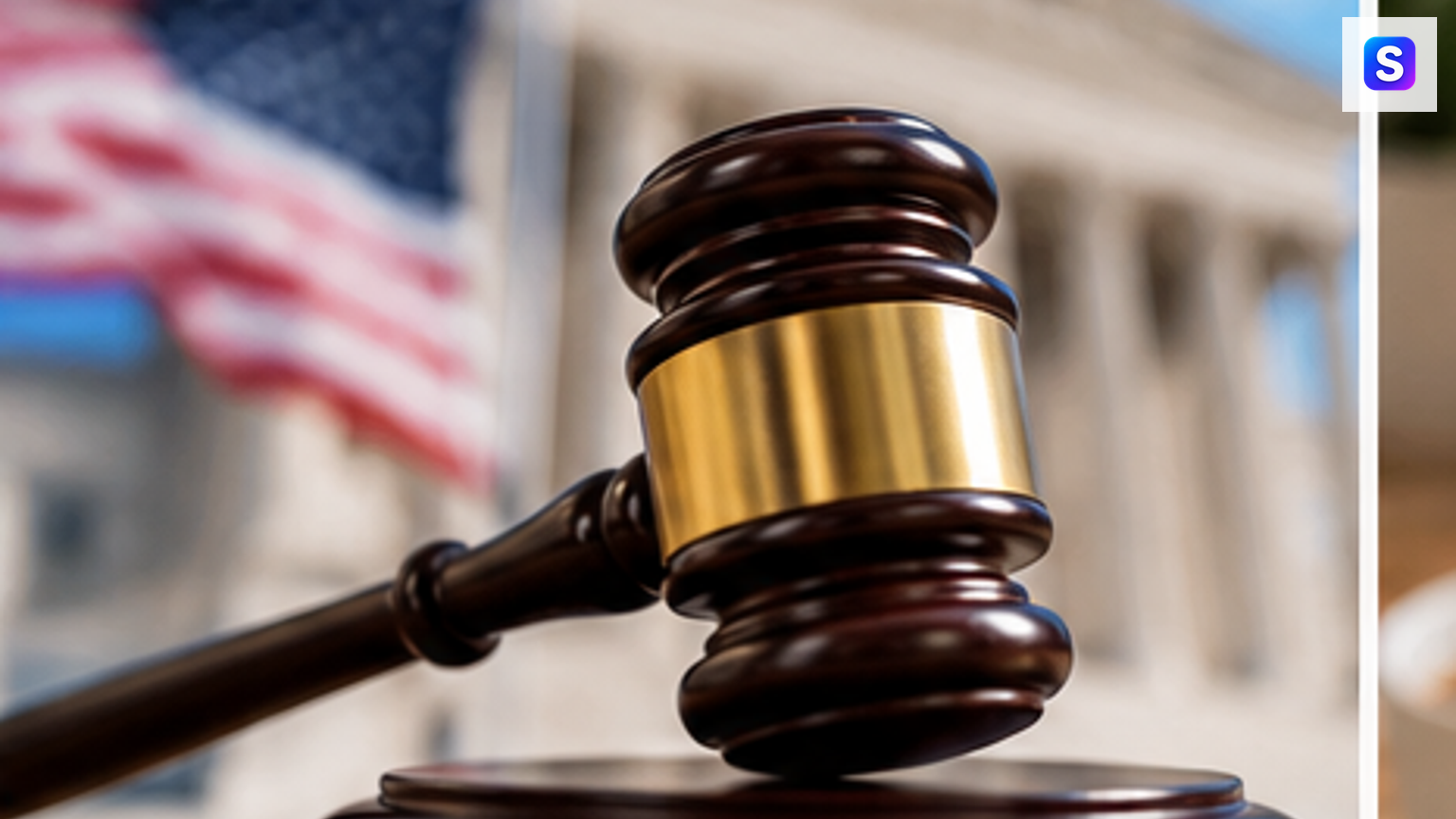
AI-generated editorial illustration. The New Mexico judgment is subject to appeal.
Sources
More from Safegram
Try Safegram
Privacy-first social and a verified marketplace, built in Dublin.