
Trust Before Checkout: What Makes an Online Marketplace Safer?
Safegram explores what makes an online marketplace safer, focusing on verification, platform responsibility, and key checks for buyers.
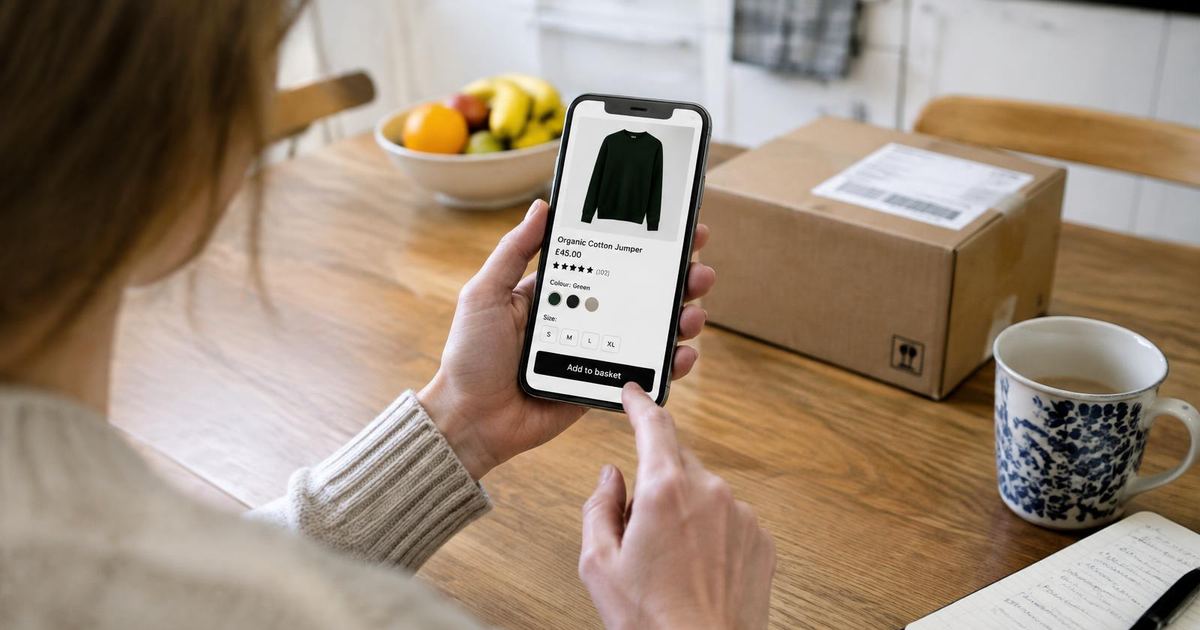
Online marketplaces have made it effortless to buy from a stranger, a creator or a small business. That convenience also creates a difficult question: what should a platform do before it asks a buyer to trust a seller? European rules increasingly expect marketplaces to know more about traders, act on illegal products and give consumers clearer routes to report problems. For shoppers in Ireland, the safest habit remains simple: verify before you pay.
Key takeaways
- A polished listing, sponsored advert or professional-looking profile is not proof that a seller is legitimate.
- Under the EU Digital Services Act, online marketplaces have specific obligations around trader traceability and illegal products.
- The European Commission fined Temu €200 million in May 2026 after finding that its risk assessment did not adequately address illegal-product risks; the decision is specific to that case and should not be generalised to every marketplace.
- If an Irish consumer has a marketplace purchase problem, Coimisiún na Meán says online-trading complaints about seller legitimacy should be directed to the Competition and Consumer Protection Commission (CCPC).
- Safegram’s marketplace direction is built around verified participation, but verification reduces uncertainty; it does not make every transaction risk-free.
Online marketplace trust starts before payment: understand who is selling, what protections apply and what happens if something goes wrong.
The marketplace problem is really a trust problem
The modern marketplace can put a local tradesperson, a creator selling a product, a second-hand seller and a professional retailer into the same feed. To a buyer, they can look remarkably similar.
That is why online marketplace safety cannot depend on appearance alone. A convincing profile can be created quickly. A sponsored advertisement can be paid for by a dishonest operator. Reviews can be incomplete, manipulated or copied. Product photos can be genuine while the seller behind them is not.
An Garda Síochána’s consumer warnings illustrate the problem clearly. Its Black Friday shopping guidance says fraudulent shops can appear in sponsored social-media advertisements and may present themselves as Irish businesses, use urgent closing-down stories or offer unusually large discounts. Garda figures cited in that guidance recorded 2,288 reports of online shopping fraud in the first nine months of 2025, with reported losses of more than €1.12 million.
The practical lesson is not to distrust every unfamiliar seller. It is to treat trust as something that should be evidenced rather than assumed.
Europe is moving from buyer beware to platform responsibility
The EU Digital Services Act changes the discussion because it places duties on the services that organise online commerce, not only on individual buyers.
The European Commission explains that when an online marketplace becomes aware that a seller has offered an illegal product or service, it must inform affected purchasers, identify the seller and provide options for redress. The DSA also strengthens trader traceability requirements and requires marketplaces to design their interfaces in ways that support compliance.
Enforcement is no longer theoretical. On 28 May 2026, the Commission fined Temu €200 million for breaching the DSA after concluding that the platform failed to diligently identify, analyse and assess systemic risks connected with illegal products. The Commission said its mystery-shopping evidence found serious safety problems among selected chargers and baby toys.
That decision does not mean that every item on a large marketplace is unsafe, nor does it prove wrongdoing by unrelated platforms. It does show the direction of regulation: platforms are increasingly expected to demonstrate how their systems identify and reduce marketplace risk.
What should a safer marketplace show you?
For a buyer, regulation matters most when it changes the product experience.
A safer marketplace should make it easier to understand who is selling, whether the seller is acting as a business, what the product or service actually is, what payment and refund route applies, and how a problem can be reported. It should not hide basic seller information behind confusing menus or make reporting deliberately difficult.
Verification can help here, but the word “verified” needs precision. Identity verification can provide stronger evidence that an account is connected to a real person. Business verification can provide evidence about the entity operating an account. Neither proves that every future listing is accurate, every product is safe or every seller will perform perfectly.
The useful question is therefore not simply “is there a badge?” It is “what was checked, and what protections continue after the check?”
A polished listing is not enough. Check the seller, the payment route and the history behind the account.
Five checks before you buy from an unfamiliar seller
First, inspect the seller rather than only the item. Look at account history, business details where relevant, reviews, previous activity and whether contact information is consistent.
Second, compare the offer with reality. Extreme discounts, artificial countdowns and pressure to act immediately deserve more scrutiny. Garda guidance specifically flags very large discounts and urgent sale messaging as warning signs used by fraudulent online shops.
Third, keep payment inside the marketplace’s legitimate payment flow where possible. Moving immediately to an unprotected bank transfer, cryptocurrency payment or another irreversible method can remove safeguards that would otherwise help resolve a dispute.
Fourth, preserve evidence. Keep the listing, messages, order details, receipts and seller information until the transaction is complete. Garda cyber-crime guidance advises scam victims reporting to Gardaí to bring copies of emails, account details, advertisements or online posts and other relevant information.
Fifth, stop when the story changes. If a seller suddenly changes the payment account, delivery method, price or identity explanation, verify independently before continuing.
A sponsored ad is still an ad
One of the most important consumer-safety lessons is that paid placement is not the same thing as verification.
Garda guidance warns that scam shops may run thousands of sponsored social-media advertisements. The word “sponsored” tells a user that distribution was paid for. It does not, by itself, certify that the underlying business is genuine.
That distinction matters because digital interfaces create powerful trust signals. Professional photography, a clean website and a paid advertisement can make a new operation look established. A safer ecosystem should avoid allowing design signals to substitute for evidence about the trader.
Better trader traceability can help legitimate local businesses stand apart from disposable or misleading seller accounts.
What happens when an illegal product is discovered?
The DSA gives this question more structure. The Commission says marketplaces that become aware of an illegal product or service offered by a seller must inform purchasers, identify the seller and explain available redress. Several large marketplaces now maintain EU recall pages covering relevant illegal products offered during the previous six months.
For consumers, this means marketplace safety should continue after checkout. A platform may learn something important about a product only after it has already been sold. Good safety systems need a way to reach the buyer later.
That principle is particularly important for electrical products, children’s goods, cosmetics and other categories where the risk is not merely financial.
Where should Irish users report a problem?
The correct route depends on what happened.
Coimisiún na Meán says that if a person bought something through an online marketplace and is concerned that the seller is not legitimate, it is not the competent authority for that consumer-trading complaint and directs people to the CCPC.
If you believe you have been the victim of an online scam or fraud, An Garda Síochána advises reporting it to your local Garda station and also using the reporting system of the website or forum where the scam occurred. Garda guidance recommends retaining supporting material such as emails, account information and copies of the advertisement.
If the issue is illegal online content or a platform’s handling of a report, different routes may apply. The important point is not to assume that every online problem belongs to the same regulator.
Marketplace safety continues after checkout: keep evidence and act quickly when a product or seller does not match the listing.
What this means for Safegram — live, developing and planned
Safegram combines social features with Safegram Exchange, where verified participation is intended to reduce the uncertainty that exists when people buy, book or interact with unknown accounts.
Live Safegram functionality includes user and business verification layers, social profiles and Exchange functionality. Safegram’s broader product direction also includes business and creator commerce tools and safety-oriented account controls.
Verification should be described carefully. A verified Safegram account indicates that a verification process has been completed at the relevant account level; it should not be presented as a guarantee that every transaction, listing, product or service is risk-free. Marketplace safety also depends on listing controls, reporting, payments, dispute handling, enforcement and user behaviour.
Some Safegram commerce, safety and family features are being implemented or rolled out in stages. Features should only be described as universally live when confirmed in the current production build. Planned capabilities — including additional trust scoring, deeper marketplace safeguards or future regulatory integrations — should remain labelled as planned until implemented and verified.
That distinction is important to Safegram’s own trust proposition. A platform asking users to value verification should apply the same standard to claims about itself.
The next competitive advantage may be proof, not reach
For years, marketplaces competed primarily on inventory, price and convenience. The next phase may add another dimension: how confidently can a buyer understand who is on the other side of a transaction?
Europe’s rules are pushing platforms toward more traceability and accountability. Consumers are becoming more aware of fake shops, impersonation and manipulated trust signals. Small legitimate businesses have an interest in being distinguishable from disposable scam accounts.
That creates an opportunity for marketplaces that make trust visible without pretending risk can be eliminated.
The best marketplace experience may not be the one with the most listings. It may be the one where a buyer can answer three questions quickly: Who am I dealing with? What protections apply? What happens if something goes wrong?
Frequently asked questions
Are online marketplaces safe in Ireland?
Many legitimate transactions happen through online marketplaces every day, but safety varies by platform, seller, payment method and product. Check the seller and transaction protections rather than assuming a marketplace listing is automatically trustworthy.
Does a sponsored social-media ad mean the seller is verified?
No. Sponsorship generally means distribution has been paid for. Garda guidance warns that fraudulent online shops can use sponsored social-media advertising.
What does the Digital Services Act require from online marketplaces?
Among other obligations, the DSA includes trader-traceability duties and rules around illegal products. The European Commission says marketplaces that become aware of an illegal product sold through their service must inform affected purchasers, identify the seller and provide redress options.
Does verification guarantee a safe transaction?
No. Verification can reduce identity uncertainty, but it cannot guarantee product quality, seller behaviour, delivery or the outcome of every transaction.
What should I do if an online seller asks me to pay outside the platform?
Treat a sudden request to move to an unprotected or irreversible payment route as a reason to stop and verify independently. Keep copies of the conversation and listing.
Who handles online marketplace consumer complaints in Ireland?
Coimisiún na Meán directs concerns about whether an online marketplace seller is legitimate to the Competition and Consumer Protection Commission. Suspected fraud should also be reported to An Garda Síochána.
What evidence should I keep after an online scam?
Garda guidance recommends keeping material such as emails, account details, advertisements or online posts and other relevant information when reporting suspected fraud.
Is Safegram Exchange risk-free because users or businesses can be verified?
No. Verification is a trust layer, not a guarantee. Safegram should continue to distinguish verified identity or business status from transaction-level guarantees and clearly label features that are still being developed.
Source references
-
European Commission, “The impact of the Digital Services Act on digital platforms” — marketplace obligations, trader traceability and illegal-product redress.
-
European Commission, “Commission fines Temu €200 million for breaching the Digital Services Act”, 28 May 2026.
-
European Commission, “Fifth Roundtable with Civil Society Organisations and Researchers on the implementation of the Digital Services Act”, 25 September 2026.
-
An Garda Síochána, “Black Friday Shopping” — online shopping fraud figures and scam-shop warning signs.
-
An Garda Síochána, “Cyber Crime Awareness” — reporting online scams and preserving evidence.
-
Coimisiún na Meán, “What can I report?” — reporting routes and online-trading complaints.
More from Safegram
Try Safegram
Privacy-first social and a verified marketplace, built in Dublin.