
Who Controls Your Feed? Europe Is Turning Social Media Algorithms Into a User-Rights Issue
Europe is redefining social media, making feed control and algorithmic transparency key user rights through regulations like the DSA.

Standfirst
Europe is putting social-media feeds under closer scrutiny. In 2026, regulators have focused on recommender systems, addictive design and whether people can genuinely choose how content is ranked. The debate is no longer only about what appears in a feed — it is increasingly about who controls the feed in the first place.
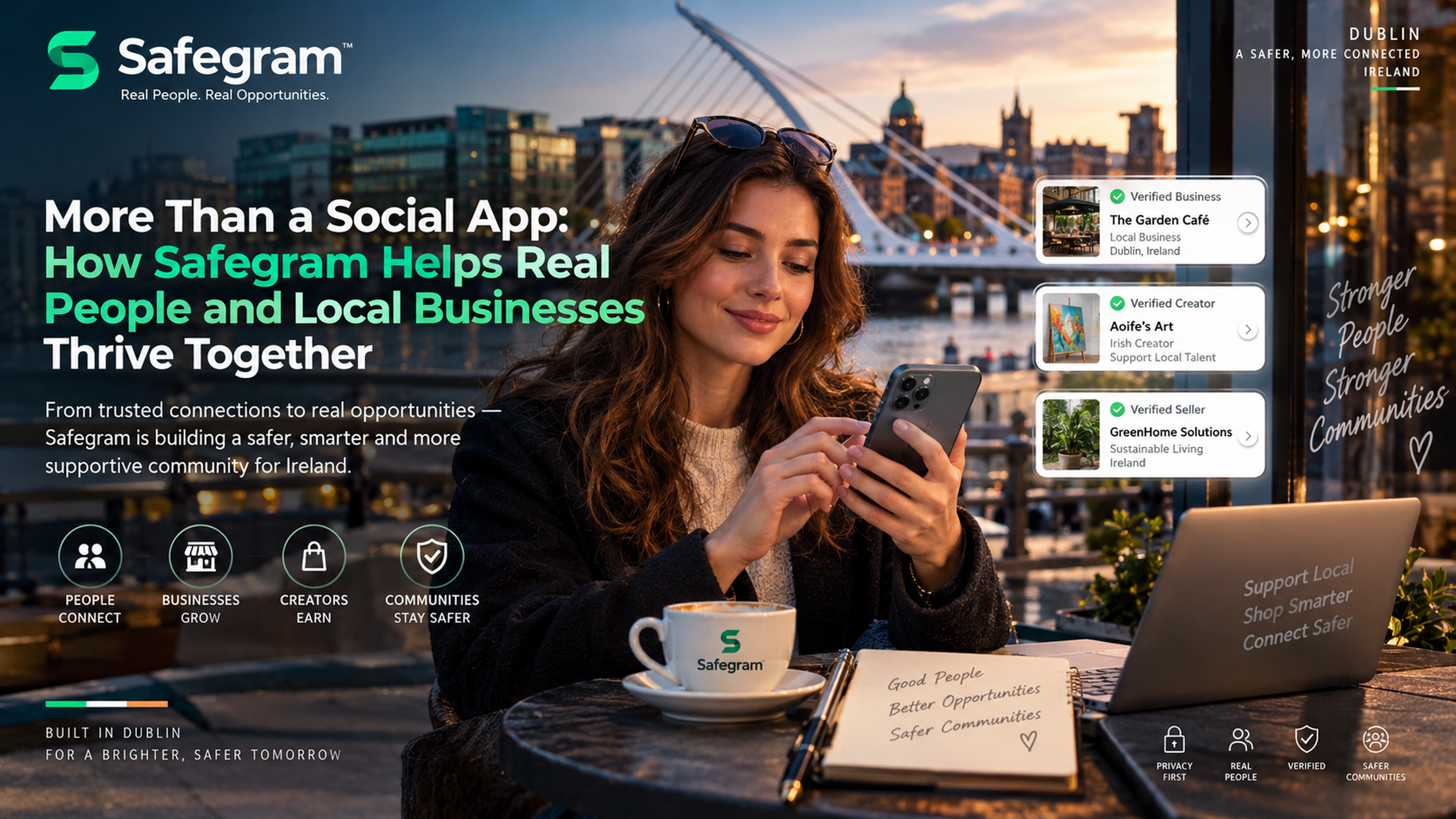
Feed design affects what people discover — from friends and communities to local businesses and services.
Key takeaways
The EU Digital Services Act requires major platforms to be more transparent about recommender systems and gives users important choices over how content is selected.
Very Large Online Platforms must provide at least one recommender-system option that is not based on profiling.
In May 2026, Coimisiún na Meán opened formal investigations into Meta over concerns about how users access and choose non-profiled feeds on Facebook and Instagram. Those investigations are ongoing.
In July 2026, the European Commission preliminarily found that the addictive design of Facebook and Instagram breached the Digital Services Act; the finding is preliminary, not a final decision.
Safegram’s current product positioning gives users multiple feed modes and a “Why am I seeing this?” explanation layer.
For years, the social-media feed has looked deceptively simple.
You open an app. You scroll. Posts appear.
But behind that screen is a ranking system deciding what you see first, what disappears, what repeats, what is recommended and what is likely to keep you engaged.
That system is usually called a recommender system or recommendation algorithm.
The technology itself is not automatically harmful. Recommendation systems can make a service more useful by surfacing relevant friends, local content, communities or information.
The problem begins when the user has little meaningful understanding or control over how that ranking works.
For a growing number of European regulators, that question is becoming a rights issue.
The Digital Services Act changed the conversation
The EU Digital Services Act, or DSA, created new obligations for online platforms around transparency, safety and accountability.
Among those obligations are rules concerning recommender systems.
Coimisiún na Meán, Ireland’s Digital Services Coordinator, explains that platforms using recommender systems must describe in plain language the main parameters used to select and rank content and the options users have to influence those systems.
Where a platform offers several recommender-system options, users must be able to select and change their preferred option.
Very Large Online Platforms — the biggest services covered by the DSA — have an additional obligation: they must provide at least one recommender-system option that is not based on profiling.
That sounds technical, but the practical question is simple:
Can a user choose a feed without having their behaviour constantly interpreted and used to personalise what comes next?
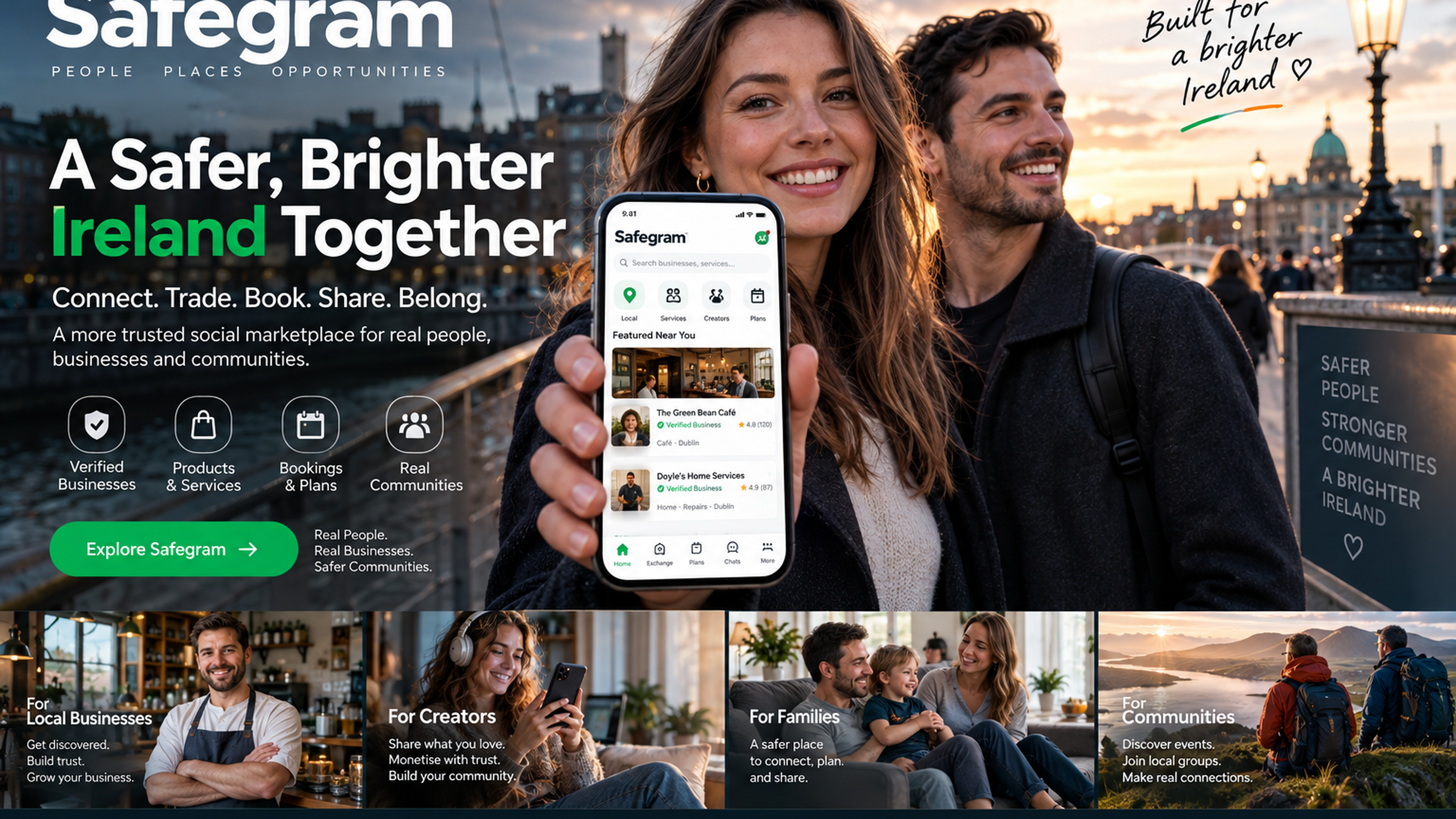
The future of recommendation may depend less on maximizing engagement and more on giving users meaningful choices.
Ireland is already testing how meaningful that choice really is
On 5 May 2026, Coimisiún na Meán announced two formal investigations into Meta concerning Facebook and Instagram.
One area of concern is whether interface design may make it difficult for users to choose a recommender feed that is not based on profiling.
The regulator said its investigation will examine potential “dark patterns” and whether people can select and modify a non-profiled recommender system in a direct and easily accessible way at any time.
That distinction matters.
A platform can technically offer a choice while still making that choice difficult to find, confusing to use or easy to reverse accidentally.
The investigation is ongoing. It would therefore be inaccurate to describe the Irish regulator as having already concluded that Meta breached the DSA on these specific issues.
But the investigation itself shows how seriously European authorities are beginning to treat feed choice and interface design.
Addictive design is now part of the regulatory debate
The scrutiny goes beyond whether a user can select a different feed.
On 10 July 2026, the European Commission announced preliminary findings that the addictive design of Instagram and Facebook breached the DSA.
The Commission said its investigation focused on features including infinite scroll, autoplay, push notifications and highly personalised recommender systems.
According to the Commission’s preliminary assessment, Meta had not adequately assessed or mitigated risks that those design features could create for physical and mental wellbeing, including for minors and vulnerable adults.
Again, the word “preliminary” matters.
These are not final findings after the complete enforcement process. Meta has the opportunity to examine the Commission’s case and respond.
Still, the direction of travel is clear: regulators are treating feed architecture and engagement design as matters that can have real effects on users, not merely as neutral product choices.
Why “more engagement” is not always the same as “more value”
Traditional social platforms often optimise around engagement because engagement is measurable.
More time spent.
More posts viewed.
More reactions.
More sessions.
More opportunities to show advertising.
But maximizing those metrics does not automatically maximize user value.
A person may spend 45 minutes scrolling and later wish they had stopped after five.
A parent may want a child to see posts from friends rather than increasingly extreme recommendations.
A user may want local information rather than whatever is most likely to trigger another swipe.
A business may prefer to reach people who intentionally follow or search for it rather than compete inside a feed whose ranking logic constantly changes.
The larger question is therefore not whether algorithms should disappear.
It is whether people should be able to understand them, change them and sometimes opt out of profiling-based ranking altogether.

Safegram combines feed controls with verified businesses, local discovery, Plans and community features.
Feed choice should be a product feature, not a hidden setting
One of the strongest lessons from the European regulatory debate is that user choice has to be practical.
A control that technically exists but is buried several menus deep is not the same as a control that is visible, understandable and easy to change.
A good feed-control system should answer several basic questions:
Why am I seeing this?
Which signals caused this post to appear?
Can I switch to people I explicitly follow?
Can I prioritize friends?
Can I see local content?
Can I reduce algorithmic intensity?
Can I use a feed that is not based on behavioural profiling?
Can I change my preference whenever I want?
These questions are increasingly important because the feed has become one of the most influential interfaces in modern life.
It shapes what people discover, what they believe is popular, which businesses they notice, which creators get attention and how long they remain inside an app.
Where Safegram fits
Safegram is a Dublin-built privacy-first social marketplace that combines social networking, communities, real-world Plans and verified commerce.
Its public product currently presents seven feed modes:
For You
Following
Friends First
Local
Discover
Custom
Less Addictive
Safegram also presents a “Why am I seeing this?” layer designed to explain why a post appears in a user’s feed.
For example, the product can indicate that the user follows an account, that a post is recent or local, and that no advertiser paid to force the post into that position.
Safegram’s website currently describes the feed philosophy as “Your feed. Your choice.”
That is a useful principle because it frames recommendation as something the user should be able to influence, rather than something that happens invisibly to them.
It also fits Safegram’s wider product direction: verified identity where trust matters, smaller Circles, real-world Plans, encrypted conversations, local business discovery and commerce through Safegram Exchange.
Less addictive does not mean no discovery
There is an important balance here.
People often want discovery.
They want to find a new restaurant, creator, walking group, business, event or useful post.
A feed made only from existing connections can become too narrow.
The better approach is not necessarily to eliminate recommendations. It is to give users clearer modes and control over how strongly recommendations influence the experience.
A “Less Addictive” mode, for example, should be designed around a calmer experience rather than maximizing session length.
A “Following” feed should prioritize accounts the user deliberately chose.
A “Local” feed should help surface nearby people, Plans, communities and businesses.
A “Friends First” mode should make social relationships more important than viral reach.
The central idea is choice.
Different users want different experiences — and the same user may want a different experience on Monday morning than on Saturday night.
What this means for the future of social media
The next phase of social-media competition may not be about who has the smartest recommendation engine.
It may be about who gives people the clearest control over it.
European regulation is pushing platforms toward greater transparency and accountability, but product design can go further than the legal minimum.
Platforms can make feed choices visible.
They can explain recommendations.
They can avoid manipulative paths.
They can let users change modes quickly.
They can make non-profiled or lower-intensity experiences genuinely usable.
That could lead to a healthier definition of personalization — one where technology adapts to what the user explicitly wants rather than trying to infer everything from behaviour.
Conclusion
For years, social feeds were treated as black boxes.
That era is beginning to change.
The Digital Services Act has made recommender-system transparency and user choice part of Europe’s regulatory framework. Irish and EU authorities are now examining whether those rights work in practice and whether addictive design creates wider risks.
For Safegram, the opportunity is to make feed control a visible part of the product rather than a compliance footnote.
The strongest version of social media may not be the one that knows the most about you.
It may be the one that gives you the most meaningful control over what you see.
Frequently asked questions
What is a recommender system?
A recommender system is the technology a platform uses to select, rank or suggest content, products, accounts or other information for a user.
Does the EU require social platforms to offer a non-profiled feed?
Very Large Online Platforms covered by the Digital Services Act must provide at least one recommender-system option that is not based on profiling.
Has Meta been finally found guilty of addictive design under the DSA?
No. On 10 July 2026, the European Commission announced preliminary findings concerning the addictive design of Facebook and Instagram. The process is not the same as a final enforcement decision.
What is Coimisiún na Meán investigating?
In May 2026, Ireland’s media regulator opened investigations examining, among other issues, whether Facebook and Instagram users can directly and easily choose and modify a recommender-system feed that is not based on profiling.
What feed controls does Safegram currently describe?
Safegram publicly lists For You, Following, Friends First, Local, Discover, Custom and Less Addictive modes, together with a “Why am I seeing this?” explanation feature.
Sources
- https://digital-strategy.ec.europa.eu/en/news/commission-preliminarily-finds-addictive-design-instagram-and-facebook-breach-digital-services-act
- https://digital-strategy.ec.europa.eu/en/policies/dsa-vlops
- https://www.cnam.ie/two-investigations-commenced-into-meta-in-respect-of-facebook-instagram/
- https://www.cnam.ie/general-public/report-complain/something-i-saw-or-experienced-online/what-can-i-report/
- https://safegram.com/
- https://safegram.com/circles
- https://safegram.com/plans
More from Safegram
Try Safegram
Privacy-first social and a verified marketplace, built in Dublin.