
TIKTOK IS AN EU GATEKEEPER. WHO REALLY CONTROLS THE CUSTOMER RELATIONSHIP?
What TikTok’s EU gatekeeper status means for small businesses, DMA rights and building lasting, permission-based customer relationships.
The big picture
On 15 October 2026, an Advocate General at the Court of Justice of the European Union advised judges to dismiss ByteDance’s challenge to TikTok’s designation as a “gatekeeper” under the Digital Markets Act (DMA). It is a non-binding legal opinion, not a final judgment. TikTok has already been designated since September 2023. The development matters because Europe is testing how much control large platforms should wield over the connection between businesses and their customers. [1][2]
For a Dublin café, an independent retailer or a freelance video creator, the practical issue is easy to recognise: social platforms can introduce you to thousands of people, but a view is not yet a booking, a customer or a repeat order.
Key takeaways
- TikTok has been an EU-designated Digital Markets Act gatekeeper since 2023; the 15 October 2026 court opinion does not create that status.
- The DMA is designed to give business users fairer conditions, access to relevant data and greater freedom to communicate offers and conclude contracts outside gatekeeper platforms, subject to the applicable provisions.
- The legislation does not promise creators guaranteed reach, free advertising or a portable list of followers.
- Small businesses should use discovery platforms for what they do well while building durable, permission-based customer relationships of their own.
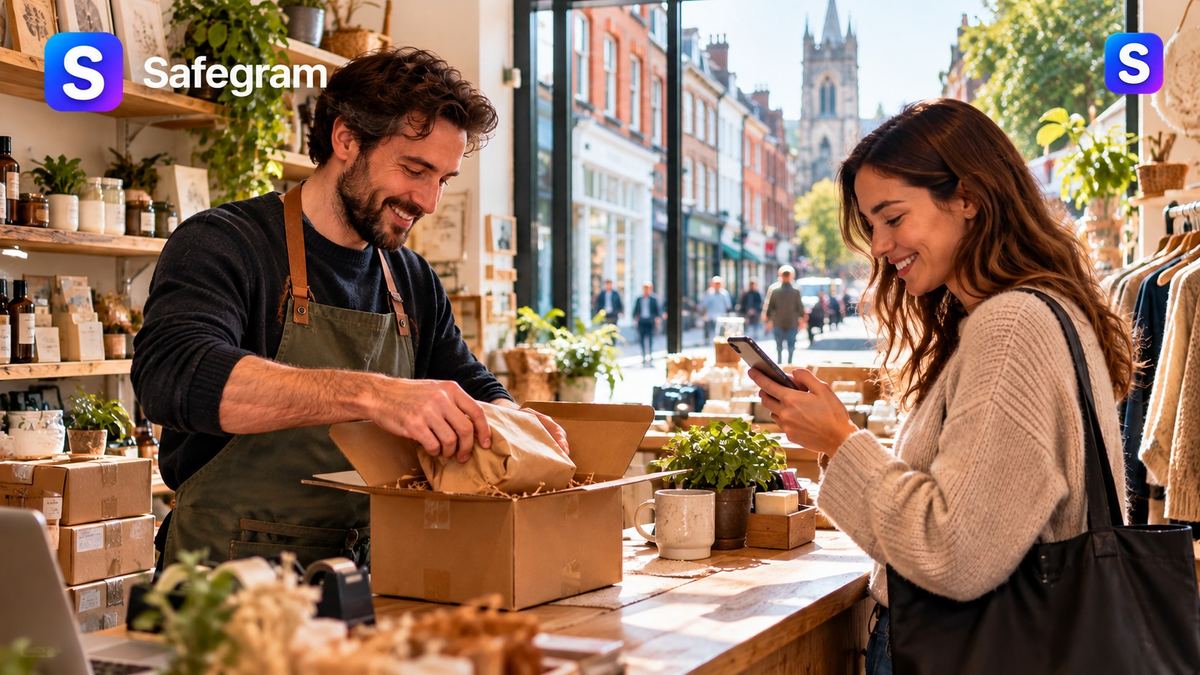
Photo: An independent shop and a video creator collaborate on product content. Discoverability matters, but repeat business depends on the relationship behind the view. AI-generated editorial illustration.

The court opinion is not a new ban on tiktok
The latest development is less dramatic — and more consequential — than some headlines suggest.
On Thursday 15 October, Advocate General Andrea Biondi recommended that the EU’s highest court reject the relevant parts of ByteDance’s appeal against TikTok’s gatekeeper designation. ByteDance had argued that TikTok should not be treated as a durable gateway between businesses and consumers, pointing, among other things, to the fact that people use multiple social platforms. [1]
The Advocate General’s reasoning matters because simply having competitors does not necessarily mean a service has stopped being an important route to customers. The Commission designated ByteDance in respect of TikTok in September 2023; the EU General Court upheld the decision in July 2024. The Court of Justice has not yet delivered its final judgment. The Advocate General’s opinion is expressly non-binding. [1][2]
Nothing in the 15 October opinion instantly changes a creator’s TikTok account, imposes a new Irish advertising charge, or orders users to move platforms. The existing DMA framework is already in force. That distinction is central to understanding the story.
WHAT DOES “GATEKEEPER” ACTUALLY MEAN?
Under the Digital Markets Act, a gatekeeper is a company controlling a designated core platform service that serves as an important gateway for businesses to reach consumers, meets the relevant economic and user thresholds, and has an entrenched or potentially durable position. Social networks, search engines, app stores and online marketplaces can fall within the law. [3][4]
The European Commission, rather than individual users, makes gatekeeper designations. The regulation then attaches obligations to the specified services. It is not a judgment that every video on the platform is harmful, nor a rule applying identical duties to every small startup.
According to the Council of the European Union, seven companies are designated gatekeepers across 23 core platform services: Alphabet, Amazon, Apple, Booking, ByteDance, Meta and Microsoft. A gatekeeper label concerns market power and the terms on which businesses and consumers interact; it is not a prize for popularity. [3]
In plain English, the DMA asks what happens when a platform becomes too important for a business to ignore — even if that business would prefer better choices.
A local business can be visible without being in control
Consider a fictional but familiar Dublin example. An independent bakery works with a creator to film its weekend specials. The reel takes off. Viewers save it, share it and ask questions. Some arrive at the shop. Others want to order a cake, book an event or see the next offer.
The platform has done something valuable: it has created discovery at a speed a small business might struggle to achieve alone. But if the bakery has no clear booking route, identifiable business profile, way to answer enquiries or appropriate means to maintain customer contact, much of that attention evaporates.
That is why the EU’s gatekeeper debate is not just an argument between regulators and large technology companies. It reaches into ordinary commerce: who can reach a customer, on what terms, using which data, and what happens after the initial click?
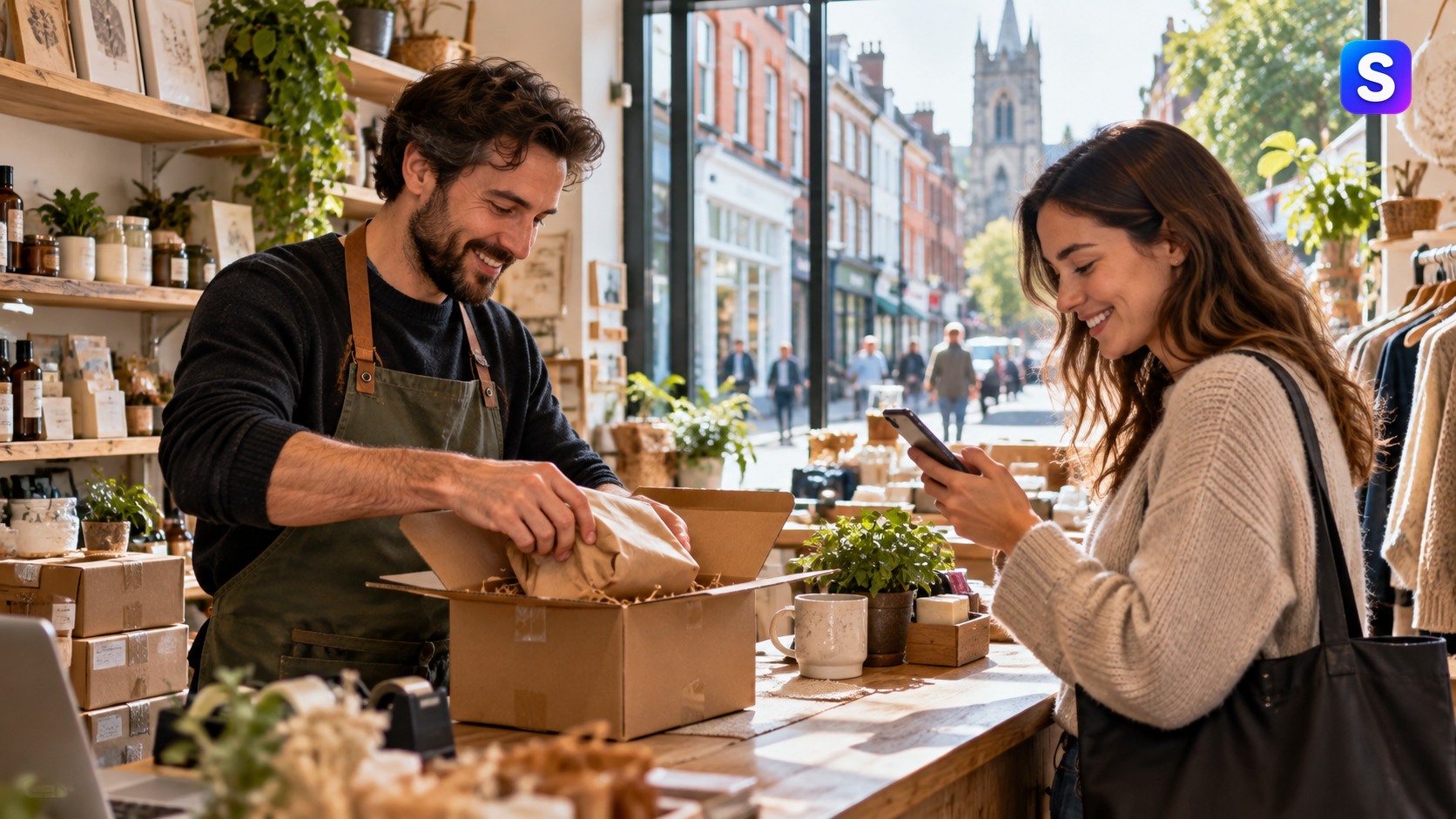
Photo: A customer and independent shop owner discuss an order on a smartphone. Attention becomes more valuable when the next step is clear and trustworthy. AI-generated editorial illustration.
Three dma rights worth understanding — and their limits
- The ability to communicate beyond a gatekeeper.
The DMA requires designated gatekeepers, within the scope of the applicable rules, to allow business users to communicate and promote offers to customers and conclude contracts with them outside the gatekeeper’s platform. That can reduce dependence on a single closed transaction route. It does not remove consumer-law duties or give companies permission to spam people. [4]
- Access to business and advertising information.
Gatekeepers must give qualifying business users access to certain data generated through use of the relevant platform, while respecting conditions such as user consent and privacy rules. Advertisers and publishers also have rights to tools and information needed to verify advertising performance independently. A small advertiser should therefore ask what figures are available, how results are attributed and how those figures can be checked. [3][4]
- Better data portability for users.
The DMA contains portability requirements for data provided or generated by end users using designated core platform services. That is not the same as a guarantee that a creator can export their audience as transferable followers, carry recommendation rankings to a competitor or replicate an algorithm elsewhere. The law’s actual scope, privacy safeguards and implementation matter. [4]
A useful business response is to measure more than views: enquiries received, booked appointments, completed sales, repeat customers and permission-based return visits.
The digital markets act is not the digital services act
The two EU laws are often confused. The DMA is primarily about fairness and contestability in digital markets. The Digital Services Act (DSA) focuses on online safety, illegal content, transparency and systemic platform responsibilities. They can affect the same companies in different ways. [3][5]
TikTok provides a good example. In December 2025, the European Commission accepted binding commitments from TikTok concerning the transparency of its advertising repository under the DSA. The commitments included faster repository updates, fuller ad content and targeting details, and improved search. That development concerns ad transparency under the DSA — not the October 2026 DMA court appeal. [5]
For advertisers and creators, the takeaway is practical: identify the rule before claiming that a platform is breaking it. More transparent advertising can help researchers and users scrutinise promotions; it does not prove that every advertisement or seller is trustworthy.
Photo: A small digital-product team reviews customer journeys and platform choices. Regulation can change the rules of competition, but product design determines whether those choices help people. AI-generated editorial illustration.
BIG PLATFORMS HAVE REAL STRENGTHS. SMALLER ONES NEED A DIFFERENT CASE.
TikTok remains a powerful discovery environment for short-form video, with sophisticated production tools, recommendation systems and advertiser infrastructure. Instagram and YouTube offer enormous communities and mature creator ecosystems. Etsy helps shoppers search specialist goods; Shopify gives merchants tools for running their own storefronts; Booking.com has deep accommodation-search capabilities.
These are not interchangeable products, and no credible newcomer should pretend they are. Scale, specialist inventory, established buyer habits and business tooling are significant competitive advantages. Nor does a gatekeeper designation imply that any single competitor has already solved the economics of customer acquisition.
The opportunity for emerging platforms is to remove a different frustration: the distance between finding someone interesting, knowing whether they are genuine, discovering a service, starting a conversation and completing a transaction.
That is a narrower, more measurable challenge than trying to replace every large social network overnight.
From a viral reel to a lasting local relationship
On a platform such as Safegram, the proposed competitive path is to bring verified identities, social discovery, neighbourhood relevance and commerce closer together. A creator could demonstrate work on a social profile, publish a clearly described video-production service through Safegram Exchange and receive enquiries from a verified local business. A restaurant could present an offer and explain how customers can contact or book it. A verified individual could list a second-hand item while a buyer evaluates the seller’s trust signals and terms.
The value lies in reducing the number of disconnected steps, not in claiming that verification makes fraud impossible. A verified identity can provide additional accountability; it cannot guarantee quality, suitability or that a transaction will go perfectly. Safegram’s wider goal is a persistent trust layer across people, services and products, beginning with a focused Irish market rather than an assumed global audience.
That matters to creators as much as merchants. A content maker who gets discovered through a social video still needs a professional portfolio, clear deliverables, payment terms and relationships that produce the next job. Attention should be a doorway to work, not the entire business model.
Safegram does not claim to match TikTok’s reach, Shopify’s merchant ecosystem or specialist marketplaces’ inventory. Its opportunity is to prove that a verified, cross-category local experience can convert discovery into useful real-world activity without forcing people to rebuild trust at every step.
Photo: A Dublin-style customer and service provider review details together. Identity checks can support trust, but clear terms, safe payment and good service remain essential. AI-generated editorial illustration.
Five questions every irish business should ask before its next social campaign
Where does the viewer go next?
A beautiful reel without an obvious next action may deliver attention but little measurable value. Give customers a relevant service page, listing, enquiry route or booking option.
Who owns the actual customer permission?
Do not assume a follower is a marketing contact. If you collect email or phone details, explain how they will be used and obtain a valid GDPR basis. Respect unsubscribe requests and never move people into campaigns automatically.
Can the results be verified?
Ask an agency or platform for evidence that distinguishes views, clicks, qualified enquiries, confirmed sales and repeat purchases. Read the applicable platform reporting tools rather than relying on a screenshot of “reach”.
What would happen if the algorithm changed tomorrow?
Build a business identity, portfolio, customer service standards and legitimate direct channels that make sense beyond one social feed. Do not rely on any legal change to guarantee your posts will be seen.
Can people tell who they are dealing with?
Verification, business details, transparent prices, reviews and accurate advertising disclosures help people make informed decisions. Use them alongside consumer protections, not as substitutes for them.
What the tiktok case tells US about europe’s next digital economy
The EU’s aim is not to make every social platform equal in size. It is to make digital markets contestable — a market in which established platforms must compete fairly and smaller businesses have meaningful choices. The Advocate General’s opinion is one step in testing that framework, not a verdict on the future of social media. [1][3]
For creators and local companies, the most useful response is not to abandon TikTok or wait for Luxembourg. Use established platforms for discovery where they work. Build clear, trustworthy routes from attention to services, orders and customer relationships. And judge every new platform, including Safegram, by whether it makes that journey genuinely easier.
The future of local digital commerce may be won not by the app with the loudest video, but by the experience that helps a customer confidently take the next step.
Frequently asked questions
Is TikTok banned in Ireland because of the EU gatekeeper case?
No. The October 15, 2026 development was a non-binding Advocate General opinion about a Digital Markets Act designation, not a ban. TikTok remains available and the Court of Justice’s final ruling is pending. [1]
What did the European Court decide about TikTok on 15 October 2026?
The Court has not yet decided the appeal. Advocate General Andrea Biondi advised that the relevant parts of ByteDance’s challenge should be dismissed. Judges will deliver a final ruling later. [1]
What is a gatekeeper under the EU Digital Markets Act?
A designated company controlling a core platform service that acts as an important route between businesses and consumers, subject to the Act’s economic and user thresholds. [3][4]
Does the DMA let influencers transfer TikTok followers to another app?
The DMA includes rights to certain data portability but does not guarantee that a creator can transfer a follower network or TikTok’s recommendation system to another platform. [4]
Can an Irish business sell products outside TikTok?
Yes. A business can offer goods or services through other lawful channels. The DMA adds protections for business users’ freedom to communicate offers and conclude contracts beyond designated gatekeeper platforms within the law’s scope. [4]
Is the DMA the same as the Digital Services Act?
No. The DMA targets fair competition and gatekeeper behaviour. The DSA targets online safety, transparency and platform responsibilities. Both can affect major services. [3][5]
How can a small business reduce dependence on one social platform?
Create a consistent business identity, provide a clear listing or booking destination, measure enquiries and transactions, and build lawful permission-based customer relationships. Diversify only where the channels genuinely serve your customers.
Could Safegram replace TikTok, Instagram or specialist marketplaces?
Safegram’s ambition is different: connecting social discovery, verified people and businesses, services and commerce within one trusted environment. Its Ireland-first focus and current scale should not be mistaken for the reach or specialist capability of established platforms.
Explore and take the next step
Whether you are a Dublin business, an independent creator or a customer who values dealing with real people, explore verified profiles and services on Safegram. Show what you offer, describe it clearly and make it easier for the right people to reach you.
Visit https://safegram.com
Source references
[1] Court of Justice of the European Union, Press Release No 151/26, Advocate General’s Opinion in Case C-627/24 P, 15 October 2026: https://curia.europa.eu/site/upload/docs/application/pdf/2026-10/cp260151en.pdf
[2] European Commission, ByteDance designation decision, 5 September 2023, published in the Official Journal: https://eur-lex.europa.eu/eli/C/2023/552/oj/eng
[3] Council of the European Union, Digital Markets Act overview and designated gatekeepers (accessed 18 October 2026): https://www.consilium.europa.eu/en/policies/digital-markets-act/
[4] EUR-Lex, Digital Markets Act summary, Regulation (EU) 2022/1925: https://eur-lex.europa.eu/EN/legal-content/summary/digital-markets-act.html
[5] European Commission, TikTok commitments on advertising transparency under the DSA, 5 December 2025: https://digital-strategy.ec.europa.eu/en/news/commission-accepts-tiktoks-commitments-advertising-transparency-under-digital-services-act
[6] Reuters, EU court adviser backs TikTok gatekeeper label, 15 October 2026: https://www.reuters.com/world/china/eu-court-adviser-sides-with-eu-regulators-against-tiktok-fight-over-tech-label-2026-10-15/
More from Safegram
Try Safegram
Privacy-first social and a verified marketplace, built in Dublin.