You Don't Need 100,000 Followers. You Need a Way to Get Hired.
Learn how UGC creators can win clients with a strong portfolio, clear services and transparent pricing—not a huge follower count.

A new wave of creators is proving that creative skill can be more valuable than follower count. But turning a good video into a paying customer requires more than posting and hoping an algorithm notices. Ireland's latest creator research reveals a market hungry for authenticity — and an opportunity for creators ready to operate like businesses.
Key takeaways
- UGC creators are paid to make useful content; they do not necessarily need a large personal audience.
- Irish research shows creator content drives product discovery, but audiences remain sceptical of sponsored posts.
- A clear portfolio, specific services, transparent pricing and reliable delivery can matter more than vanity metrics.
- Safegram is inviting creators and influencers to list their services and build a professional presence, with a limited-time Creator Elite incentive and a separate initiative to commission ten creators.
The next creator breakthrough might have 600 followers
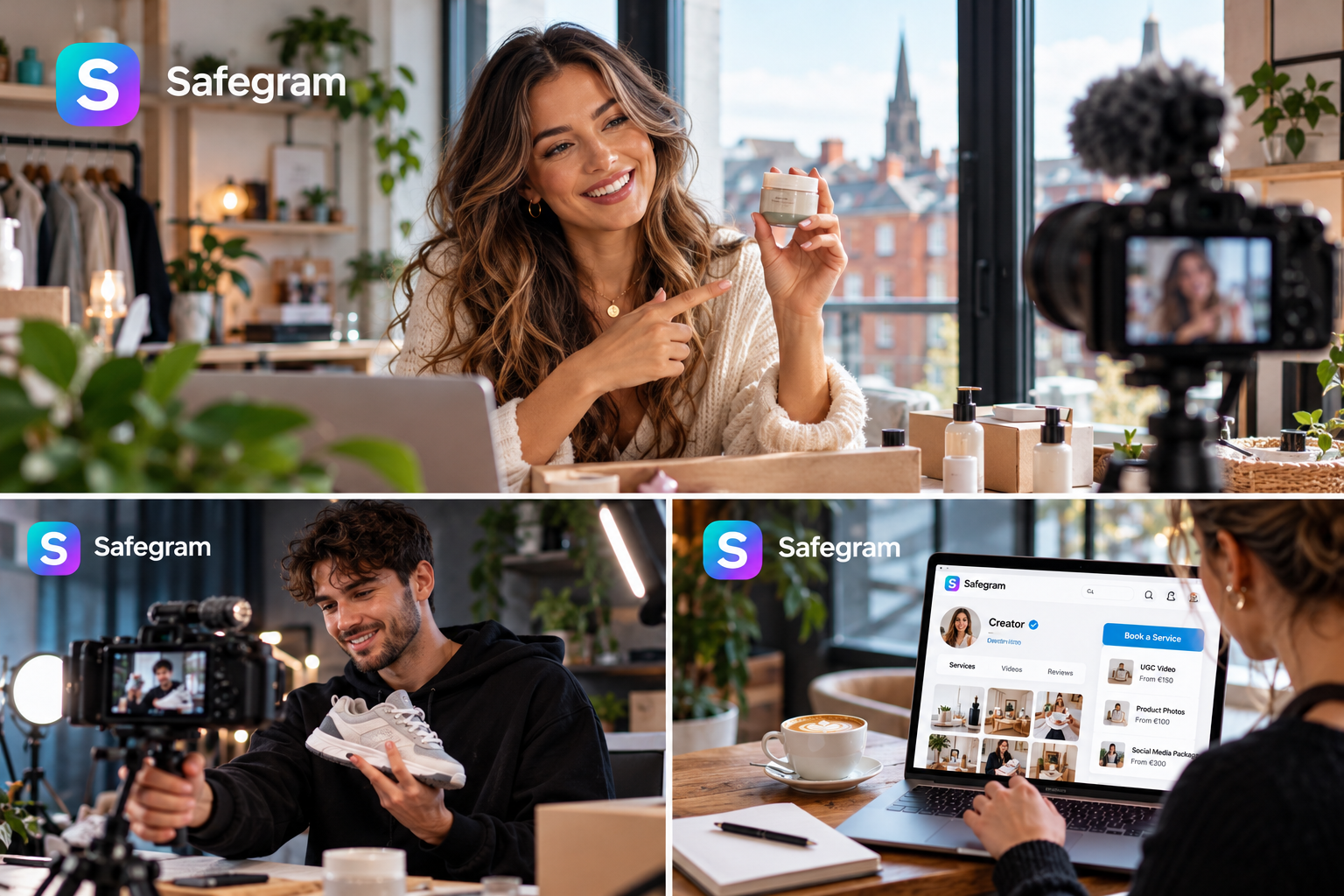
Imagine two creators. One has 80,000 followers but no clear offer, no portfolio of client work and no easy way to book a campaign. The other has 600 followers, five strong product videos, an understandable price and a service a local business can purchase.
For a brand looking for someone to shoot a 30-second restaurant reel, the second creator may be the better hire.
This is the distinction between attention and employable creative skill. Influencers often monetise the relationship with their audience. User-generated-content (UGC) creators can monetise production: scripting, filming, editing, photography, testimonials, tutorials and short-form advertising assets that a business publishes through its own channels. Many people do both.
The opportunity is not that follower counts have stopped mattering. They matter when brands are paying for reach. It is that reach is only one of several things a business can buy.
What irish audiences are telling brands
Research published by IAB Ireland and RED C in September 2026 found that 38% of heavy online media users had researched a product or brand further after encountering creator content; 36% had discovered a new brand or product, and 19% had purchased a product or service as a result.
But influence does not automatically equal trust. While 72% of Irish adults said authenticity was important in creator content, only 17% felt sponsored creator content was authentic. Some 68% valued transparency about commercial partnerships, but just 21% perceived that transparency in creator content.
The strongest trust signal was surprisingly simple: honest reviews showing both positives and negatives, cited by 47% of adults. These findings came from IAB Ireland's Creator Effect research, conducted by RED C.
For aspiring creators, that is a commercial insight, not just a criticism of influencer culture. Brands need content that feels believable, explains the product and earns a viewer's attention. An authentic demonstration from someone who understands the customer can be more useful than another glossy, interchangeable advertisement.
Ugc is a service, not a lottery ticket
A creator's first offer need not be complicated. Consider a Dublin café needing a short video of its lunch menu, a beauty salon wanting a treatment walkthrough, a local gym seeking member stories, or a small retailer needing five product demonstrations.
A credible creator could package those jobs as a single vertical video, a set of three edited reels, product photography, a testimonial-style demonstration or a monthly content package. The deliverables should specify length, number of edits, turnaround time, usage rights and whether posting to the creator's own audience is included.
That final point is important. Making a video for a brand's account is different from publishing sponsored content to your followers. A creator should not give away advertising usage rights, perpetual exclusivity or unlimited revisions by accident. Clear agreements protect both sides.
Creators also need evidence. A portfolio with three excellent sample videos — even self-initiated examples clearly marked as samples — can explain a service better than a generic bio saying “DM for collabs”.
From discovery to a paid order
The traditional workflow is fragmented. A brand discovers a creator on Instagram or TikTok, asks for rates through direct messages, requests examples through a cloud folder, negotiates a brief by email and arranges payment elsewhere. Specialist marketplaces and agencies help solve parts of this process, and established platforms bring considerable audience reach, tools and brand relationships.
Safegram is approaching the same problem from another direction: combining social discovery with a place for verified creators and businesses to present services, communicate and transact through Safegram Exchange. The longer-term ambition is to connect local businesses, creator talent, products, bookings and community relationships rather than leave each interaction stranded in a separate application.
That is an ambition, not a claim that Safegram has the audience or campaign inventory of the major networks. Its near-term value to early creators is more practical: establish a profile, show previous work, publish at least one specific service and make it easier for interested businesses to understand what they can buy.
An Irish restaurant owner might discover a creator's behind-the-scenes food video, view a portfolio, then enquire about a menu launch reel. A construction company might want a polished before-and-after renovation video. A wedding supplier might commission a venue walkthrough. A micro-influencer with a genuinely engaged Dublin audience could offer a separate paid distribution package.
These are examples of possible services, not claims of completed Safegram transactions.
The creator who treats their work like a business will stand out
The most compelling creator profile answers six questions without forcing a potential client to chase details: What do you make? Who is it for? What does it look like? What exactly is included? How quickly can you deliver? How can the customer book or enquire?
Creators should show different strengths: a fast product hook, a natural on-camera explanation, clean editing, local knowledge, or the ability to translate technical services into language ordinary customers understand. Businesses increasingly need creators who understand the customer, not just the camera.
For influencers, the offer may include audience demographics, engagement, content formats and examples of relevant previous partnerships. For UGC specialists, portfolio quality and production reliability may be the stronger evidence.
And disclosure matters. Ireland's Competition and Consumer Protection Commission and Advertising Standards Authority advise that commercial content must be instantly recognisable. Payments, commissions, gifted products and certain other benefits can trigger disclosure obligations. An honest partnership should not require a creator to hide that it is commercial.
A real review can be positive and still be clearly labelled as an advertisement.
An invitation to build, not just post
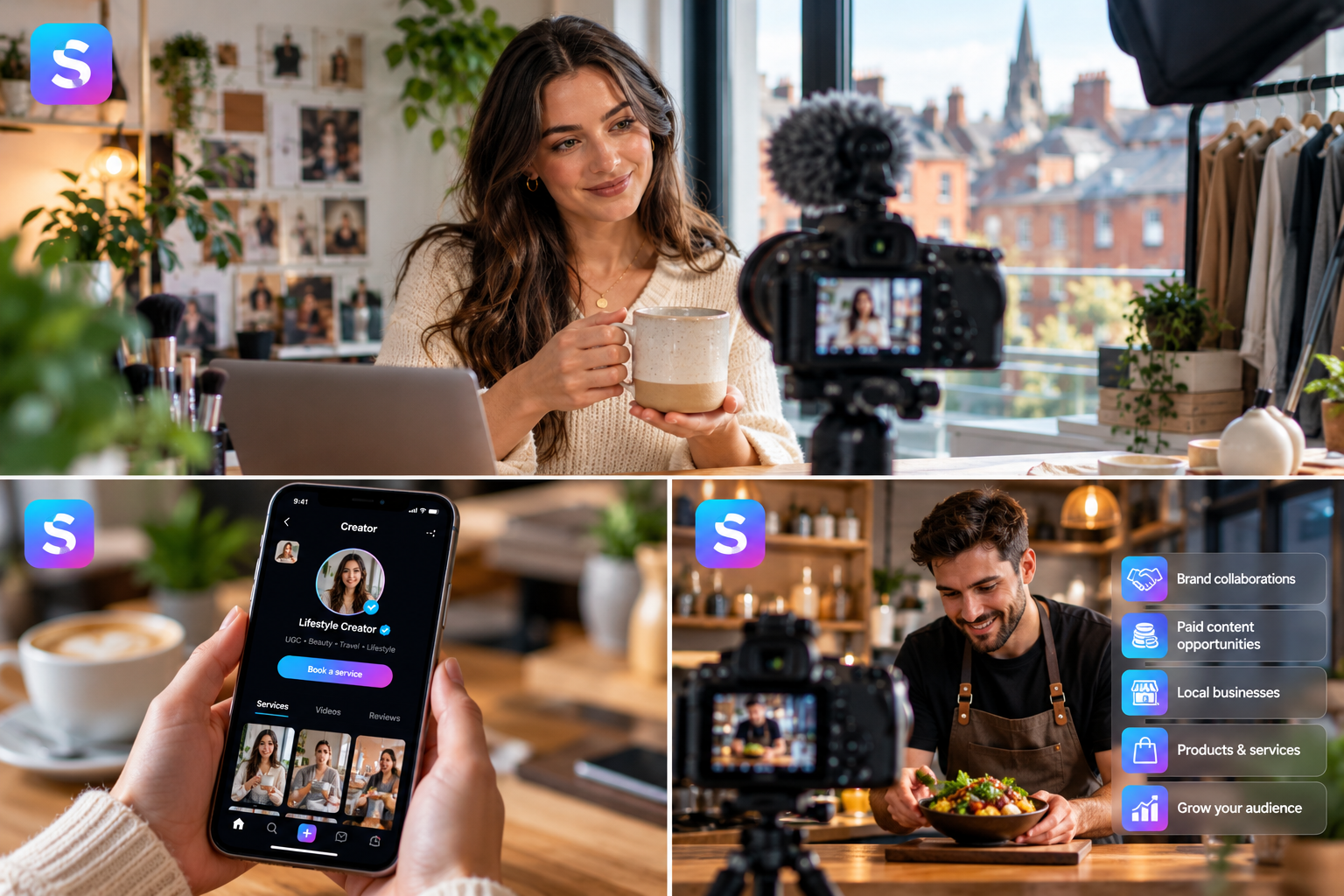
Safegram is currently inviting UGC creators, influencers, videographers, photographers and other creative professionals to bring their existing work onto the platform and publish the services they want customers to buy.
For eligible creators who join within 24 hours of receiving the current invitation, Safegram is offering 12 months of Creator Elite at no subscription cost, subject to the stated onboarding steps: download the app, complete verification, publish at least one service listing and reply to the invitation email so the team can activate the offer. This is a limited invitation, not a permanent public entitlement.
Safegram also intends to purchase services from ten different creators through the platform and then commission those creators to produce content demonstrating the process. Those orders are a separate, selective initiative; signing up does not guarantee a paid commission. Creators should provide examples of previous work and clear service offers so the team can assess suitability.
The proposition is straightforward: if you can create something valuable, make it possible for someone to hire you for it.
Five moves to make this week
-
Choose a niche you understand: food, fitness, beauty, travel, fashion, home renovation, local business or another specialist area.
-
Produce three strong portfolio examples. Label speculative samples honestly and do not imply a brand hired you when it did not.
-
Turn skills into bookable offers: a video, a bundle, a monthly package or an audience promotion, with clear deliverables and usage terms.
-
Build a verified professional presence, upload previous work and publish at least one service on Safegram Exchange.
-
Approach relevant businesses with one concrete creative idea rather than a generic “let's collaborate”.
WHAT HAPPENS NEXT?
The creator economy's next phase will not be decided solely by who accumulates the most views. It will also be shaped by who can turn talent into a dependable service, who earns trust and who can form lasting commercial relationships.
For creators willing to treat their craft seriously, that opens a much bigger possibility than the occasional free product: a business with a portfolio, clients and repeat work.
You do not need permission from an algorithm to start building it.
Frequently asked questions
DO YOU NEED FOLLOWERS TO BECOME A UGC CREATOR?
No. Brands can hire UGC creators to produce content for brand-owned channels regardless of the creator's follower count. Influencer campaigns that pay for audience reach are different.
HOW DO BEGINNERS GET THEIR FIRST UGC CLIENT?
Create honest sample work, choose a niche, define a clear service and pitch relevant businesses with specific ideas. Do not claim unpaid samples were commissioned work.
WHAT SHOULD A UGC PORTFOLIO INCLUDE?
Three to six representative videos or images, a short introduction, your specialities, deliverables, turnaround times, usage terms and a clear contact or booking route.
CAN MICRO-INFLUENCERS SELL SERVICES AS WELL AS SPONSORED POSTS?
Yes. A micro-influencer can offer production services separately from paid promotion to their own audience. Pricing and deliverables should distinguish the two.
HOW DOES SAFEGRAM HELP CREATORS?
Safegram enables verified creator profiles and services listings through its social-commerce approach, helping creators show previous work and present offers to prospective customers. Availability of particular workflows may depend on rollout and account setup.
IS CREATOR ELITE FREE FOR EVERYONE?
No. The current offer is 12 months free for eligible invitees who complete the required onboarding steps within 24 hours of receiving their invitation and reply for activation. Terms should be confirmed with Safegram.
WILL SAFEGRAM PAY EVERY CREATOR WHO JOINS?
No. Safegram plans to commission services from ten selected creators through the platform. Joining or listing a service does not guarantee selection or payment.
DO I HAVE TO LABEL A GIFTED OR PAID POST IN IRELAND?
Commercial relationships must be disclosed clearly. The CCPC and Advertising Standards Authority provide detailed guidance on paid partnerships, gifts, affiliate links and self-promotion.
Call to action
CREATORS: YOUR NEXT CLIENT SHOULD BE ABLE TO FIND YOU.
Join Safegram, verify your profile, showcase previous work and list at least one service. If you received the limited Creator Elite invitation, complete its steps within 24 hours and reply to the email to request activation.
Explore: https://safegram.com
Sources
- IAB Ireland / RED C, “The Creator Effect”, September 2026
- AdWorld, “Creator Content is Driving Brand Discovery But Trust Gap Persists”, 11 September 2026
- CCPC and Advertising Standards Authority, “Influencer advertising and marketing” guidance
- CCPC, “CCPC and ASA sign data-sharing agreement to strengthen social media influencer regulation”, 25 August 2025
More from Safegram
Try Safegram
Privacy-first social and a verified marketplace, built in Dublin.