
Why verified marketplaces could change how Ireland buys and sells online
Anonymous listings, fake shops and scam tactics have made online buying riskier. Here's why verified marketplaces matter in Ireland — and what verification can and cannot do.
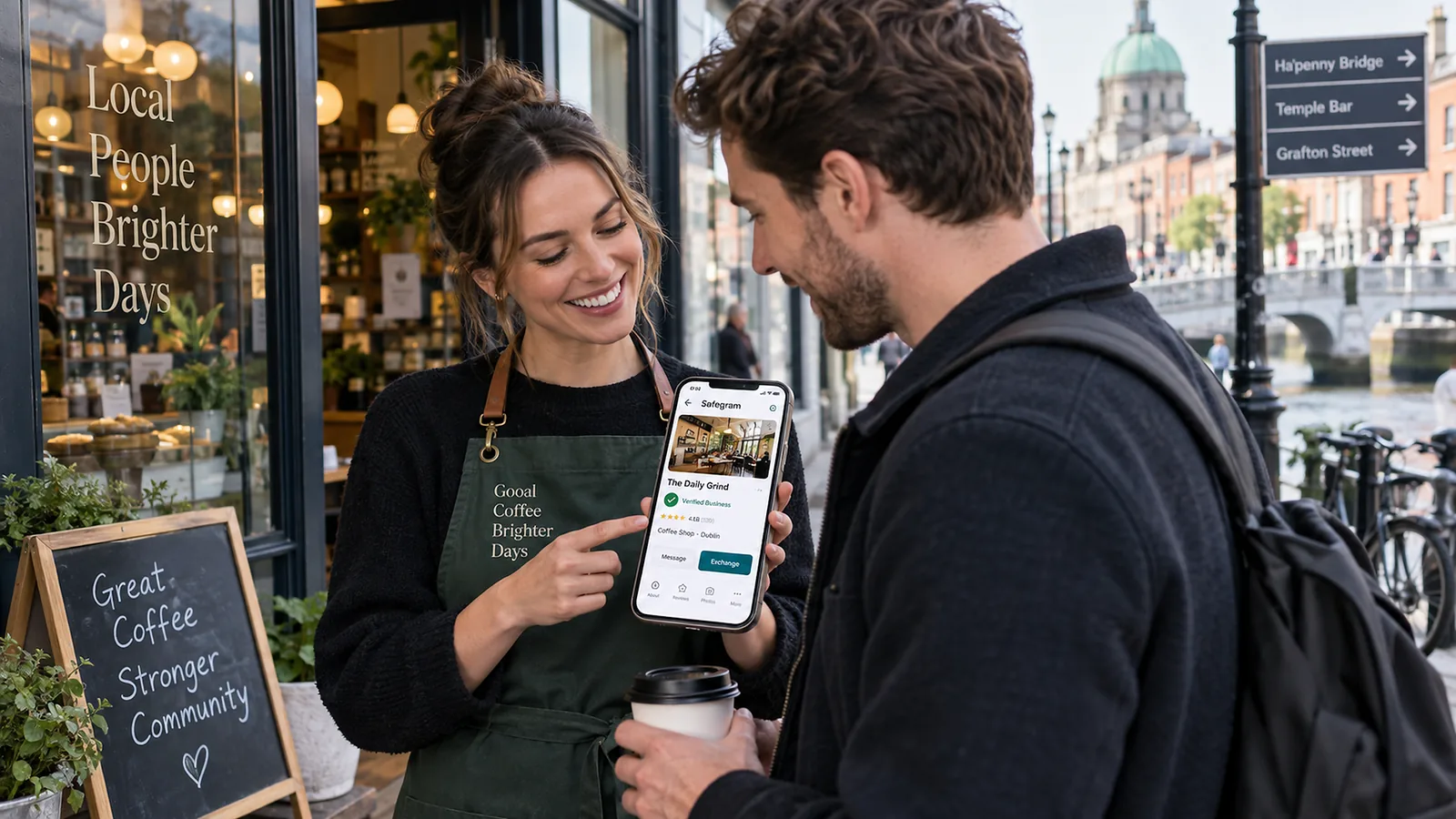
Online marketplaces made buying and selling easier, but they also made it easier for bad actors to hide behind fake names, cloned listings and misleading profiles. In Ireland, trust has become one of the biggest problems in digital commerce. Verification does not remove every risk, but it can change the quality of the marketplace by adding accountability where anonymity often creates confusion.
Key takeaways
- Online convenience is still growing, but so are concerns around scams, fake shops and misleading social listings.
- A verified marketplace does not guarantee perfect safety, but it adds identity and accountability to commercial activity.
- Safegram's approach is to require businesses, sellers and creators to verify before monetising or listing commercially.
- Trust online should come from product design, not just after-the-fact moderation.
- In Ireland, a more trusted marketplace model could benefit both consumers and real local businesses.
Buying and selling online has become normal. For many people, it is now the first place they look for a service, a local business, a product, a booking, or a second-hand deal. The convenience is obvious: search quickly, compare options, message directly, and complete the transaction from your phone.
But something important has changed alongside that convenience.
For many users, the online experience is now mixed with hesitation. Is this seller real? Is this business genuine? Is the profile trustworthy? Will the person actually turn up? Is the deal as it seems, or is it another example of urgency, fake reviews or copied branding being used to push someone into a rushed decision?
That trust gap is one of the biggest issues in digital commerce today.
Irish consumer guidance has repeatedly warned the public about fake online shops, misleading social media promotions, suspicious payment methods, impersonation and pressure tactics. The problem is no longer just "shopping online". The real issue is trying to judge trust in spaces where the other side may be difficult to verify.
That is why the idea of the verified marketplace matters.
The trust problem is bigger than one fake listing
When people think about marketplace risk, they often imagine one obvious scam post. In reality, the issue is much wider than that.
A suspicious marketplace can involve:
- fake or copied business identities
- social profiles that look real at first glance
- listings with little accountability behind them
- misleading offers designed to create urgency
- requests for unsafe payment methods
- difficulty knowing who is genuinely behind a product or service
This damages more than just individual transactions.
It also harms legitimate businesses, creators and sellers who are trying to build trust honestly. If a platform treats real and fake operators the same way at the point of visibility, users become more cautious about everyone. That means genuine businesses work harder to overcome the doubt created by bad actors.
In other words, weak trust systems hurt the good participants too.
What a verified marketplace actually means
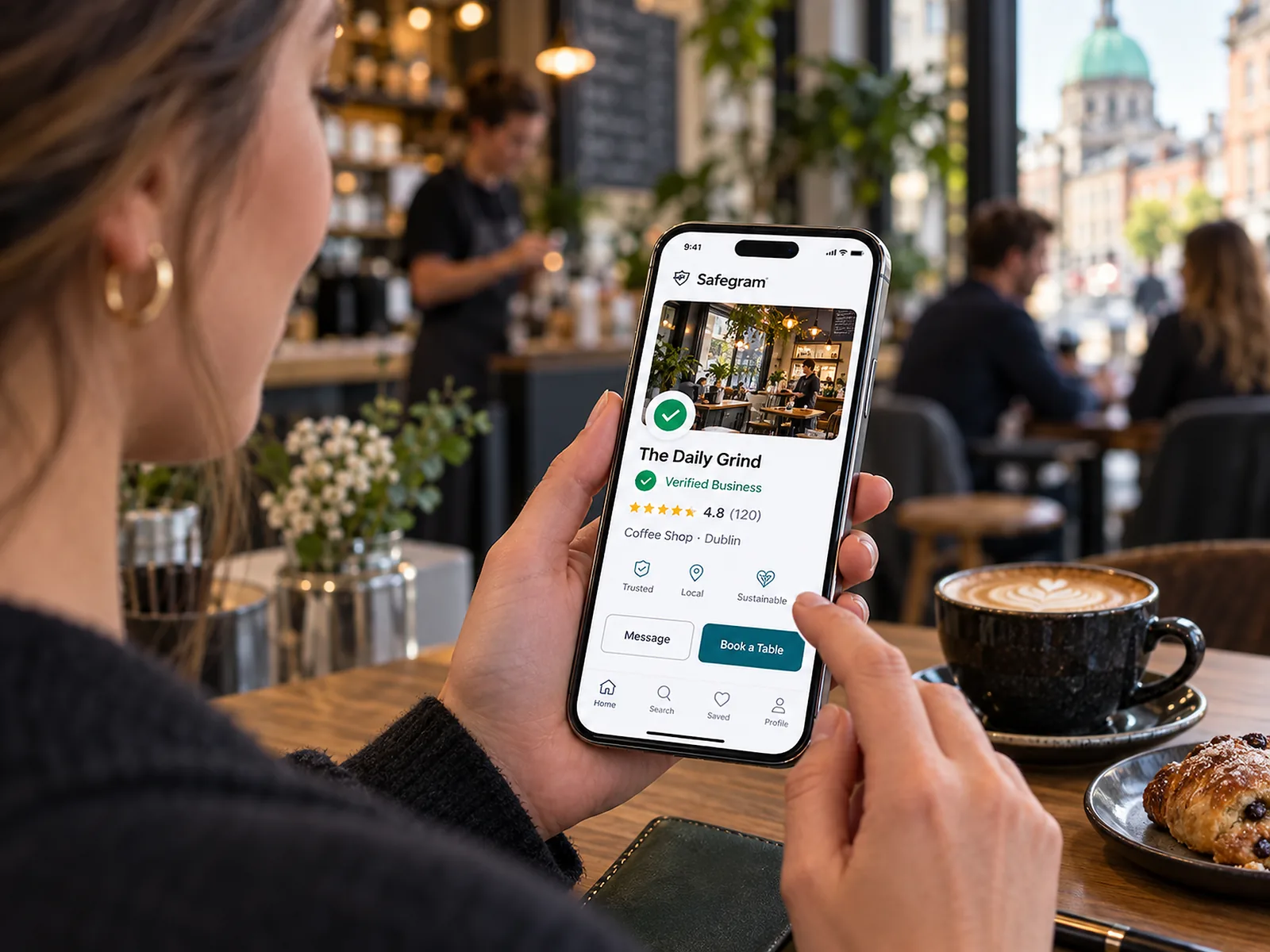
A verified marketplace is not simply a platform with a badge next to random accounts. It should be a marketplace where commercial activity is connected to meaningful accountability.
That usually means that the people or organisations earning money through the platform are not anonymous to the system. It also means the platform is taking trust seriously before a problem happens, not only after a complaint is made.
A stronger marketplace model typically includes:
- identity or business verification before monetisation
- clearer trust signals
- reporting and moderation tools
- transparent rules for buyers and sellers
- safer payment and booking flows
- visible business information where appropriate
- review and reputation mechanisms that support real accountability
Verification alone is not enough. It should be part of a broader trust architecture.
But it is an important starting point, because it changes the incentives. Someone who has had to verify before selling or listing commercially is operating with more accountability than someone using a throwaway identity.
What verification does — and what it does not do
This distinction matters.
Verification does not mean that fraud becomes impossible. No serious platform should promise that.
A verified system cannot guarantee that every transaction will be perfect, every service will satisfy the customer, or every dispute will disappear. Human behaviour is more complicated than that.
What verification can do is raise the standard of the marketplace by making commercial participants more accountable and by giving users better context about who is on the other side.
That may sound simple, but it is powerful.
The difference between an anonymous seller and a verified seller is not only symbolic. It changes how trust is built, how abuse is deterred, and how a platform structures its marketplace culture.
The best trust systems do not pretend risk does not exist. They reduce avoidable risk and make the environment more transparent.
Why this matters in Ireland
Ireland has a strong local business culture, a high level of smartphone use, and a growing expectation that platforms should work better for ordinary people rather than against them.
That creates an opportunity.
Irish consumers want convenience, but they also want to feel that they are dealing with real people and real businesses. At the same time, many small businesses are looking for a better way to be discovered, message customers, take bookings and generate business online without being lost in noisy, low-trust environments.
This is where the idea of a verified marketplace becomes more than a technical feature. It becomes a business model and a product philosophy.
A more trusted marketplace could help:
- consumers feel more confident when buying or booking
- genuine businesses stand out more clearly
- creators monetise in a more accountable environment
- local commerce work better at community level
- social interaction and commerce exist together with stronger trust signals
Where Safegram fits
Safegram is building around exactly that trust challenge.
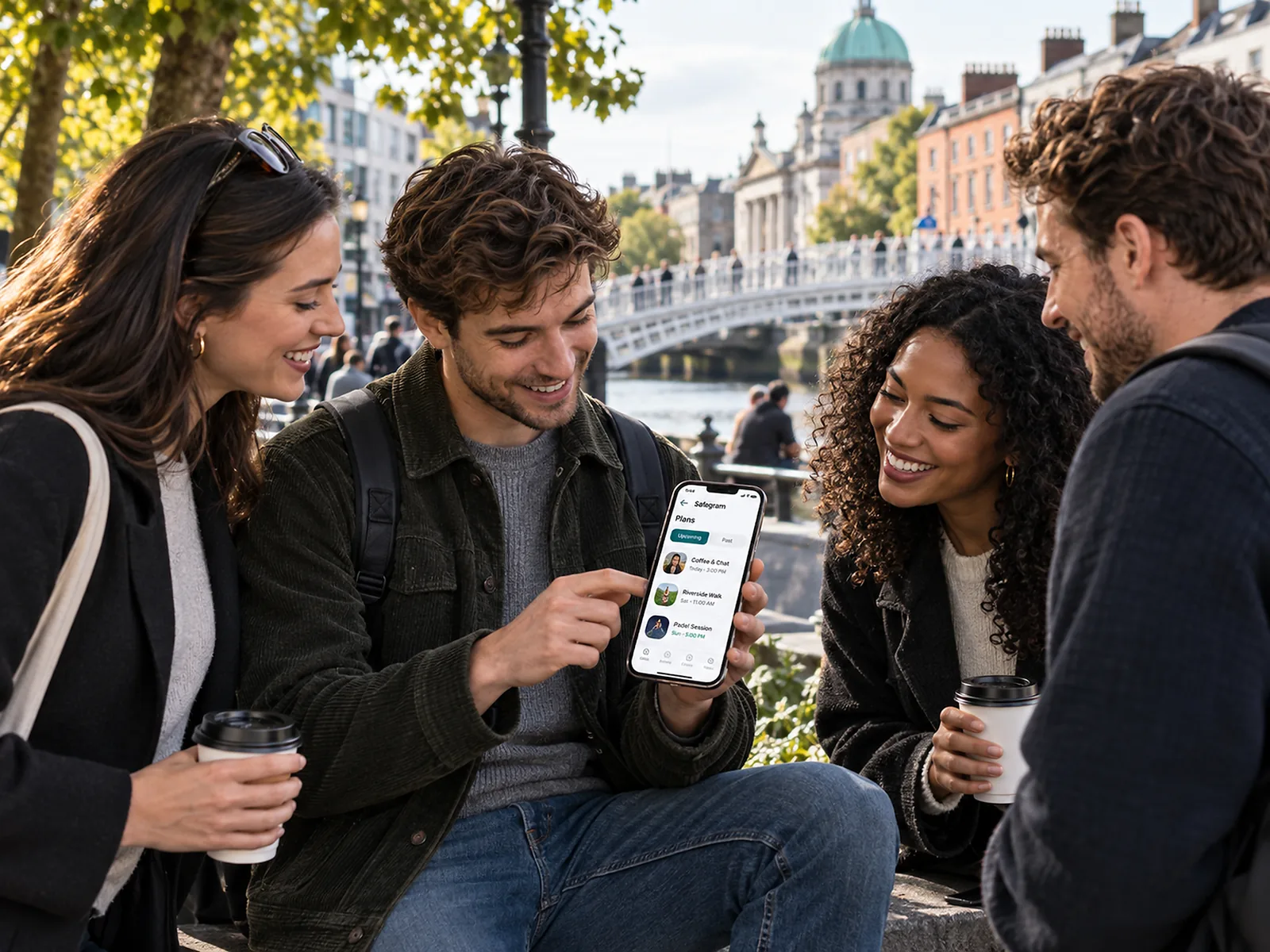
Safegram is a Dublin-built privacy-first social marketplace where people, creators, verified sellers and businesses can connect, chat, post, trade and build trust with more control.
Its approach is not to say that every ordinary user must verify simply to use the platform. Instead, the more important rule is this: businesses, sellers and creators must verify before monetising or listing commercially.
That is a meaningful distinction.
It helps keep the social side open enough to be usable, while making the commercial side more accountable. Safegram's verification process is handled through Didit, with Safegram positioned around receiving verification status rather than storing users' identity documents itself.
The wider Safegram product then builds around that trust layer. That includes:
- Safegram Exchange for products, services and bookings
- verified businesses, sellers and creators
- end-to-end encrypted chat
- Plans for real-world activities
- Circles for smaller trusted communities
- Safegram Select for more curated listings
- feed controls that give users more transparency and choice
- a Family Safety Layer
- an AI Receptionist to help businesses respond faster and qualify enquiries
Taken together, that makes Safegram more than a social app and more than a marketplace. It is trying to become a trust-first social marketplace.
Why platform design now matters more than promises
For years, many online platforms treated trust mainly as a moderation issue: grow first, clean up later.
That approach has limits.
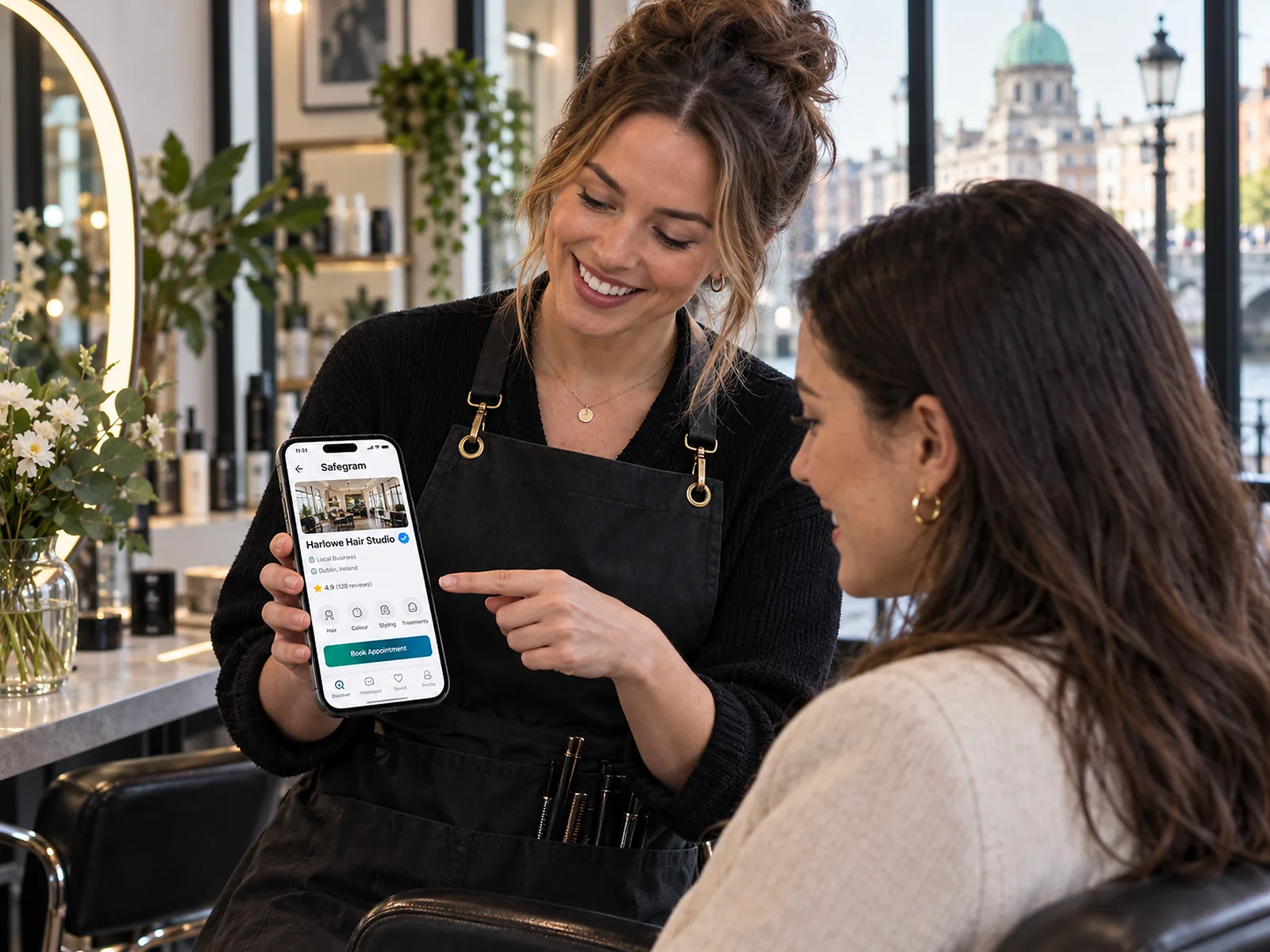
If the platform architecture itself does not support accountability, reporting alone cannot solve the problem. Trust has to be designed into the product from the start — into identity, listings, payments, messaging, community rules and discovery.
This is one of the most important shifts happening in digital products. Users are more informed than they used to be, and the platforms that win long-term attention are likely to be built by companies that understand this.
The bigger opportunity
A better online marketplace is not just about removing bad actors. It is also about improving life for the good ones:
- the small business trying to win new customers
- the creator trying to sell fairly
- the buyer trying to avoid stress and confusion
- the user who wants more control over who they interact with
- the person who wants technology to help real life, not replace it
That is where verified marketplaces become genuinely interesting.
They are not only safer in theory. They have the potential to make online trade feel more human, more local and more accountable.
And in a time when digital trust is under pressure, that may be exactly what users are looking for.
Conclusion
Verification is not a magic solution. But it may be one of the clearest ways to improve accountability in digital commerce.
For Ireland, that matters. For users, it matters. And for platforms that want to build long-term trust rather than short-term activity, it matters even more.
Safegram's model suggests a simple but important idea: if online marketplaces want better outcomes, trust cannot be optional design decoration — it has to be part of the foundation.
Frequently asked questions
What is a verified marketplace?
A verified marketplace is a platform where businesses, sellers or creators are verified before they can list commercially or monetise, helping improve accountability and trust.
Does verification guarantee that a seller is safe?
No. Verification does not eliminate all risk, but it helps create more accountability and should be combined with moderation, reporting, payment protections and trust signals.
Does every Safegram user need to verify?
Ordinary members can use Safegram without commercial verification. Businesses, sellers and creators must verify before listing or monetising commercially.
Why does this matter in Ireland?
Irish consumers and businesses both benefit from clearer trust signals, particularly as online scams, fake shops and misleading listings continue to be a concern.
Real people. Real businesses. Safer communities. Explore Safegram and see how a more trusted social marketplace works for Ireland.
Sources
More from Safegram
Try Safegram
Privacy-first social and a verified marketplace, built in Dublin.